




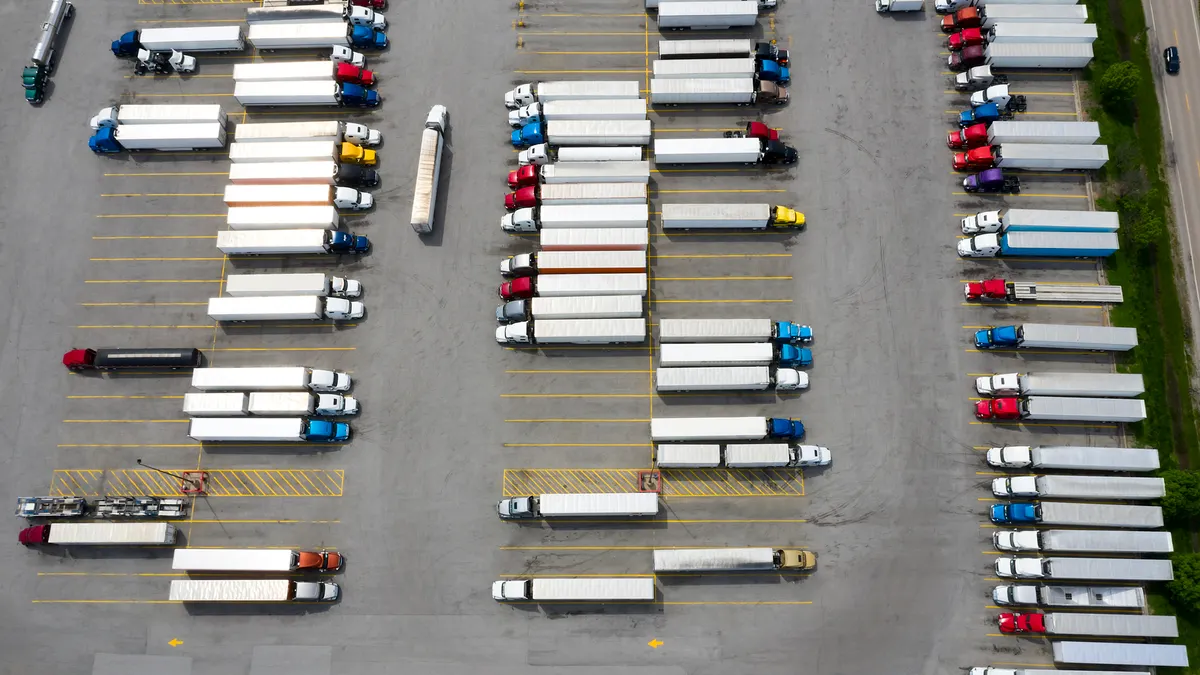
The US Department of Transportation (DOT) has approved funding for 14 truck parking projects expected to deliver a total of 2,403 additional spaces over the coming years. Supported through the Nationally Significant Multimodal Freight & Highway Projects (INFRA) program, the developments aim to ease the shortage of parking available to commercial vehicle operators across the United States.
The initiative is designed to improve safety, strengthen freight network reliability and help prevent fatigue-related road accidents. In announcing the grants on Wednesday, the department highlighted the importance of expanding safe, accessible public parking for truck drivers, particularly along the country’s most important freight corridors. The investments are also intended to improve supply chain fluidity and maintain the operational efficiency of the national transportation network.
Public authorities and private partners eligible for funding
Under the INFRA program’s frequently asked questions document, funding for truck parking infrastructure is available to public entities and public-private partnerships. Eligible applicants include individual states, groups of states, local governments and coalitions of local authorities.
Public applicants can also work with private companies to finance the development of new facilities, expand existing capacity, or support operations and maintenance. This approach allows public authorities to collaborate with private-sector partners in delivering infrastructure designed to meet commercial freight demand.
The 14 approved projects vary considerably in scale and location, ranging from major developments near freight hubs and border crossings to additional spaces at existing interstate rest areas.
Tennessee receives funding for the largest project
Tennessee will host the programme’s largest development, with 500 additional truck parking spaces planned across two separate projects near Nashville and Knoxville.
Three counties, working together under the Greater Nashville Regional Council, will receive a grant of just under $24 million. According to the DOT’s project fact sheet, the parking capacity will be developed at five separate Pilot Travel Center locations along Interstate 40 and Interstate 24.
The scale of the Tennessee investment places it well ahead of the next-largest project, which will serve freight movements near the US-Mexico border.
New parking capacity near the Los Indios border crossing
In Los Indios, Texas, a project will add 305 truck parking spaces near the Brownsville border crossing with Mexico. Cameron County has been awarded $9.2 million to carry out the work.
The project also requires the reconstruction of approximately 0.35 miles of a local road to provide access to the new parking area near the Los Indios Port of Entry. The additional capacity is intended to support commercial vehicle operations in a location closely linked to cross-border freight traffic.
The remaining INFRA-funded projects
The other 12 projects, ranked below by the number of parking spaces planned, will expand capacity at ports, interstate rest areas, travel centres and dedicated truck parking facilities.
Port of Savannah, Georgia – 275 spaces
The Georgia Ports Authority will receive $24.5 million to develop 275 parking spaces near the Port of Savannah. The site will be located less than two miles from Gate 4, placing additional capacity close to a major freight gateway.
Enfield, Connecticut – 260 spaces
Connecticut’s Department of Transportation has been awarded $13.5 million to build a new parking facility in Enfield, along Interstate 91 north of Hartford. The project will provide 260 additional spaces.
Rest Iowa – 150 spaces
Iowa’s Department of Transportation will receive $24.5 million for a rural truck parking initiative covering six existing rest areas along Interstate 80. The project will add a combined total of 150 spaces across those locations.
Port of Wilmington, North Carolina – 140 spaces
The North Carolina State Ports Authority will oversee a $6 million project to create 140 parking spaces at the Port of Wilmington. The facility will serve freight traffic using Interstate 40.
Future Interstate 49, Arkansas – 137 spaces
In Crawford County, Arkansas, the state Department of Transportation will invest a $23 million grant in a new 137-space rest area along the future Interstate 49 corridor.
Interstate 80, Nebraska – 120 spaces
Nebraska’s Department of Transportation has secured $7.5 million to build a new truck parking facility in Dawson County. The site will provide 120 spaces between Interstate 80 mile markers 247 and 254.
Monroe County, Georgia – 109 spaces
A $13.5 million project will add 109 spaces at two existing parking facilities owned by the state of Georgia. The sites comprise a weigh station and a rest area, with the state’s Department of Transportation acting as sponsor.
Interstate 41, Wisconsin – 106 spaces
Wisconsin’s Department of Transportation will receive $15 million to expand two existing parking areas along Interstate 41 near Dodge County. The project will deliver 106 additional spaces.
Fort Worth Alliance, Texas – 100 spaces
The city of Fort Worth will receive $5 million for a project at a Pilot Travel Center serving the area around State Highway 170 and Interstate 35W. The development will provide 100 new truck parking spaces.
Needles, California – 100 spaces
The city of Needles has secured $6.4 million to develop a new 15-acre truck parking site near the interchange of Interstate 40 and California State Route 95. The facility will accommodate 100 trucks.
Fergus Falls, Minnesota – 63 spaces
Minnesota’s Department of Transportation will receive $27.7 million for a 63-space rest area project along Interstate 94 near Fergus Falls.
Southern Illinois – 38 spaces
Illinois’ Department of Transportation will use its INFRA funding to reconstruct the southbound Green Creek and Post Oak rest areas along Interstate 57. The project will provide 38 truck parking spaces.
Addressing a persistent freight infrastructure gap
With 2,403 new spaces planned across 14 projects, the INFRA awards will expand truck parking capacity at strategic points throughout the US freight network. The programme combines large-scale developments near major transport hubs with smaller additions and improvements at existing roadside facilities.
The DOT’s stated priorities include making public parking more accessible to commercial drivers, reducing fatigue-related accident risks and improving the movement of goods along critical freight corridors. The projects will be developed over the coming years, adding infrastructure intended to support truck drivers and the wider supply chain.