



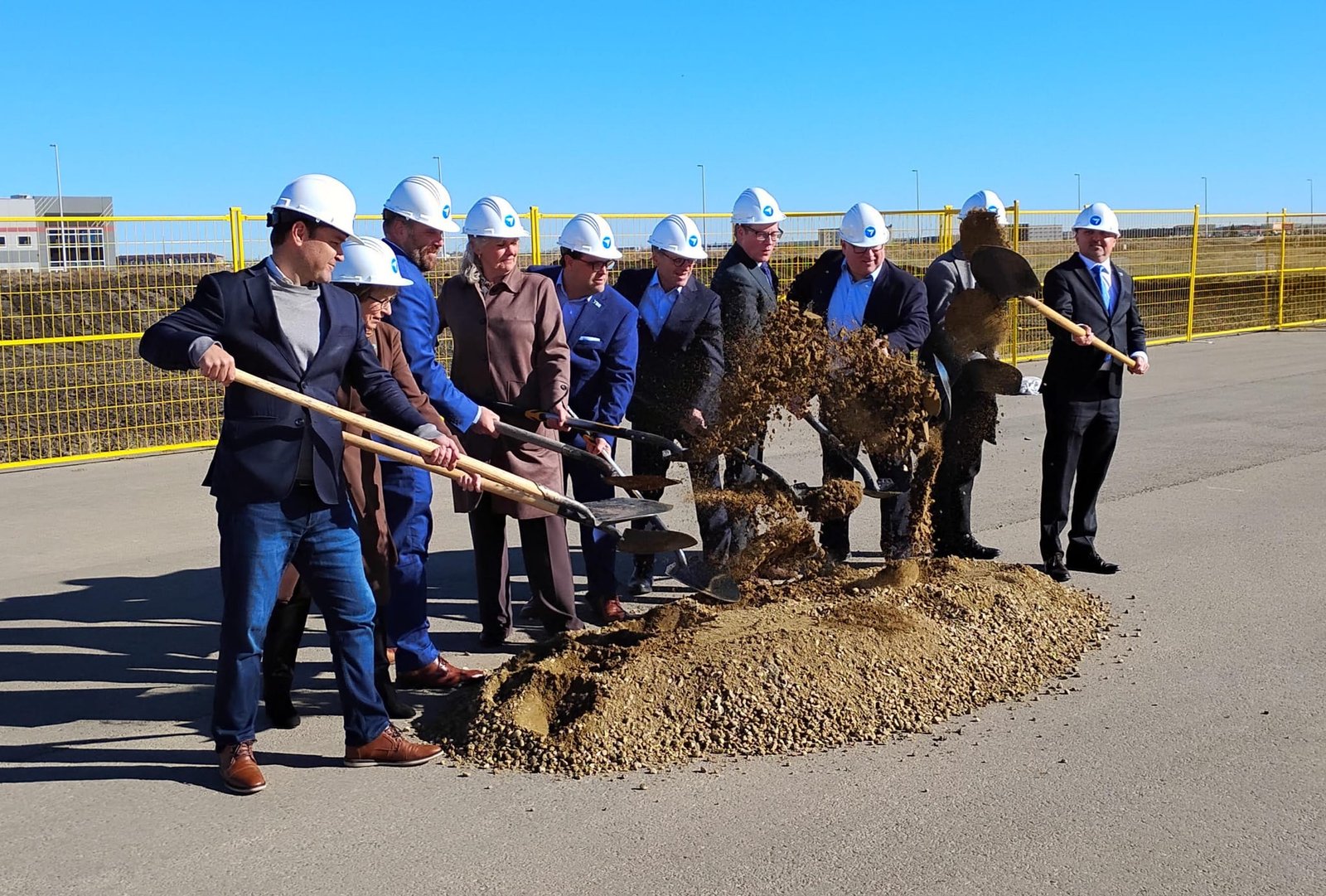
Edmonton International Airport (YEG) and Terracap Management have officially launched construction of a new 50,000-square-foot airside cargo facility in Canada. The project is designed to increase the airport’s freight handling capacity, improve cargo distribution and reinforce Edmonton’s position as a growing centre for air logistics and international trade.
Terracap will develop, own and manage the new facility, which will be built directly alongside Apron VIII. Its location will allow cargo to move efficiently between freighter aircraft and the warehouse, supporting faster handling operations for shipments requiring time-sensitive delivery.
The building is intended to accommodate several categories of freight, including e-commerce shipments, perishable goods, pharmaceuticals and aviation parts. By adding dedicated airside capacity, the project will help meet the needs of cargo operators and businesses relying on efficient connections to domestic and international markets.
Public infrastructure investment attracts private-sector development
The groundbreaking highlights the role of public infrastructure funding in encouraging additional private investment in Canada’s transportation and logistics sector.
The Government of Canada has committed $118 million through the National Trade Corridors Fund to support the development of Edmonton International Airport’s International Cargo Hub (ICH) and its associated infrastructure.
Covering more than 2,000 acres of serviced development land, the International Cargo Hub is intended to accommodate future projects linked to cargo handling, logistics and trade. Terracap’s latest investment will complement this wider development, contributing to the expansion of the airport’s freight infrastructure and its growing role in North American supply chains.
Myron Keehn, President and CEO of Edmonton Airports, said the project demonstrates how public investment can create the conditions needed to attract private-sector capital.
He explained that the International Cargo Hub is establishing the infrastructure and connectivity required to support long-term cargo growth at YEG. The decision by Terracap to invest in additional capacity reflects the momentum generated by these developments.
According to Keehn, the new facility will provide additional airside cargo capacity while strengthening the wider logistics ecosystem being developed at Edmonton International Airport.
Terracap expands its cargo footprint at YEG
The new warehouse will build on Terracap Management’s existing presence at the airport. The company currently operates approximately 100,000 square feet of airside cargo space at YEG, with all of that capacity fully leased to major cargo operators, including Air Canada, Cargojet, DHL and Purolator.
The additional 50,000-square-foot facility will represent Terracap’s third air cargo distribution building at Edmonton International Airport, further expanding its long-standing partnership with the airport authority.
Larry Krauss, Chief Executive Officer of Terracap Management, said the company was pleased to continue working with Edmonton International Airport through the latest development.
He said the new building would provide tenants with efficient air cargo handling and distribution services, connecting Edmonton-based businesses with markets across Canada and around the world.
Krauss added that the investment reflects Terracap’s continued confidence in Edmonton and the increasing importance of YEG as a major North American air cargo and logistics hub. He also highlighted the company’s intention to strengthen its relationship with the airport authority while contributing to the region’s economic development.
Federal government highlights trade and economic benefits
The project has also received support from federal representatives, who view the development as an example of how infrastructure investment can encourage further economic activity.
Matt Jeneroux, Member of Parliament for Edmonton–Riverbend, said federal spending on infrastructure that connects Canadian businesses with international markets helps create favourable conditions for private investment.
He pointed to Terracap’s new cargo facility as an illustration of how cooperation between government and private companies can strengthen Edmonton’s role in global trade, stimulate economic growth and generate new opportunities for Albertans.
A wider real estate portfolio behind the investment
Terracap Management is headquartered in Toronto, Ontario, and operates as a private equity real estate group with a portfolio valued at $2.4 billion.
Founded in 1989, the company holds a diversified range of assets, including multi-residential properties, development land, retail and office buildings, industrial properties and hotels.
Its latest investment at Edmonton International Airport adds to its established air cargo operations and supports the continued development of the airport’s International Cargo Hub. By combining public infrastructure investment with private-sector development, the project is expected to increase cargo capacity and improve Edmonton’s connectivity with markets across Canada and internationally.