



J.B. Hunt Transport Services reported third-quarter 2026 results slightly above analysts’ revised expectations, but rising operating expenses remained a drag on the U.S. transportation company’s performance. The earnings report, released after the market close Thursday, Oct. 15, came after a warning in September that already had lowered expectations among investors.
JB Hunt Transport Services Inc (NASDAQ:JBHT) had a net margin of 5.17% and had a return on equity of 37.20%. Revenue for the company was $3.68 billion for the quarter versus a consensus estimate of $3.59 billion. Earnings per share were $1.82, a penny higher than revised analyst estimates.
The effective tax rate rose during the quarter, reducing earnings per share by four cents. This was partially offset by a two-cent decline in net interest expense.
The results also slightly beat the company’s September outlook, which had expected a sequential EPS decline of 5% to 10%, implying earnings of around $1.77 per share at the midpoint.
J.B. Hunt at the time cited several immediate cost pressures, including a sharp rise in diesel prices that would cost $10 million, $25 million in driver-related costs and another $10 million in higher cargo claims. The cumulative effect of these pressures ultimately exceeded $50 million for the quarter.
But the company saw its fifth straight quarter of year-over-year growth in operating income and earnings per share, furthering the earnings recovery. The rebound started in the third quarter of 2025, ahead of the recovery of many industry peers.
Intermodal growth drives revenues, but margins are squeezed by costs
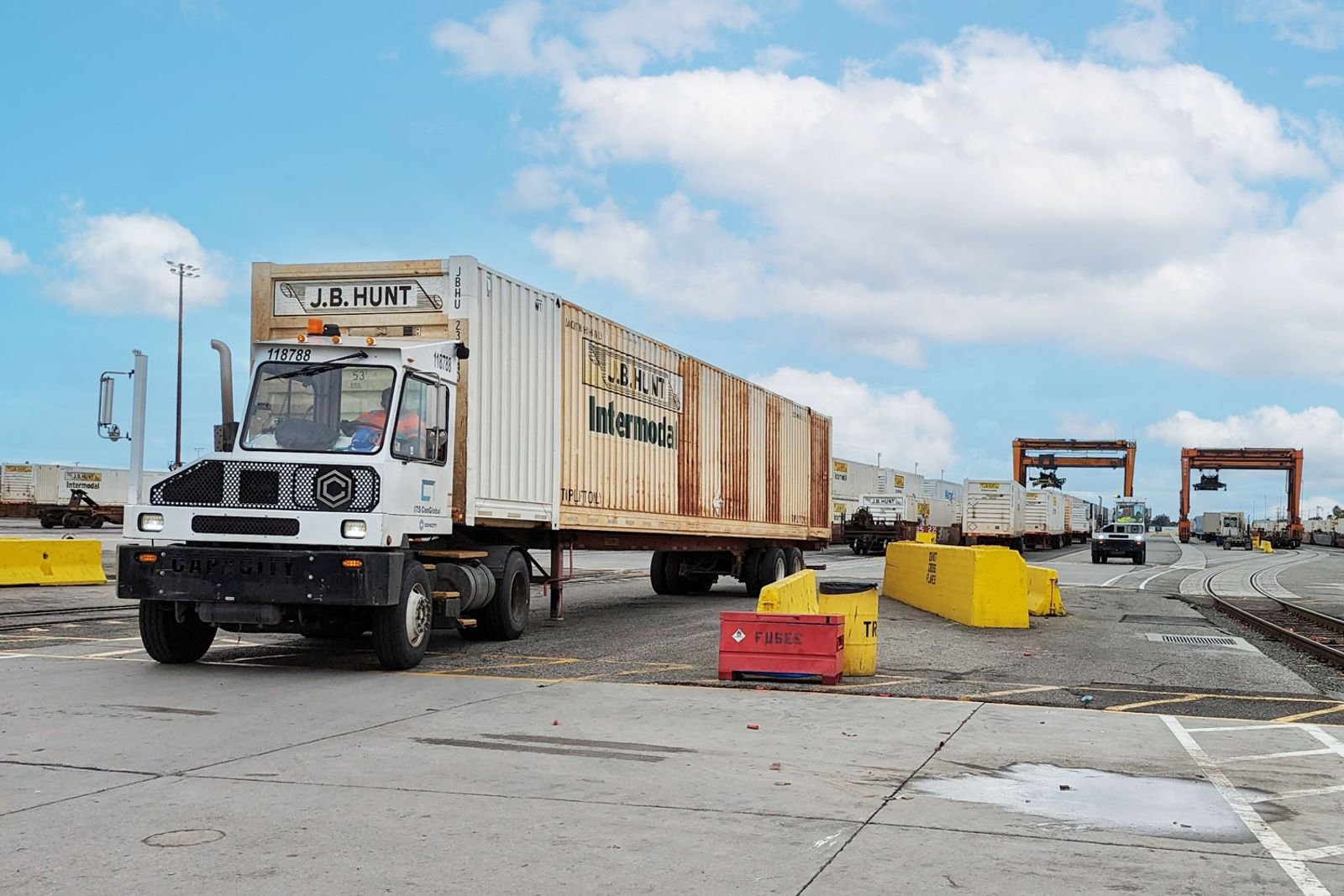
Intermodal continued to contribute solidly to the quarter results. Segment revenue was $1.83 billion, up 20% from the prior year period, with an 8% increase in loads and an 11% increase in revenue per load. Higher fuel prices helped boost reported revenue.
Revenue per load excluding fuel increased 2% year over year. Eastern operations were up 18 per cent and transcontinental lanes were up 1 per cent, but results were mixed by network.
But average haul length dropped 3% as freight activity shifted to the East. The change in the traffic mix was a slight headwind to revenue per load.”
Intermodal posted an operating ratio of 91.9%, 15 basis points higher than a year ago. Higher driver personnel expenses, equipment costs and employee benefits impacted the segment’s results negatively.
higher insurance and people costs have dedicated operations
J.B. Hunt’s Dedicated Contract Services business also faced profitability pressures. Operating ratio fell 360 basis points year on year to 91.5%.
Revenue increased 11% reflecting higher weekly revenue per truck including fuel surcharges. Fuel and revenue per truck were just up 3%.
The operating fleet also increased by 11% more trailers, but loads were up just 3%. Higher driver expenses, group medical claims, insurance premiums, and costs to open new customer accounts drove the weaker operating ratio.
Strong Brokerage and Truckload Performance
The brokerage division, which spans the business, delivered a second consecutive quarter of operating profit after 13 quarters of losses.
The company’s asset-light truckload business also turned profitable, reporting operating income of $7 million after a small loss in the second quarter.
The improvements were some evidence the broader recovery was still on track, even as cost inflation continued to weigh on operating performance across the business.
Shares struggle on after September warning
The latest figures were greeted cautiously by investors. J.B. Hunt shares fell 2.4% in after-hours trading Thursday. The stock finished that session down 14% from its mid-September earnings update.
The company was to hold a conference call at 5:00 p.m. Eastern Daylight Time Thursday to discuss its third-quarter earnings.
Why J.B. Hunt results matter to the freight industry
J.B. Hunt’s quarterly results are closely watched in the intermodal, trucking and broader logistics sectors, making its results an important barometer of operating conditions across the transportation market.
The third quarter was a slight deceleration after four quarters of solid recovery. As the company continued to grow revenue and keep its streak of earnings improvement alive, increasing fuel, labor, equipment and claims costs limited the benefit of that progress.
Some of the other expenses that are impacting the quarter could be temporary. Still, balancing revenue growth, operating efficiency and cost control remains a key element of J.B. Hunt’s performance as the freight industry heads into the final quarter of 2026.