



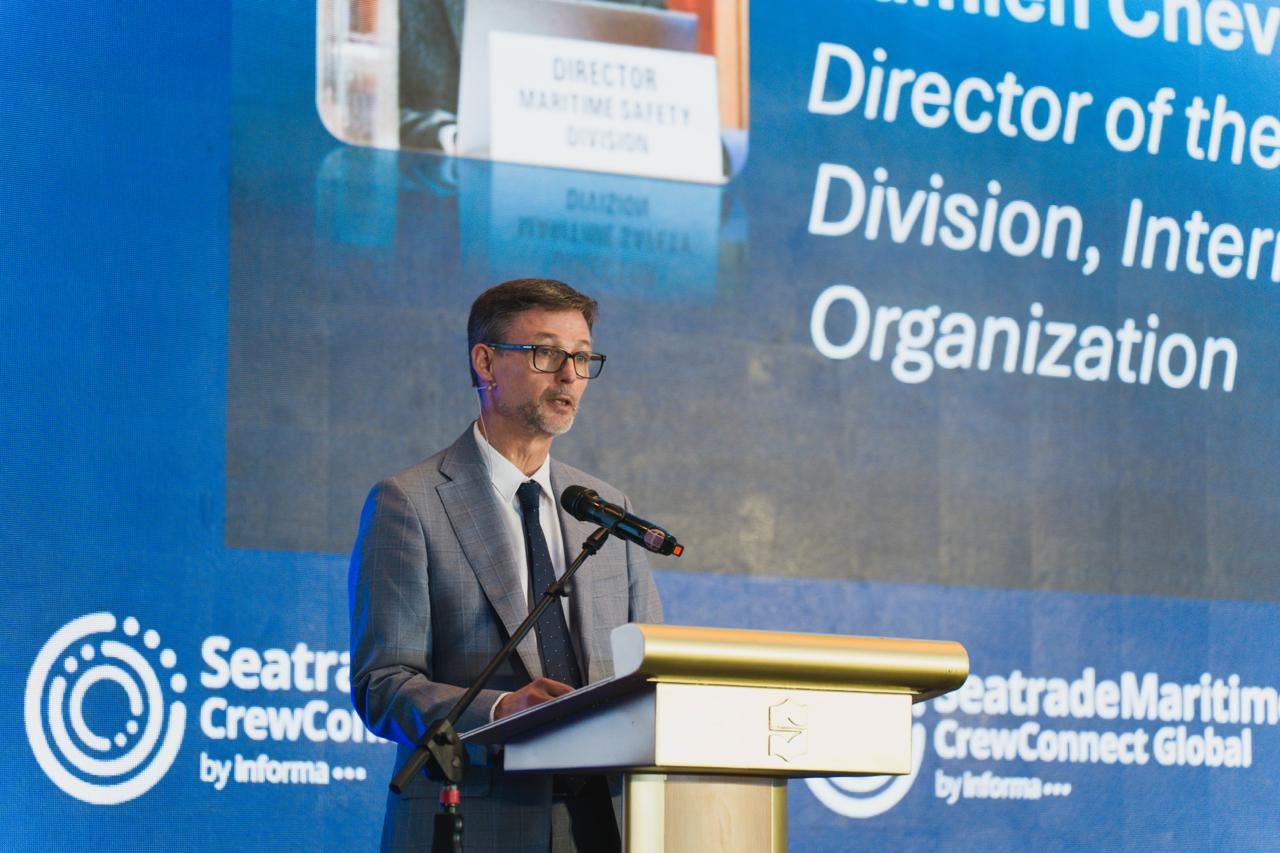
The growing risks facing seafarers, from prolonged detention and criminal accusations to geopolitical conflicts and cyber-security threats, were at the centre of an address by Damien Chevallier, Director of the Maritime Safety Division at the International Maritime Organization (IMO), during the Seatrade Maritime Crew Connect Global conference in Manila.
Chevallier outlined the multiple pressures confronting the shipping industry, highlighting geopolitical tensions, maritime security, the criminalisation of seafarers, digitalisation, cyber-security and professional training as key areas requiring continued attention.
“Too many seafarers continue to face detention and lengthy legal proceedings despite acting in good faith despite carrying out their professional duties,” he told delegates.
Criminalisation remains a concern for maritime crews
Seafarers can face criminal charges or prolonged legal restrictions following vessel casualties and pollution incidents. They may also become implicated in drug-smuggling operations conducted aboard ships without their knowledge.
To address these concerns, the IMO has been working alongside the International Labour Organization (ILO) to strengthen safeguards for maritime personnel. The joint IMO–ILO process produced new guidelines covering the treatment of seafarers detained in connection with alleged criminal offences. These guidelines were adopted by the IMO Legal Committee and are intended to ensure that seafarers’ rights are respected and that detention is not extended unnecessarily.
Chevallier stressed that the response must go beyond establishing international guidance. Each case involves individuals and their families, making continued cooperation between governments and engagement with relevant stakeholders essential to securing fair treatment.
The IMO and its partners therefore continue to work on individual cases and maintain regular discussions with governments and other stakeholders to support seafarers and advocate for their rights.
The X-Press Pearl captain remains caught in legal uncertainty
The issue was brought into focus by a case highlighted on the same day by Seatrade Maritime News: that of Vitaly Tyutkalo, captain of the X-Press Pearl.
He has been prevented from leaving Sri Lanka following the cargo fire and explosion that ultimately sank the vessel in May 2021. More than five years after the incident, no criminal or civil proceedings have produced findings against Captain Tyutkalo, who remains not guilty of any crime.
His situation illustrates the uncertainty that can confront maritime professionals following a serious incident, particularly when legal proceedings continue without a final determination of responsibility.
Geopolitical tensions put crews at risk
Beyond legal proceedings, Chevallier warned that international conflicts are increasingly affecting seafarers simply because of the nature of their work.
“Today, too many seafarers find themselves on the frontline of geopolitical tension. Ships have been attacked and seafarers killed. Crews have been trapped in conflict zones. Seafarers have faced increased uncertainty just because they are doing their jobs.”
He reiterated the IMO’s position that seafarers must not be adversely affected by geopolitical developments and must receive appropriate protection. Safeguarding maritime personnel, he emphasised, remains one of the highest priorities of the IMO Secretary-General.
The warning reflects the exposure of commercial shipping crews to circumstances beyond their control, including attacks on vessels and the dangers associated with operating in conflict-affected waters.
Preparing the next generation of seafarers
The IMO is also looking beyond immediate security and legal concerns to the future of the maritime profession. An important part of this effort is the ongoing review of the International Convention on Standards of Training, Certification and Watchkeeping for Seafarers (STCW).
Chevallier said the review must address not only the technical skills required by a changing industry but also the conditions in which future seafarers will work.
“The real question is what kind of profession do we want to offer future generations?”
He acknowledged the need to prepare maritime personnel for the introduction of new fuels, as well as advances in digitalisation, automation and cyber-security. However, he stressed that technical training alone would not be sufficient to secure the profession’s long-term future.
The maritime industry must also provide a working environment in which seafarers feel safe, secure and respected.
The IMO’s message is therefore twofold: strengthen protections for crews facing detention, criminalisation and geopolitical threats today, while ensuring that tomorrow’s seafarers enter a profession equipped to meet technological change without compromising their safety, dignity or rights.