

• Latest
  • Trending
Korean Air completes Incheon Smart Cargo Terminal upgrade as cargo revenue surges 34%

Korean Air completes Incheon Smart Cargo Terminal upgrade as cargo revenue surges 34%

October 22, 2026
CSX boosts third-quarter profit as freight volumes and revenue climb

CSX boosts third-quarter profit as freight volumes and revenue climb

October 22, 2026
DHL Invests Nearly MXN 300 Million in Logistics Expansion in Mexico’s State of Mexico

DHL Invests Nearly MXN 300 Million in Logistics Expansion in Mexico’s State of Mexico

October 22, 2026
ADVERTISEMENT
Kales Iceland to Handle Air China Cargo Representation as Beijing–Keflavík Route Launches

Kales Iceland to Handle Air China Cargo Representation as Beijing–Keflavík Route Launches

October 22, 2026
Kuehne+Nagel lifts air logistics EBIT by 84% as Q3 2026 results strengthen

Kuehne+Nagel lifts air logistics EBIT by 84% as Q3 2026 results strengthen

October 22, 2026
Qatar Airways Cargo strengthens its winter network with new freighter routes to Europe and North America

Qatar Airways Cargo strengthens its winter network with new freighter routes to Europe and North America

October 22, 2026
SLL expands its air logistics portfolio with three specialised freight services

SLL expands its air logistics portfolio with three specialised freight services

October 22, 2026
AGOS Aviation makes the case for outsourcing airlines’ backend operations

AGOS Aviation makes the case for outsourcing airlines’ backend operations

October 22, 2026
DSV Q3 2026: Air freight yields climb 8% as volumes decline 3%

DSV Q3 2026: Air freight yields climb 8% as volumes decline 3%

October 22, 2026
Boeing reaches 200 conversions of its 737-800BCF freighter, with Texel Air receiving the milestone aircraft

Boeing reaches 200 conversions of its 737-800BCF freighter, with Texel Air receiving the milestone aircraft

October 22, 2026
US Air Force Invests $3.5 Million in Natilus’ KONA Regional Cargo Aircraft

US Air Force Invests $3.5 Million in Natilus’ KONA Regional Cargo Aircraft

October 22, 2026
MISC Expands LNG Fleet Orders with Five New Carriers at Hudong-Zhonghua

MISC Expands LNG Fleet Orders with Five New Carriers at Hudong-Zhonghua

October 22, 2026
Container Shipping Returns to the Red Sea as Security Concerns Intensify

Container Shipping Returns to the Red Sea as Security Concerns Intensify

October 22, 2026
  • Home
  • About Us
  • Press Room
  • Podcasts
  • Media Kit
  • Contact Us
  • Careers
Thursday, October 22, 2026
  • Login
  • Register
The Logistic News
  • Logistic
  • Air
  • Maritime
  • Land
  • World
  • Business
  • Tech
  • Events
  • Advertise
No Result
View All Result
  • Logistic
  • Air
  • Maritime
  • Land
  • World
  • Business
  • Tech
  • Events
  • Advertise
No Result
View All Result
The Logistic News
No Result
View All Result
Home Air

Korean Air completes Incheon Smart Cargo Terminal upgrade as cargo revenue surges 34%

The new automated terminal increases hourly ULD processing capacity from 18 to 30 units, while strong demand for AI and semiconductor components drives cargo revenue growth. Korean Air is also advancing its JFK terminal modernisation and preparing to integrate Asiana Airlines in December, with significant implications for South Korea’s air cargo market.

The Logistic News by The Logistic News
October 22, 2026
in Air, Business, Cargo, Logistic, Tech, World
Reading Time: 5 mins read
0
Korean Air completes Incheon Smart Cargo Terminal upgrade as cargo revenue surges 34%
ADVERTISEMENT

Korean Air completes Incheon Smart Cargo Terminal upgrade as cargo revenue surges 34%

The new automated terminal increases hourly ULD processing capacity from 18 to 30 units, while strong demand for AI and semiconductor components drives cargo revenue growth. Korean Air is also advancing its JFK terminal modernisation and preparing to integrate Asiana Airlines in December, with significant implications for South Korea’s air cargo market.

Category: Logistic, Air, Business, Cargo, Tech, World

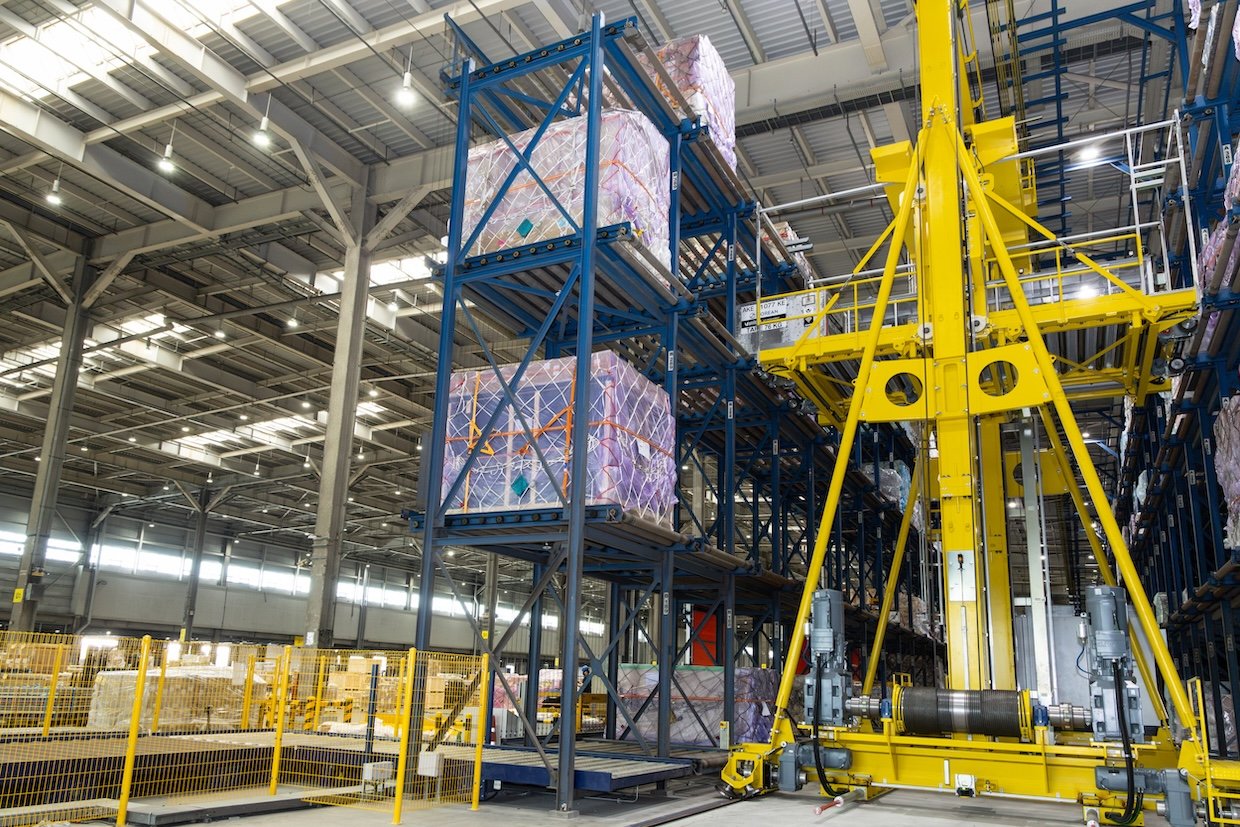
Korean Air has completed an upgrade of its cargo terminal at Incheon International Airport, featuring a fully integrated Smart Terminal with the latest automated logistics technologies. The upgrade is expected to boost handling efficiency, enhance operational precision and enhance the airline’s standing in the global air cargo market.

ADVERTISEMENT

The project ran between June 2025 and September 2026 and automated all terminal handling operations. The airline was able to maintain continuity of service and upgrade its infrastructure, because cargo operations were not halted during the modernization.

A fleet of Automated Guided Vehicles (AGVs) and Elevating Transfer Vehicles (ETVs) are at the core of the new terminal. Korean Air has also improved the bypass infrastructure from one to two automatic transfer lines connected to the new ETV system.

The improvements have increased the terminal’s ULD handling capability per hour from 18 to 30 units. Total cargo-handling capacity is expected to grow more than 25 percent. The airline is also growing its dedicated specialized facilities for high yield cargo, as part of its strategy to carry more valuable and specialized shipments.

Korean Air is automating the movement of heavy equipment to improve working conditions, operational accuracy and the need for manual handling.” The terminal upgrade is a part of a broader transformation the carrier is undergoing, the carrier said, which includes digital integration, sustainability initiatives and next-generation aircraft orders.

A Korean Air spokesperson said, “The renovation is an important step to proactively respond to the rapidly changing global logistics environment through upgrading equipment and adopting smart technologies.”

The airline has finished the Incheon project and now turns its attention to its cargo terminal at John F Kennedy International Airport (JFK) in New York. Modernization work is expected to be completed in 2027.

Cargo revenue boosted by AI demand

The new terminal is being opened amid strong financial results for Korean Air’s cargo division, driven by steady demand for high-value technology shipments.

Cargo revenue in Q3 2026 was KRW 1.4323 trillion (US$1.08 billion), up KRW 365.6 billion (US$277 million), or 34% year-on-year.

The growth was propelled by demand for artificial intelligence (AI) infrastructure and semiconductor components. The airline also protected profitability by adjusting the available capacity to changing demand in regional markets.

Korean Air expects high fuel costs to remain in the fourth quarter due to the conflict in the Middle East. The cargo division will be flexing capacity to take advantage of the usual year-end rush and also catering to demand from the AI and semiconductor sectors.

The company’s overall financial performance also reflected the strength of its operations. Korean Air reported 2026 third-quarter sales of KRW5.0448 trillion (US$3.82 billion), a record for the carrier and up KRW1.0363 trillion (US$784 million) from a year ago.

Operating profit rose 44.9 billion won (US$34 million) to 421.2 billion won (US$319 million) year-on-year despite persistently high fuel prices.

Integration of Asiana in December

Korean Air is also preparing for the final stage of integrating with Asiana Airlines, set for December 17, 2026, on top of its infrastructure investments. Before the merger, the airline is standardizing service protocols across its growing international network.

The integration process started on December 12, 2024, by Korean Air buying shares in Asiana. The merger is aimed at combining the resources of both companies, to increase their international competitive ability as a Full-Service Carrier (FSC) and to add to corporate and shareholder value.

Combining the two airlines will require a lot of coordination in aircraft operations, maintenance procedures, operating systems and passenger safety procedures. So Korean Air has put priority to the timing of the transition so as to minimize the risk of system errors and operational disruption.

The airline had spent two years preparing for the merger and had set December 2026 as the best time to complete it.

What the merger means for freight

The merger will secure Korean Air’s status as South Korea’s dominant full-service cargo airline, although the combined group will not take over Asiana’s freighter business. As a condition for the transaction, regulators demanded Asiana’s cargo division be divested to ensure competition in the market.

Asiana transferred 11 freighter aircraft to Air Incheon, now called Air Zeta. The fleet consists of 10 Boeing 747 freighters and 1 Boeing 767 freighter. The deal, worth 470 billion Korean won (US$356 million), also included transfer of related personnel and contracts.

The divestiture addresses competition concerns raised by the European Commission regarding the potential concentration of two leading Korean freighter operations on Europe-Korea routes. The deal separates Asiana’s cargo operation, preventing Korean Air from combining both businesses under one corporate structure.
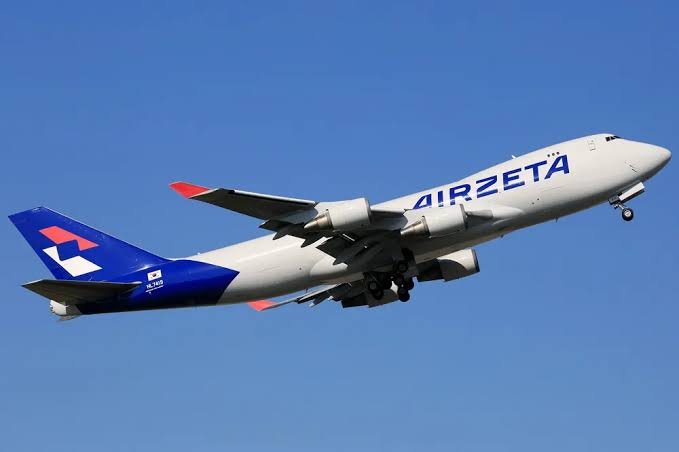
Korean Air cargo operations and Air Zeta's role in South Korea's air freight market

Korean Air will retain its existing freighter fleet, passenger aircraft belly-hold capacity, Incheon hub operations and customer contracts. At the same time, the enlarged passenger network is expected to provide additional opportunities through increased belly-hold capacity, airport slots, traffic rights and greater operational scale at Incheon. Industry reports anticipate that the combined group’s overall cargo capacity could increase by more than 10%.

For Air Zeta, the acquisition provides the foundation for an independent long-haul freighter operation. The company plans to expand its presence in North America and Europe while developing its activities in e-commerce and specialised cargo.

The resulting market structure creates a new independent Korean competitor in the freighter segment, while Korean Air benefits from the broader network and passenger capacity resulting from the merger.

Together, the Smart Terminal investment, strong technology-driven cargo demand and the planned Asiana integration mark a significant period of change for Korean Air. The carrier is expanding its automated handling capabilities while adapting its cargo network and operating structure to evolving global logistics demand.

With Incheon’s modernisation complete and the JFK upgrade still underway, the airline is positioning its cargo business to accommodate higher volumes, more specialised shipments and continued demand from the technology sector.


Previous Post

Qatar Airways Cargo strengthens its winter network with new freighter routes to Europe and North America

Next Post

Kuehne+Nagel lifts air logistics EBIT by 84% as Q3 2026 results strengthen

Next Post
Kuehne+Nagel lifts air logistics EBIT by 84% as Q3 2026 results strengthen

Kuehne+Nagel lifts air logistics EBIT by 84% as Q3 2026 results strengthen

Leave a Reply Cancel reply

Your email address will not be published. Required fields are marked *

A D V E R T I S E M E N T

Popular News

  • Drone Delivery Takes Flight: Amazon Partners with UPS for Trial Program

    Drone Delivery Takes Flight: Amazon Partners with UPS for Trial Program

    0 shares
    Share 0 Tweet 0
  • Rail Cargo Group Strengthens European Network with Captrain Netherlands Acquisition

    0 shares
    Share 0 Tweet 0
  • Automotive Inbound Logistics Market: Navigating Future Challenges

    0 shares
    Share 0 Tweet 0
  • Global Inflation Cools to Target After Three Years, Central Banks Face Policy Dilemma

    0 shares
    Share 0 Tweet 0
  • Dubai Mercantile Exchange Rebrands as Gulf Mercantile Exchange Following Saudi Tadawul Group Acquisition

    0 shares
    Share 0 Tweet 0

Recent News

CSX boosts third-quarter profit as freight volumes and revenue climb

CSX boosts third-quarter profit as freight volumes and revenue climb

October 22, 2026
DHL Invests Nearly MXN 300 Million in Logistics Expansion in Mexico’s State of Mexico

DHL Invests Nearly MXN 300 Million in Logistics Expansion in Mexico’s State of Mexico

October 22, 2026
Kales Iceland to Handle Air China Cargo Representation as Beijing–Keflavík Route Launches

Kales Iceland to Handle Air China Cargo Representation as Beijing–Keflavík Route Launches

October 22, 2026

Discover a new era of logistics reporting with The Logistic News, your go-to platform for breaking news, insightful features, and exclusive interviews shaping the global logistics and freight landscape. Trust us to deliver accurate, timely, and relevant information that empowers professionals and enthusiasts alike in navigating the intricacies of this vital sector.

Navigation

  • Home
  • About Us
  • Press Room
  • Podcasts
  • Media Kit
  • Contact Us
  • Careers
  • Privacy Policy
  • Terms of Use

© 2024 - thelogisticnews.com

Welcome Back!

Login to your account below

Forgotten Password? Sign Up

Create New Account!

Fill the forms below to register

All fields are required. Log In

Retrieve your password

Please enter your username or email address to reset your password.

Log In

SIgn Up Newsletter

This will close in 20 seconds

Manage Cookie Consent
We use technologies like cookies to store and/or access device information. We do this to improve browsing experience and to show (non-) personalized ads. Consenting to these technologies will allow us to process data such as browsing behavior or unique IDs on this site. Not consenting or withdrawing consent, may adversely affect certain features and functions.
Functional Always active
The technical storage or access is strictly necessary for the legitimate purpose of enabling the use of a specific service explicitly requested by the subscriber or user, or for the sole purpose of carrying out the transmission of a communication over an electronic communications network.
Preferences
The technical storage or access is necessary for the legitimate purpose of storing preferences that are not requested by the subscriber or user.
Statistics
The technical storage or access that is used exclusively for statistical purposes. The technical storage or access that is used exclusively for anonymous statistical purposes. Without a subpoena, voluntary compliance on the part of your Internet Service Provider, or additional records from a third party, information stored or retrieved for this purpose alone cannot usually be used to identify you.
Marketing
The technical storage or access is required to create user profiles to send advertising, or to track the user on a website or across several websites for similar marketing purposes.
Manage options Manage services Manage {vendor_count} vendors Read more about these purposes
View preferences
{title} {title} {title}
No Result
View All Result
  • Logistic
  • Air
  • Maritime
  • Land
  • World
  • Business
  • Tech
  • Events
  • Advertise

© 2024 - thelogisticnews.com