



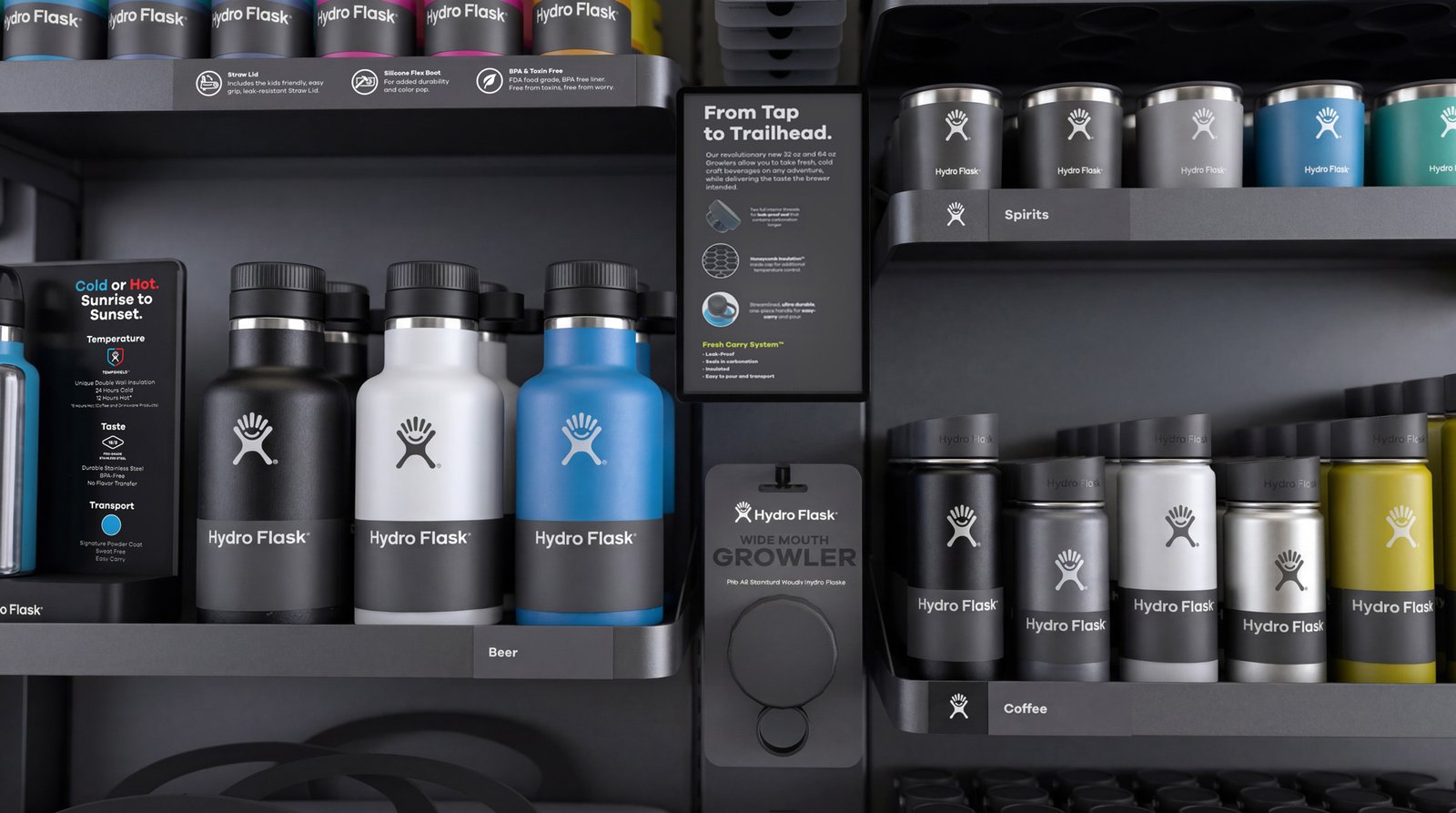
Helen of Troy, the company behind Hydro Flask, Osprey and Drybar, plans to reinvest part of its expected $80.5 million in tariff refunds into improving inventory management and redesigning product packaging to meet environmental requirements in the United States and international markets.
During an earnings call on October 8, executives explained that the refunds would help the company address lingering cost pressures while preparing its product portfolio for the next fiscal year. The group expects to receive the remaining amount by the end of fiscal 2027, which concludes on February 28, 2027.
For the quarter ended August 31, Helen of Troy recognized $26.9 million of the anticipated refunds. Part of that amount helped offset higher commodity, fuel and freight expenses, according to the company’s earnings presentation.
Chief Financial Officer Brian Grass stressed that the refunds would provide a financial benefit in fiscal 2027, but would not fully compensate the company for the cumulative impact of tariffs already paid.
The company began receiving reimbursements in the first quarter of fiscal 2027, which ended May 31. At that stage, Helen of Troy reported that increased expenditure to prevent supply disruptions, together with higher commodity and freight costs, had offset the initial $9.2 million refund.
Inventory optimization remains a priority
Beyond easing immediate cost pressures, Helen of Troy intends to use part of the recovered funds to improve the quality and composition of its inventory. Management is seeking to reduce the volume of slow-moving products and establish a more balanced stock profile ahead of fiscal 2028.
Grass said the company wanted to address inventory-related costs earlier rather than carry them into the following fiscal year.
At the end of its latest fiscal quarter, Helen of Troy held $480 million in inventory, representing a 49% decline compared with the same period a year earlier. The company also increased the share of active inventory by seven percentage points during the first half of fiscal 2027.
Management is targeting a further improvement of 12 percentage points in the composition of active inventory by the end of the fiscal year. According to Grass, the progress achieved so far should help position the business for fiscal 2028.
Packaging redesign driven by environmental regulations
Part of the tariff refunds will also finance packaging redesigns intended to improve environmental performance and comply with evolving regulations.
According to the company’s regulatory filing, legislation introduced in several U.S. states, Canada, the European Union, the Middle East and Africa has increased packaging-related costs by transferring responsibility for disposal expenses from municipalities to consumer packaged goods producers.
The planned changes are therefore intended to address both regulatory requirements and the financial burden associated with packaging waste management.
Refunds follow the invalidation of tariffs
The reimbursements stem from a February Supreme Court ruling that invalidated tariffs imposed by the Trump administration under the International Emergency Economic Powers Act.
Helen of Troy is among several consumer goods companies receiving refunds linked to the now-invalidated duties. Other businesses reporting similar developments include PepsiCo, cosmetics and skincare company E.l.f. Beauty, and personal care manufacturer Kimberly-Clark.
Despite the expected financial recovery, Helen of Troy maintains that the reimbursements cover only part of the broader tariff burden incurred by the business. The company is consequently directing a portion of the funds toward operational improvements, inventory discipline and packaging compliance rather than treating the refunds solely as a short-term financial gain.