



Greenpeace criticizes Ikea over forestry practices
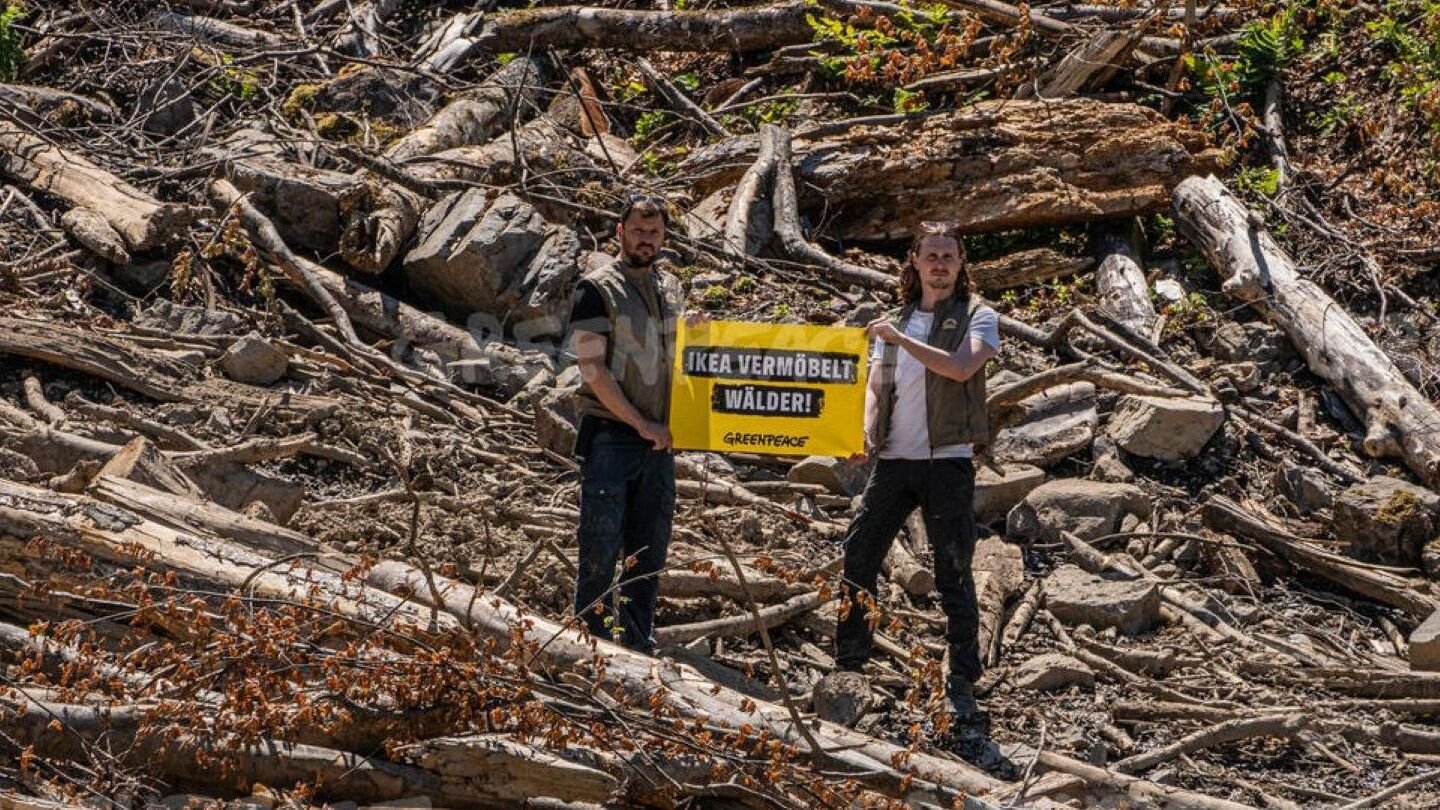
Greenpeace International has voiced worries over the wood sourcing practices of Ikea Group, alleging that the furniture retailer’s supply chain contributes to the destruction of valuable European forests. The environmental group says the company’s sourcing practices are inconsistent with its stated commitment to responsible forestry and protecting biodiversity.
And on October 13 Greenpeace issued a press release with its findings in a report called The Missing Manual. The document notes what the organization calls a gap between Ikea’s sustainability commitments and its wood sourcing practices. Greenpeace also says the retailer has not sufficiently assessed the overall environmental footprint of its supply chain.
The group is urging Ikea to strengthen its forest protection strategy. “Among its recommendations are to stop sourcing wood from areas of high biodiversity value and setting measurable corporate biodiversity targets for 2030. Greenpeace also called on the company to make ecosystem integrity central to its governance and make sure its political influence aligns with its environmental commitments.
Earlier allegations about wood use
The fresh criticism comes as Ikea has been under years of scrutiny over its reliance on wood and its forestry practices.
UK environmental group Earthsight had accused the retailer of selling chairs made from wood from beech trees harvested illegally. In 2024, environmental groups Agent Green and the Bruno Manser Fonds also released a report alleging destructive logging practices in Romanian forests owned by, or used as sources for timber for Ikea.
Ikea is one of the world’s biggest consumers of wood and says its size gives it the leverage to push the whole industry toward better forestry practices. The company announced in May 2025 it was working to improve forest management and raise industry norms.
As part of that effort, Ikea has teamed up with the European Forest Institute and non-profit Preferred by Nature to set aside 16,000 hectares of forest for research. The project aims to enhance forest management practices and to boost forest resilience and biodiversity.
But Greenpeace says the retailer’s actions are still not enough. Ikea has not done enough to protect ecosystems and show what more needs to be done to conserve biodiversity, the group says.
The report urges the company to use its purchasing power and political influence to highlight gaps in existing forestry frameworks and advocate for stricter industrywide standards.
Ikea disputes a number of conclusions.
Ikea said it had reviewed the Greenpeace report and welcomed discussion on how to improve biodiversity outcomes, but rejected several of the organization’s conclusions.
“The report does not fully reflect the work that goes into our sourcing approach and we do not agree with many of its conclusions,” the company told Supply Chain Dive in an email.
In its FY25 sustainability report, Ikea said it was focused on reducing negative pressures and impacts on biodiversity and ecosystems across its operations and value chain. The company also cited efforts to address the nexus between its products and commodities linked to primary deforestation.
For FY25, Ikea said it had continued to use forensic methods to verify the origins of its wood among the measures reported.
Europe is the key region for sourcing wood for Ikea
The magnitude of the retailer’s wood use offers important perspective to the debate. In fiscal 2025, suppliers delivered about 14.7 million cubic meters of roundwood equivalent for Ikea products. 81% virgin fibers and 19% recycled fibers were found in this volume.
The majority of Ikea’s wood came from Europe, representing 81% of its supply. Asia accounted for 15%, with other regions accounting for the remaining 4%.
The company’s material breakdown also shows the significance of wood-based composites in its products. 69% of the wood-based materials Ikea uses are composite materials according to Ikea’s official webpage The wood we use. Solid wood accounts for 25%, while the remaining 5% consists of other materials (such as paper and paper-based coverings).
Ikea’s largest virgin wood sources are Poland and Lithuania. The company’s published sourcing figures show Poland as the single largest source followed by Lithuania and China.
Poland leads among Ikea’s individual sourcing countries
Poland accounts for 29% of the wood sourcing represented in Ikea’s published country breakdown. Lithuania contributes 12%, while China accounts for 11%. Other countries collectively represent 47%.
Ikea also reports that 96.5% of the wood and paper it uses is either certified by the Forest Stewardship Council (FSC) or recycled, according to its FY25 sustainability report.
The retailer says it operates a comprehensive wood control system designed to prevent materials that fail to meet its sourcing requirements from entering its supply chain. Its stated exclusions include illegally harvested wood, timber from non-commercial high-conservation-value forests, wood associated with areas experiencing social conflicts, and material from genetically modified tree plantations.
To help regional suppliers and sub-suppliers access wood that meets its standards, Ikea also acquired approximately 8,000 hectares of forest land in different parts of Latvia, according to its sustainability report.
Supplier traceability and certification requirements
Ikea’s wood sourcing policy requires suppliers to trace the origins of timber used in its products. According to the company’s Our approach to wood sourcing webpage, suppliers must submit sourcing reports three times a year and provide additional information when requested. They must also submit annual wood procurement plans to help identify and mitigate potential risks.
The company says suppliers are required to hold FSC certification and obtain materials that are either FSC-certified or recycled. Exceptions are permitted in certain circumstances, however.
Ikea acknowledges that these exceptions account for the 3.5% of its wood and paper that is neither FSC-certified nor recycled.
The disagreement between Greenpeace and Ikea therefore centres on whether the company’s existing controls and sustainability initiatives are sufficient to protect vulnerable forest ecosystems. While Ikea points to certification, traceability and research partnerships as evidence of progress, Greenpeace is pressing the retailer to adopt stronger, measurable commitments and use its market position to raise environmental standards across the forestry sector.