



Five manufacturers are investing over $1.6 billion to build or expand production facilities across the United States, adding to the momentum behind domestic manufacturing and the growth of industrial supply chains.
The projects are in Texas, Illinois, Georgia, Kentucky and Arkansas and include commercial trailers, school busses, commercial cooling systems and bottled beverages. Hyundai Translead, Carrier Global Corp. and Blue Bird Corp. together account for announced investments of more than $1.5 billion and 5,625 planned jobs.
These trends could mean more shipments of raw materials, industrial components and manufacturing equipment for trucking companies, freight carriers and logistics providers, followed by more outbound transportation of finished products. Construction schedules, production ramp-ups and distribution needs will determine the size and timing of the resulting freight demand.
The announcements include facilities under construction and plants that have recently begun production.
Hyundai Translead raises Illinois investment to $600M
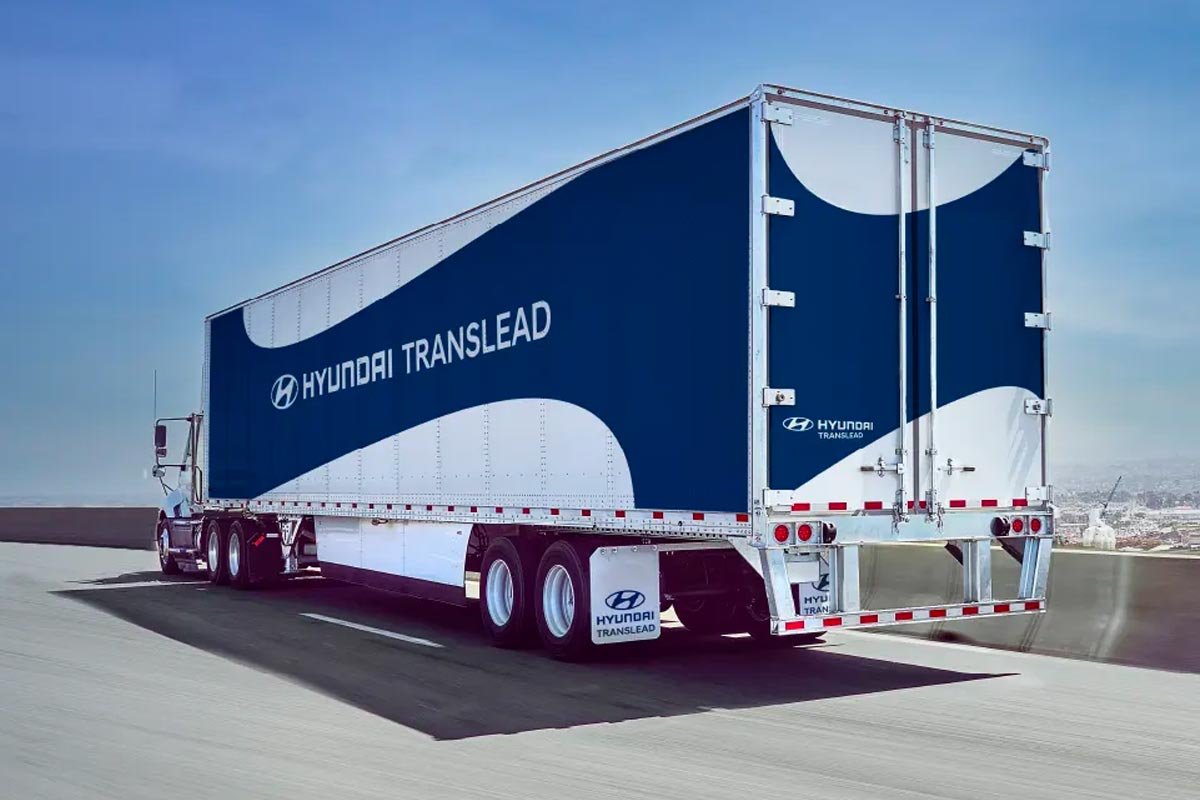
Hyundai Translead, a commercial trailer manufacturer, has raised its planned investment in two Will County, Ill., facilities to $600 million, from the more than $450 million announced in March.
The company reiterated the revised commitment on Thursday, along with an increase in its employment target from 2,500 to 3,750 full-time jobs. The additional $150 million will allow a third production shift and 1,250 more jobs than initially planned.
Hyundai Translead said the growth was because customers were more interested in its Illinois business. The additional capacity is to meet demand as the transportation industry recovers.
The company manufactures commercial transportation equipment including dry van and refrigerated trailers, truck bodies and flatbeds. It did not say what product lines would be manufactured at the Illinois facilities.
The increased operations also could spur demand for inbound industrial supplies and components and support additional freight movements once production volumes increase.
Carrier invests $600M+ in Fort Worth manufacturing, engineering center
Carrier Global Corp. said it will invest more than $600 million over three years to establish an advanced manufacturing and engineering center in Fort Worth, Texas.
The project announced Thursday will be located on more than 1 million square feet at AllianceTexas, a major industrial and logistics development in the Dallas-Fort Worth region, and is expected to bring 1,500 jobs.
Carrier expects the facility will be operational in 2027. Production activities will be concentrated on advanced thermal management systems, including air-cooled and water-cooled commercial chillers.
They serve data centers, hospitals, schools and industrial facilities where reliable and energy efficient cooling is a must.
The investment reflects strong demand for energy efficient cooling technologies and a record backlog in Carrier’s commercial heating, ventilation and air conditioning business, the company said.
In addition to manufacturing, the center will also include engineering labs and workforce development programs. The project’s location in AllianceTexas also puts it within a mature industrial and logistics environment, although the company has not released specific projections for freight volume.
Carrier is traded on the New York Stock Exchange under the symbol CARR.
Blue Bird plans a $300 million school bus factory in Georgia
Blue Bird Corp. is preparing to invest approximately $300 million in a new school bus manufacturing facility in Fort Valley, Georgia. The project is expected to generate 375 jobs over the next three years.
The company will convert a former diesel-powered motorhome manufacturing site at 401 Wanderlodge Way into a school bus production complex covering 1 million square feet.
Construction is scheduled to begin in the first quarter of 2027.
The facility will manufacture Type C school buses powered by diesel, gasoline, propane and electricity, allowing production to cover several propulsion technologies.
Founded in 1927, Blue Bird currently employs more than 1,900 people in Georgia. The new facility will expand its manufacturing footprint and could create additional transportation requirements for vehicle components, production supplies and completed buses.
The investment adds to the broader expansion of US transportation equipment manufacturing, with potential implications for industrial freight flows and vehicle distribution networks.
Niagara Bottling Breaks Ground on $141M Kentucky Plant
Niagara Bottling has officially opened a new beverage manufacturing facility in Elsmere, Ky., after a $141 million investment.
The opening was held Thursday at the 436,000-square-foot location in Kenton County’s C5 Airport East Logistics Center. The facility will combine beverage production and distribution operations, and is expected to create 60 full-time jobs.
First announced in September 2024, the project has grown to more than $11 million over its initial investment estimate.
Construction on the 52-acre property being developed by CORE5 Industrial Partners began in early 2025.
Niagara Bottling produces bottled water and other beverages for retailers and consumer brands. Its portfolio consists of sparkling water, flavored water, sports drinks and ready-to-drink beverages.
The integration of manufacturing and distribution at the Kentucky site is particularly relevant to logistics operations, as it facilitates the movement of products from the production line into distribution networks that serve retailers and other customers.
Primo Brands boosts production of Mountain Valley water in Arkansas
Primo Brands opened a new manufacturing facility in Hot Springs, Ark., on Oct. 14 to boost production of its premium spring water Mountain Valley brand.
The 200,000-square-foot plant is the company’s first new manufacturing facility since the merger that created Primo Brands in 2024.
The company called the project a multi-million-dollar investment but would not say exactly how much. It did not say how many jobs the facility would create.
The plant includes a high-speed retail production line, two large-format production lines and specialized warehouse and logistics space. It will be producing Mountain Valley spring water and sparkling water.
Primo Brands said the expansion was in response to increasing demand for premium bottled water. The additional production and storage capacity is intended to help move Mountain Valley products to retailers, restaurants and consumers across the nation.
Manufacturing lines are connected with the dedicated logistics infrastructure of the facility, aimed at the increased production and distribution of products through nationwide channels.
Primo Brands is listed on the New York Stock Exchange as PRMB.
Overview of the five US manufacturing investments
| Company | Facility location | Investment | Products |
|---|---|---|---|
| Hyundai Translead | Will County, Illinois | $600 million | Commercial transportation equipment; specific product lines not disclosed |
| Carrier Global Corp. | Fort Worth, Texas | More than $600 million | Commercial chillers and thermal management systems |
| Blue Bird Corp. | Fort Valley, Georgia | $300 million | Diesel, gasoline, propane and electric school buses |
| Niagara Bottling | Elsmere, Kentucky | $141 million | Bottled water and other beverages |
| Primo Brands | Hot Springs, Arkansas | Multimillion-dollar investment; exact amount undisclosed | Mountain Valley spring and sparkling water |
Source: Company announcements and state economic development releases, October 2026. The disclosed investments total more than $1.641 billion, excluding Primo Brands’ undisclosed investment. Hyundai Translead’s $600 million represents its revised total commitment, not an additional $600 million.
Manufacturing growth could alter freight demand
The five projects show investment in U.S. manufacturing is expanding to include transportation equipment, industrial cooling technology and consumer beverages.
The implications for freight carriers and logistics providers go beyond building factories. Most new or expanded production facilities require incoming deliveries of raw materials, components, packaging and industrial supplies. When operations are up and running, they can also generate recurring outbound shipments to distributors, retailers and end customers.
Logistics impact will vary by industry. Transportation of industrial components and finished vehicles is critical to trailer and school bus manufacturing. Beverage facilities need packaging supplies, production inputs and warehousing and distribution capacity.
The investment also reflects demand for cooling systems used in data centers and other energy-intensive facilities, opening up another industrial segment to the expansion.
While the companies haven’t released combined freight-volume forecasts, the projects could create new avenues for trucking companies, equipment suppliers, warehouse operators and distribution networks as domestic production capacity expands.