



Federal Reserve Holds Rates Steady Amid Persistent Inflation Pressures
The U.S. Federal Reserve has opted to keep its benchmark interest rate unchanged, even as inflation continues to accelerate beyond its 2% target. The decision, announced Wednesday following a two-day meeting of the Federal Open Market Committee (FOMC), reflects policymakers’ preference to gather further economic data before deciding whether another rate increase is warranted.
The committee voted 10-2 to maintain the federal funds rate within its current range of 3.75% to 4%. Governor Lisa Cook and Cleveland Fed President Beth Hammack dissented, advocating a further increase of 0.25 percentage point. The Fed’s previous quarter-point tightening took place in September.
In its official statement, the FOMC reaffirmed its commitment to price stability, stressing that inflation remains elevated. Additional economic information, it said, will help determine the appropriate monetary policy stance to bring inflation back to its 2% objective in a timely manner. The committee’s next scheduled meeting will take place on December 8-9.
Energy Prices and Inflation Keep Policymakers Guessing
The decision comes in the midst of renewed inflationary pressure. Data released ahead of the meeting showed consumer and wholesale prices accelerated in September, pushing the period of inflation above the central bank’s target to more than five years.
The Consumer Price Index, or CPI, accelerated to 3.7% year over year in September, beating expectations. The Producer Price Index, or PPI, meanwhile rose 6.3% from the prior 12 months, also beating expectations.
Higher energy costs have contributed to rising prices in many areas of the economy. The U.S.-Israel war against Iran has put pressure on energy markets and there’s no sign that prices will drop anytime soon. Brent crude has surged 80% over the past year to $115.75 a barrel.
Persistent increases of this magnitude have eroded real incomes and undermined the purchasing power of households, adding further strain to family budgets. Inflation is emerging as a top voter concern with the November 3 midterm elections approaching.
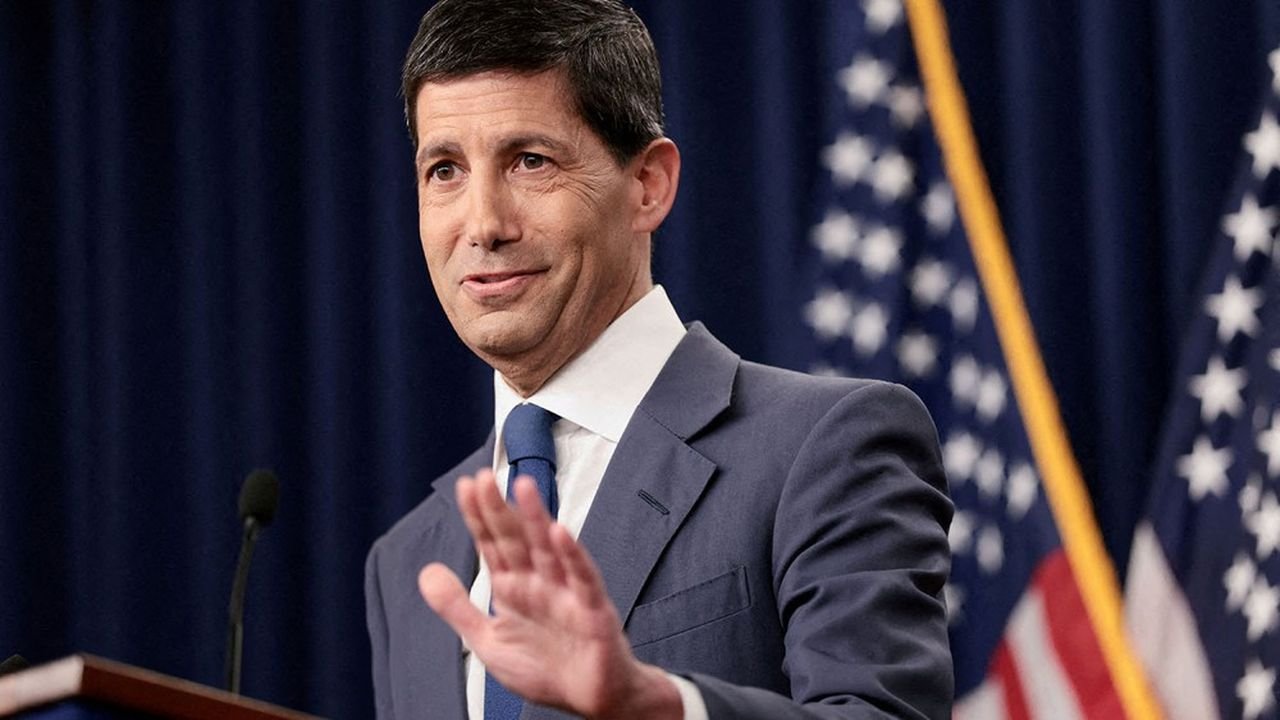
After the meeting Fed Chairman Kevin Warsh said policymakers had a serious and candid debate on the outlook for inflation.
“Just came out of a helluva family fight — serious, sober discussion,” Warsh said.
He also emphasized the central bank’s responsibility to bring price increases under control.
“It is our job to bring inflation down,” he said.
Financial Markets Are Already Tightening Conditions
Financial markets have begun to build in tighter monetary conditions, even when the Fed did not raise rates Wednesday. Bond traders have pushed the yield on the benchmark 10-year U.S. Treasury note above 5% since late September, reflecting changing expectations for interest rates and borrowing costs.
“Financial and credit conditions are beginning to change after the Fed’s September policy move,” Warsh said. He noted that market participants were becoming more discerning in their capital allocations.
The Fed chair acknowledged that overall financial conditions have tightened, but cautioned that they shouldn’t be described as fully restrictive.
“Market participants are becoming a little more discriminating in terms of their capital allocations and overall financial conditions are tighter, though I’m not prepared and able to call them tight,” he said.
But investors are increasingly pricing in the chances of another rate hike. Interest rate futures traders increased the chance of a 0.25-percentage-point increase at the December meeting to 85% on Wednesday from 75% on Tuesday, according to CME Group’s FedWatch tool.
Strong Economic Activity Demands a Cautious Stance
The FOMC overall gave a positive assessment of the U.S. economy despite the ongoing inflation. The committee said in a statement that economic activity was expanding at a solid pace, supported by strong domestic spending, solid capital investment and solid productivity growth.
The Fed also said employment gains have been in line with the growth of the labor force and the unemployment rate has been little changed. Geopolitical developments continue to add to uncertainty but policymakers said the domestic economy remains relatively robust.
Warsh also described labor market conditions as healthy. The jobless rate was 4.2 percent in September and has stayed in a tight range between 4.1 percent and 4.3 percent since March.
Employment conditions remain favorable under the Fed’s dual mandate of price stability and maximum employment, the Fed chair said. “Unemployment is lower than a year ago and payroll growth is well ahead of last year’s pace,” he noted.
With a strong labor market and economy overall, policymakers have the space to digest incoming data before deciding what to do next. At the same time, persistent above-target inflation is a key constraint on any sustained easing of monetary policy.
December Meeting Could Bring Another Rate Increase
Since taking the helm of the Federal Reserve in May, Warsh has repeatedly emphasized his determination to bring inflation down, arguing that inflation is a policy outcome that can be addressed through appropriate decisions.
The latest vote, however, highlights divisions within the FOMC over how quickly monetary policy should respond to rising prices. Hammack and other policymakers have expressed concern in recent months that inflation could accelerate further and become more difficult to contain if borrowing costs are not increased promptly.
For now, the committee has chosen to wait for additional evidence before committing to another tightening move. The December 8-9 meeting will provide the next scheduled opportunity to reassess inflation, economic growth and employment conditions.
Warsh also rejected suggestions that political considerations influenced Wednesday’s decision, despite the proximity of the November 3 midterm elections.
“Politics had no role in the decision,” he said, adding that he had spent two days with his colleagues without hearing any discussion of politics.
With inflation still elevated, energy prices under pressure and financial markets increasingly anticipating another rate increase, the Fed’s next decision will depend on whether incoming data strengthen the case for further monetary tightening or support maintaining the current rate range for longer.