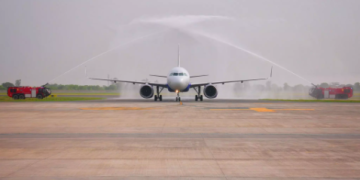




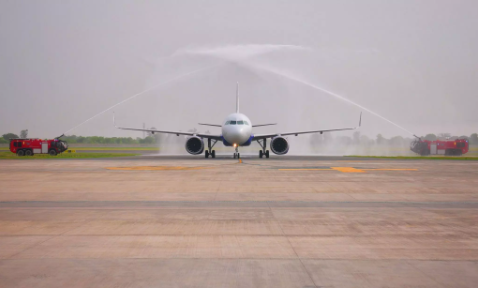
Noida International Airport (NIA) is preparing to reach another important milestone in its development with the arrival of its first cargo flight on June 17. Operated by Afcom Cargo, the inaugural service will connect Chennai and Noida using a Boeing 737-800 freighter, marking the official start of cargo operations only two days after the airport launched passenger services on June 15.The first flight will transport domestic e-commerce shipments between Chennai and Noida before returning to Chennai, serving as a practical demonstration of the airport’s cargo handling capabilities and broader logistics ecosystem. The operation is designed to showcase how Noida Airport’s infrastructure, digital systems and multimodal transport connections can support future trade growth across North India.Strategically located to serve western Uttar Pradesh and the National Capital Region (NCR), Noida International Airport has been developed to complement existing aviation infrastructure and ease pressure on Delhi’s airports. At the same time, it is expected to create new cargo capacity and strengthen regional connectivity for businesses operating across Northern India.Afcom Cargo, headquartered in Chennai, currently operates a fleet of three Boeing 737-800 freighters serving destinations across Asia and the Middle East. Beyond its regular operations, the airline recently demonstrated its operational flexibility during disruptions affecting Middle Eastern aviation markets in the fourth quarter of fiscal year 2025-26. During that period, Afcom operated 415 charter flights, including routes such as Chennai–Colombo and Colombo–Malé, helping maintain cargo flows during a challenging market environment.The inaugural Noida flight will act as a live test of the airport’s entire cargo chain. From aircraft turnaround and cargo handling to warehousing, digital processing and onward transportation through the Yamuna Expressway, every component of the logistics ecosystem will be evaluated under real operating conditions.The launch follows a partnership that has steadily evolved over the past year. The partnership began with a Memorandum of Understanding between AISATS and Afcom in September 2025 which subsequently evolved into a tripartite agreement with the addition of Noida International Airport in May 2026. The partnership aims to establish and scale up cargo operations from Jewar and make the airport a major logistics hub for the region. A major aspect of this ambition is AISATS’ role in the development of the airport’s cargo infrastructure during Phase 1 of the project. Built across nearly 80 acres, the facility has been designed to meet both current and future demand. AISATS, a joint venture equally owned by Air India and SATS, has created cargo facilities capable of handling 200,000 metric tonnes annually during the initial phase, with expansion potential reaching 1.5 million tonnes in the years ahead.At the heart of the development is the airport’s Multimodal Cargo Hub, which combines an Integrated Cargo Terminal with a dedicated Warehousing and Logistics Zone. The facility has been designed to facilitate efficient transhipment operations by providing seamless road-to-air and air-to-road connectivity.The infrastructure includes 22,000 square metres of warehousing space, two dedicated freighter parking bays operating around the clock, and integrated terminals for domestic, international and express cargo. Advanced digital solutions such as COSYS+, e-Acceptance systems and cargo community platforms have been implemented to enhance visibility, speed and operational efficiency throughout the supply chain.Additional infrastructure includes 19 truck docks, nine X-ray screening machines and 12 Unit Load Device (ULD) roller decks, creating a highly automated and scalable environment capable of supporting future cargo growth.With cargo operations now beginning alongside passenger services, Noida International Airport is entering a new phase of development that could significantly reshape logistics flows across Northern India and strengthen the region’s role in domestic and international trade.
- Latest
- Trending
ADVERTISEMENT