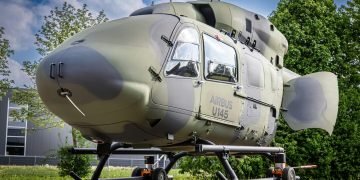




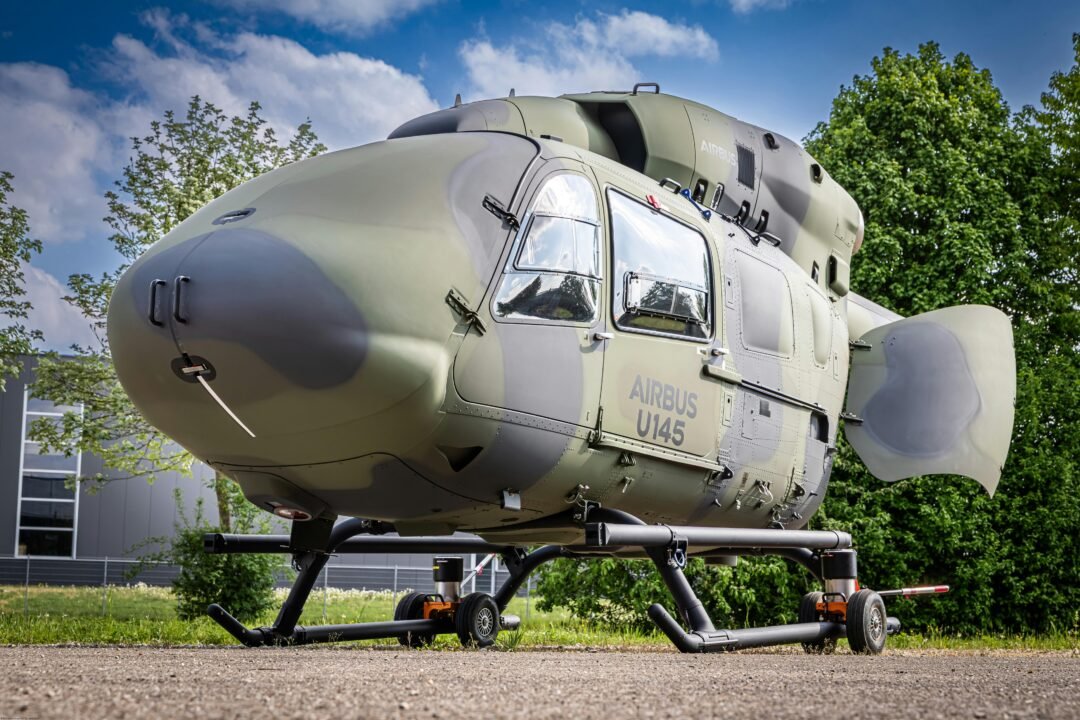
At ILA Berlin, Airbus has demonstrated a major leap in its uncrewed aviation capabilities, presenting one of the broadest ranges of autonomous aerial systems in Europe. The newly presented U145 autonomous helicopter is the highlight, a development that clearly represents a new stage towards incorporating autonomous flight in future cargo and logistics operations.
U145: autonomous helicopter for future cargo operations
Based on the proven H145 platform, the U145 is being developed as a fully uncrewed helicopter designed for both civil and military applications. One of its key expected roles is high-volume cargo transport, positioning it as a potential future solution for supply missions in complex or high-demand environments.
While Airbus’ broader showcase at the International Aerospace Exhibition (ILA) in Berlin emphasizes defence and combat systems, the inclusion of the U145 highlights how autonomous aviation is increasingly being explored for logistics, emergency response and transport use cases.
Airbus CEO of Defence and Space, Mike Schoellhorn, underlined the company’s approach to customer needs across all uncrewed domains: “Whatever uncrewed or ‘drone’ capability our customers need to strengthen sovereign air power, we deliver.”
A broader autonomous ecosystem beyond cargo
The U145 forms part of a much larger uncrewed ecosystem developed by Airbus, which includes tactical drones, combat drones, interceptors and large-scale strategic platforms.
Among the key systems presented:
U760 Ravenstorm: A next-generation collaborative combat drone with a 10-metre wingspan and 13-metre length, designed for multi-domain missions including air-to-surface strikes, air-to-air defence and electronic warfare. It is expected to enter availability in the early 2030s.
U740 Valkyrie: Developed with Kratos and powered by Airbus’ MARS mission system, this platform is planned for operational use with the German Air Force by 2029, including integration with manned aircraft such as the Eurofighter.
U680 Bird of Prey: A drone interceptor designed to neutralise multiple mid-sized threats per mission, significantly reducing the cost of air defence. It completed its first demonstration flight in March 2026 and will continue testing throughout the year.
Tactical drones and scalable mission systems
Airbus is also expanding its lighter tactical drone portfolio, designed for surveillance and reconnaissance missions:
U010 Aliaca: A 25 kg system capable of carrying 3 kg payloads for up to six hours
U030 Flexrotor: A 25 kg drone with up to 8 kg payload capacity and endurance of 12–14 hours
U050 Capa-X: A 120 kg adaptable platform carrying up to 20 kg of equipment for flexible mission deployment
These systems are designed to support intelligence gathering, operational flexibility and mission adaptability across multiple environments.
MARS: the intelligence backbone
All major platforms, including Ravenstorm, Valkyrie and Bird of Prey, are powered by Airbus’ MARS mission system. This sovereign AI-supported architecture enables scalable autonomy across platforms and is expected to be integrated into future systems such as the Eurodrone.
Eurodrone: strategic long-endurance capability
At the strategic level, Airbus continues development of the U950 Eurodrone, Europe’s first large long-endurance remotely piloted aircraft system. Designed for ISTAR missions, early warning and anti-submarine warfare, the programme is progressing toward a first flight scheduled for 2029.
Toward autonomous logistics and defence convergence
With the introduction of the U145 autonomous helicopter, Airbus is signalling a convergence between defence innovation and future logistics applications. While many of the systems showcased remain focused on military use, the underlying technologies point toward a future where autonomous aerial platforms could play a significant role in cargo transport and supply chain operations.
- Latest
- Trending
ADVERTISEMENT