




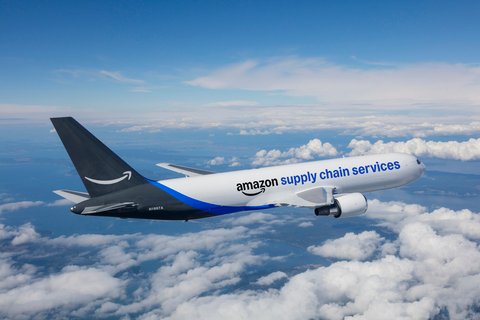
Amazon is continuing its push into third-party logistics with the launch of Amazon Supply Chain Services, an offering designed to allow any business to move, store and deliver goods, from raw materials to finished products.
The move is being seen as a strong signal to the market, particularly for established players such as UPS and FedEx. Following the announcement, shares in both companies fell by around 10%.
Amazon said several major companies are already using the service, including Procter & Gamble, 3M, Lands’ End and American Eagle Outfitters.
The services cover freight, distribution, fulfilment and parcel delivery. The freight offering relies on Amazon’s multimodal network, including ocean, air, road and rail transport, supported by 80,000 trailers, 24,000 intermodal containers and 100 aircraft.
The offer also includes options for time-sensitive shipments, simplified booking, customs clearance and end-to-end visibility.
For distribution and fulfilment, companies can import inventory, store stock in bulk, position inventory closer to demand and fulfil customer orders across multiple sales channels.
The parcel service covers orders from different sales channels, with delivery speeds of two to five days, seven-day-a-week operations, and pickups from warehouses or third-party providers.
Amazon said these solutions were initially developed for its own retail operations and independent sellers. The company added that hundreds of thousands of sellers have already used its logistics network over the past three years to move and deliver hundreds of millions of parcels.
Peter Larsen, vice president of Amazon Supply Chain Services, said the group can now offer other businesses the same level of efficiency, reliability and speed built for Amazon customers.
Cirrus Global Advisors, however, moderated expectations around the immediate impact. According to Derek Lossing, Amazon will only become truly disruptive to the broader logistics ecosystem if companies move significant volumes into its network. Questions around competitive neutrality, data access and capacity priority during peak periods will remain decisive.