



As the US-Israel-Iran conflict enters its eighth week, close to 1,000 ships and around 20,000 seafarers remain trapped in the Arabian Gulf, facing an increasingly dangerous and uncertain situation.
Although the United States extended its ceasefire with Iran earlier this week, the broader crisis appears far from resolved. The US Navy continues to blockade Iranian ports, while Iran has maintained its closure of the Strait of Hormuz, arguing that the US blockade and vessel interdictions violate the ceasefire terms. Meanwhile, prospects for a wider peace agreement remain unclear.
Against that backdrop, some shipowners have tried to seize even the narrowest opportunity to get their vessels out of the Gulf.
On 17 April, when Iran and the US briefly declared the strait fully open, a number of ships attempted outbound transit despite warnings from organisations including BIMCO and the International Maritime Organization. Those warnings quickly proved justified. Less than 24 hours later, the Indian-registered tanker Sanmar Herald and bulker Jag Arnav came under fire from Islamic Revolutionary Guard Corps craft, while the container ship CMA CGM Everglades was struck by a projectile during its attempted passage.
Iran then reclosed the strait to all traffic, citing the continued US naval blockade of its ports in the Arabian Sea. Tensions escalated further when the US Navy fired on and seized the Iranian-flagged container ship Touska after it tried to break through the blockade.
Even so, some traffic continued. According to the Joint Maritime Information Center, AIS tracking data showed six transits on 19 April and 16 on 20 April.
In a security environment this unstable, however, AIS is not always reliable. Some owners may choose to switch off transponders when moving through high-risk zones.
On 21 April, Linerlytica reported that six MSC vessels appeared to have exited the strait into the Gulf of Oman with AIS turned off. But two of them — MSC Francesca and Epaminondas — did not reappear on tracking systems.
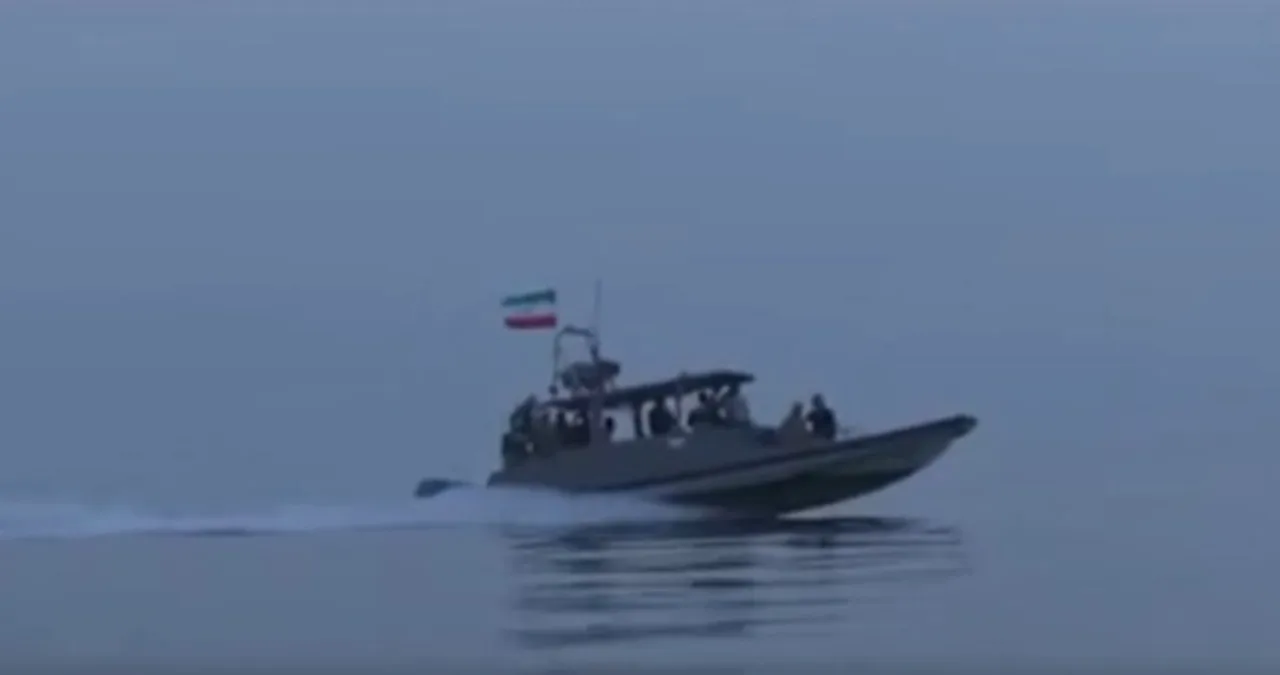
The following day, it became clear why. The two ships had delayed their attempt until 22 April and came under attack from IRGC Navy fast boats along with a third container vessel, Euphoria. Iranian forces seized MSC Francesca and Epaminondas and guided them into Iranian waters near the port of Sirik. Euphoria managed to escape into UAE waters.
These incidents, together with earlier attacks on Indian-registered vessels and CMA CGM Everglades, demonstrate just how dangerous passage through the Strait of Hormuz has become.
Whatever claims may be made about the destruction of naval assets, stopping merchant vessels does not require major warships. As previous attacks by the Houthis in the Red Sea and Somali pirates have shown, small and fast craft are more than capable of halting and boarding large commercial ships. In this case, the IRGC has been using swarm tactics, firing on merchant vessels to force them to stop before boarding them — as seen in video footage released following the seizure of MSC Francesca.
For the roughly 20,000 seafarers stranded in the Gulf, conditions are far from easy. Some ships are facing shortages of supplies and rationing, crews fear the conflict could flare again and put anchored vessels directly in danger, and many have no clear idea when they will be able to return home.
Yet for now, remaining where they are appears to be the lesser risk compared with attempting to run the Hormuz gauntlet and facing the possibility of attack, capture and indefinite detention.
IMO Secretary-General Arsenio Dominguez summed up the danger bluntly after the recent vessel seizures, saying the situation remains extremely volatile and questioning why companies would take such risks with seafarers’ lives.