



Support is gathering once again behind the SHIPS for America Act as lawmakers in Washington reintroduce the bill in the House of Representatives and a newly formed coalition moves to build political backing around it.
The legislation returned alongside a congressional hearing held on 22 April focused on revitalising US shipbuilding and the broader maritime industrial base. The hearing brought together two House subcommittees — Seapower and Projection Forces, and Transportation and Infrastructure’s Coast Guard and Maritime Transportation panel — reflecting the close connection between commercial shipbuilding and national defence.
At the centre of the SHIPS Act is a plan to support the development of a fleet of up to 250 US-built and US-crewed vessels operating in international trade during peacetime, while remaining available for contingency use when needed.
During the hearing, Stephen Carmel of the US Maritime Administration highlighted the importance of maritime capability, particularly in cargo transportation. He said MARAD had prepared legislative proposals that will soon be introduced to help implement the Maritime Act Plan, a wide-ranging framework presented in February to revive US commercial maritime strength.
Carmel told lawmakers that more proposals were on the way and pointed to the value of multi-ship contracts built around what he described as commercial common sense. He cited the National Security Multi-Mission Vessel programme at Philly Shipyard, managed by Tote Services, as an example of a successful approach.
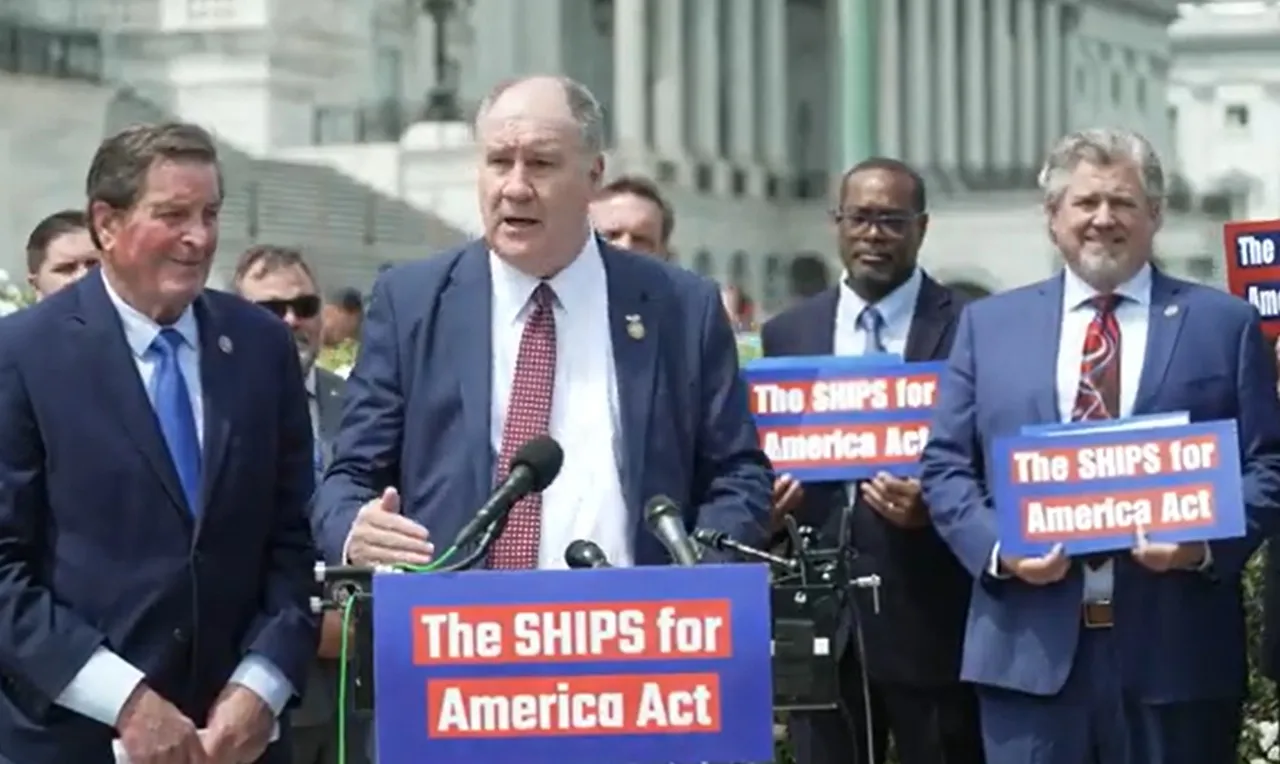
Before the hearing, supporters of the bill also staged a press event on the steps of the US Capitol led by Representatives John Garamendi and Trent Kelly, two of the SHIPS Act’s principal backers.
Kelly described the legislation as one of the most transformational opportunities available to the US, arguing that rebuilding America’s maritime strength will require serious investment in both commercial and military shipbuilding. He said the country cannot restore its position without putting far more steel in the water.
Garamendi struck a similarly enthusiastic tone, saying the country has no choice but to move forward. He stressed that shipbuilding is about far more than vessels alone, pointing as well to jobs, steel, electrical work and the broader industrial ecosystem tied to domestic production.
Momentum has also been reinforced by the creation of the USA Shipbuilding Coalition, announced one day earlier. The group describes itself as a labour-management partnership focused on driving concrete action to increase investment, strengthen domestic supply chains, and ensure the US can build, repair, maintain and crew the ships needed to restore maritime capability.
Led by a Washington lobbying organisation whose clients include the United Steelworkers, the coalition has made clear that advancing the SHIPS Act is one of its central aims.
Its launch appears carefully timed, part of a broader effort to keep the bill alive in a political environment where, as Kelly put it, many good ideas risk getting buried before they gain traction.