



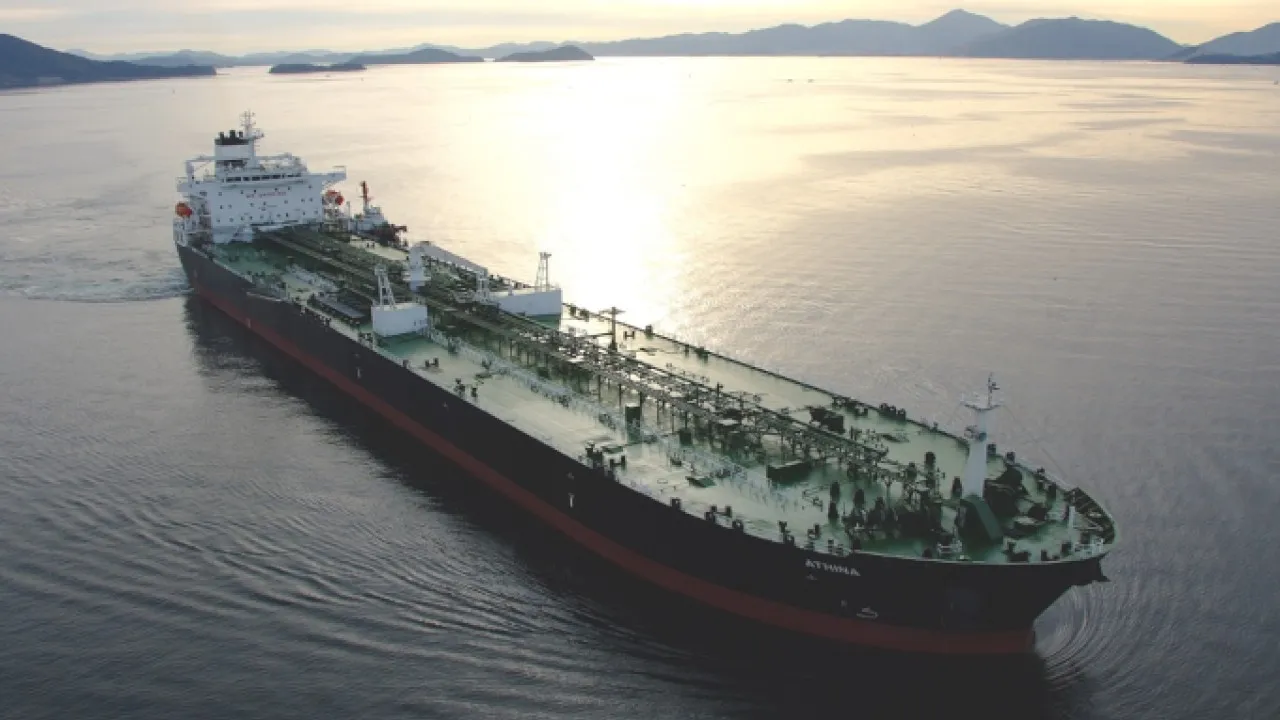
Even experienced shipbrokers were reportedly surprised when ADNOC L&S paid $115 million for the 15-year-old VLCC Olympic Leopard just a few weeks ago.
The transaction is particularly striking because the price is estimated to be only around 10% below the current cost of building a new VLCC in China. Market sources believe the deal may have set a new record for a vessel of this age.
The strength of the secondhand market has been visible across virtually every energy-related shipping segment. However, large crude tankers have emerged as some of the strongest performers as oil producers and energy companies adapt to increasingly fragmented global energy supply chains involving crude oil, refined products and gas.
ADNOC has been steadily expanding its secondhand fleet, acquiring VLCCs and large gas carriers as part of a $1.3 billion acquisition strategy. The objective is to secure greater control over its own export capacity, including shipments originating from its West-East pipeline terminal in Fujairah.
The Fujairah facility, which provides an alternative route that bypasses the Strait of Hormuz, is currently undergoing a fast-track expansion programme. The project is expected to double its capacity from 2027.
Secondhand tankers commanding premiums over newbuildings
The current market has created an unusual situation in which immediately available secondhand tankers can command significant premiums over newly built vessels.
A VLCC resale vessel, for example, may sell for between $135 million and $170 million, despite a newbuilding price of around $130 million, according to shipbrokers. A brand-new resale vessel can command even higher prices.
A similar trend is visible in the Suezmax market. Five-year-old Suezmax tankers are approaching $110 million, compared with newbuilding prices of approximately $90 million.
The premium reflects the value of immediate availability at a time when global conflicts and disruptions are forcing companies to rethink their energy transportation strategies.
Conflicts drive tonne-mile demand and newbuilding orders
The various conflicts affecting key maritime routes have significantly increased tonne-mile demand, in some cases by multiples. This development has also become a major catalyst for large-scale newbuilding contracts for VLCC and Suezmax tonnage.
Among the most notable recent orders is a series of 20 VLCCs placed by George Procopiou’s Dynacom at Hengli Heavy Industry in China. The company has also ordered nine Suezmax tankers of 158,000 dwt.
Athens-based United Overseas Group, controlled by Peter Georgiopoulos and Leo Vrondissis, has meanwhile ordered six VLCCs at Wison New Energies, with options for an additional four vessels.
Scorpio Tankers, headed by Emanuele Lauro, has also entered the race for additional tanker capacity after taking a stake in a joint venture that recently ordered eight VLCCs.
And the list of new investments continues to grow.
According to Maritime Strategies International, approximately 60 VLCCs are scheduled for delivery in 2027. That figure is expected to rise sharply to nearly 130 vessels in 2028, followed by more than 120 additional VLCCs in 2029.
A strong present and a favourable long-term outlook
Tanker owners are clearly focused on the immediate impact of global conflicts and the disruption they have caused across major maritime trade lanes.
Yet the longer-term outlook for the sector also remains favourable.
Recent analysis from New York shipbroker Poten & Partners highlighted the declining influence of OPEC over global tanker trades. According to the firm, recent hostilities in the Middle East have created a powerful incentive for the expansion of oil production outside the OPEC bloc.
Crude oil production in Canada, the United States and South America particularly in Guyana, Brazil and Argentina has increased dramatically over the past decade.
The United States remains an important oil exporter, while Canada’s Trans Mountain trade is supporting new trans-Pacific business. In Guyana, new FPSOs continue to enter service, while offshore oil production is also expanding in Brazil.
Much of this additional production is destined for international export markets.
Poten & Partners notes that domestic markets in the United States and Canada are becoming increasingly saturated, while countries such as Guyana and Suriname have limited domestic demand. As a result, a significant share of incremental oil production is expected to move toward export markets.
Asia is likely to remain the principal destination for much of this additional crude, providing further support for the large tanker sector.
Looking further ahead, Poten believes the continued rise of oil production in the Americas could become a significant challenge for OPEC.
Regaining market share following the conflicts in the Middle East may prove increasingly difficult, particularly as Asian buyers seek to diversify their sources of supply away from the region and toward more stable producing areas in the Atlantic Basin.
For the tanker market, however, this changing geography of global oil production and trade could continue to provide strong support for long-haul shipping demand and help sustain the remarkable strength currently seen in the secondhand market.