



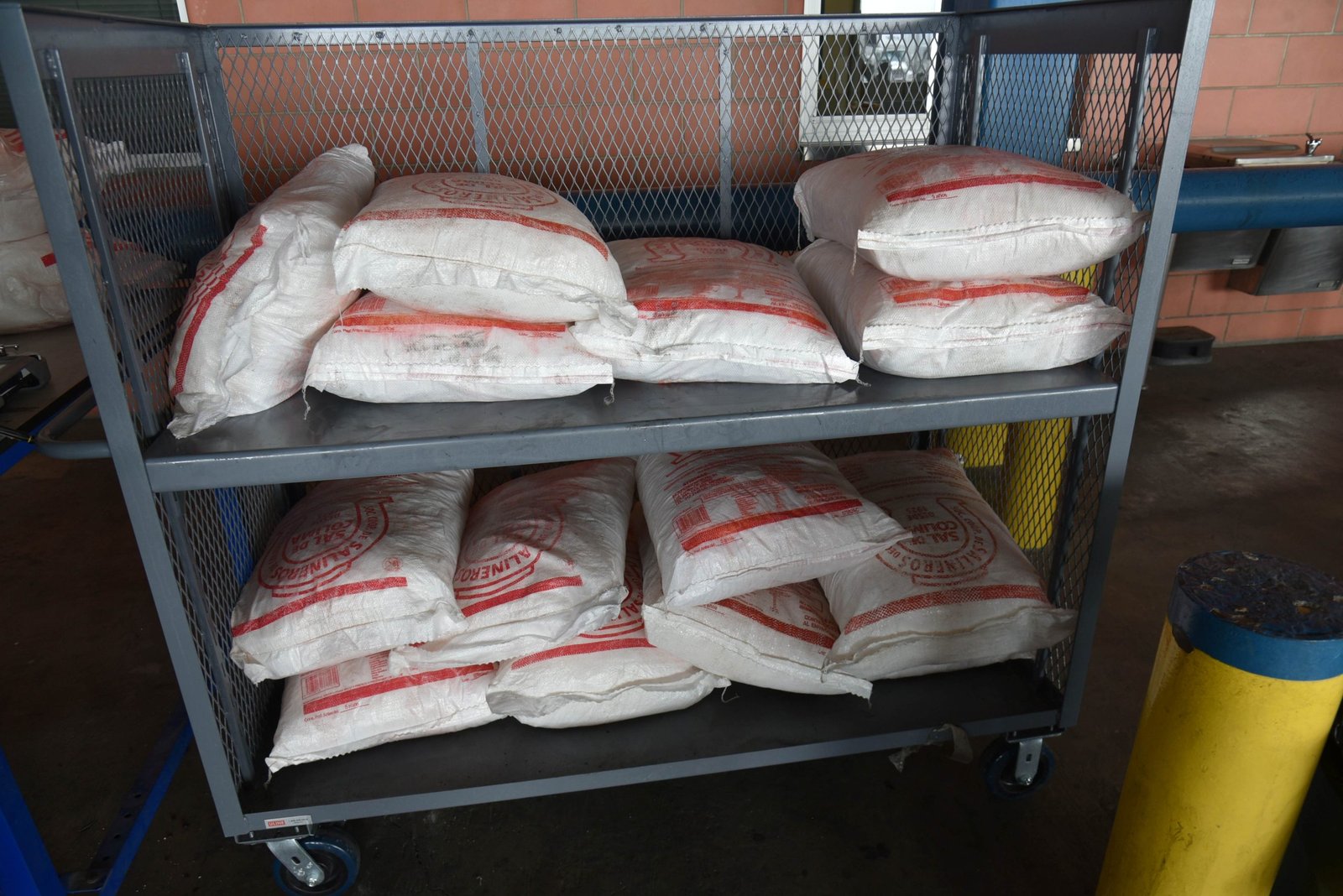
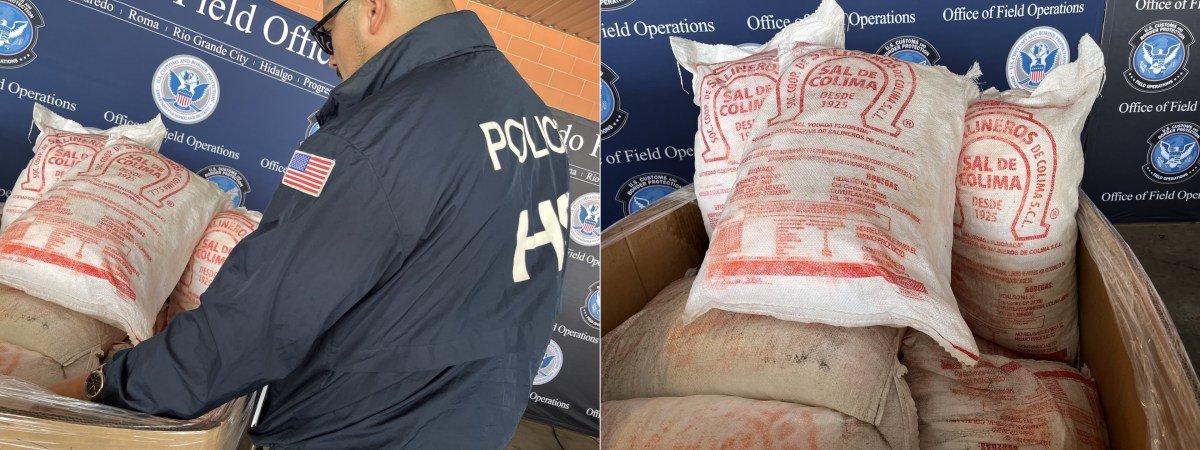
U.S. Customs and Border Protection (CBP) officers have intercepted a major shipment of suspected methamphetamine concealed inside a commercial load of salt at the World Trade Bridge in Laredo, Texas. The seizure, carried out on October 12, involved narcotics valued at approximately $30.4 million, according to the agency.
During the inspection, officers recovered 3,395.91 pounds of suspected methamphetamine, equivalent to approximately 1.54 metric tons, from a 2020 International LT625 tractor-trailer. Although the discovery triggered a federal investigation, authorities released both the driver and the vehicle while investigators continued working to establish the circumstances surrounding the shipment.
The seized drugs were found in 76 bags hidden inside a trailer whose declared cargo was salt. CBP subsequently referred the case to Homeland Security Investigations (HSI), which is pursuing leads to identify those responsible for transporting the narcotics into the United States.
Authorities have not publicly confirmed whether the truck driver or the trucking company was aware of the drugs concealed in the shipment.
A routine freight inspection leads to a major drug seizure
The discovery followed a secondary examination of the commercial vehicle as it crossed the U.S.-Mexico border. A CBP officer selected the truck for further inspection, and officers used nonintrusive imaging technology before uncovering the concealed narcotics.
The seizure highlights the challenges facing authorities as they inspect the large volumes of freight moving across the southern U.S. border. Laredo is the country’s busiest commercial land port, recording 2.95 million inbound truck crossings from Mexico in 2025, according to federal transportation data published by the Bureau of Transportation Statistics.
The latest case also follows another significant drug discovery in South Texas. In September, federal investigators found more than 2,000 pounds of methamphetamine concealed in a commercial shipment of cabbage, demonstrating how legitimate agricultural and other freight movements can be exploited to transport illegal substances.
Driver, truck released as federal probes continue
The decision to release the driver and tractor-trailer has prompted questions about how the shipment came about. FreightWaves contacted authorities to find out why the driver and equipment were released, and to find out more about the carrier’s identity, the country the carrier is registered to, the importer of record and the final destination of the shipment.
CBP and HSI would not disclose those details, citing the ongoing investigation.
In a statement to FreightWaves, HSI said the investigation remains open, and agents are following all available leads to determine who is responsible for bringing the drugs into the country.
“HSI continues to investigate the matter and pursue all available leads to identify those responsible for bringing this significant quantity of methamphetamine into the United States and prevent it from reaching communities across South Texas,” the agency said.
It is not known publicly who the carrier was, where the shipment originated and where it was headed or whether the driver or other parties were involved. FreightWaves said it would update its report as more information becomes available.
Why the seizure matters to the trucking industry
The Laredo interception is a perfect example of the vulnerability of commercial transport operators when illicit drugs are hidden in legitimate freight. Even when there is no evidence that the contents of a shipment were known, trucking companies, drivers, importers and other supply-chain participants can find themselves caught up in federal investigations.
The case also highlights for transportation professionals the critical need for shipment verification, cargo security and reliable documentation throughout the freight movement process.
What’s particularly interesting in this case is the fact that the driver was released, but that doesn’t prove whether or not the driver knew about the concealed narcotics. The investigation continues, and officials have not released more information about the shipment or named anyone who might be responsible.