



Container shipping rates remain close to their highest levels in nearly three years as strong demand, new carrier surcharges and renewed geopolitical tensions continue to put pressure on global supply chains.
According to Freightos, rates on the key Asia–U.S. trade lane increased by another 8% over the past week, showing little sign of easing despite the recent decline in crude oil prices.
The market is currently being driven by the peak shipping season, although analysts believe the traditional seasonal rush may have started earlier than usual this year.
“Peak-season demand is still supporting higher rates, but because the busy season began earlier, volumes may already be approaching their highest point,” said Judah Levine, Head of Research at Freightos.
Carriers also introduced general rate increases (GRIs) and peak-season surcharges on July 1, adding roughly $1,000 per 40-foot container (FEU) across major east-west trade routes. Since late May, total increases on trans-Pacific services have now exceeded $3,000 per FEU.
As a result, average freight rates to the U.S. West Coast are hovering around $6,700 per FEU, while services to the East Coast are approaching $9,000 per FEU.
The latest price increases come as tensions between the United States and Iran have flared once again, creating fresh uncertainty for global shipping.
Following renewed Iranian strikes and U.S. retaliation, concerns are growing that instability in the Middle East could once again threaten commercial shipping routes. The situation is particularly sensitive for carriers operating through the Red Sea and the Suez Canal, two of the world’s most important maritime trade corridors.
The renewed conflict also creates challenges for Maersk, which recently announced plans to gradually return some of its Gemini service, operated with Hapag-Lloyd, to the Suez Canal route. Earlier this year, similar plans had to be suspended as regional security deteriorated.
At the same time, Yemen’s Houthi rebels have once again warned of attacks targeting vessels linked to Israel, adding another layer of uncertainty for shipping companies operating in the region.
While crude oil prices have largely returned to pre-conflict levels, fuel costs for the transport sector remain elevated.
According to Freightos, bunker fuel and jet fuel prices are still 20% to 30% higher than before the conflict because refined fuel products typically take longer than crude oil to stabilize.
Pressure on freight rates is not limited to the trans-Pacific market.
Despite record levels of vessel capacity, rates between Asia and Northern Europe have climbed to around $5,400 per FEU, while services to the Mediterranean have moved above $7,000 per FEU.
Shipping lines are planning another round of increases in mid-July worth approximately $2,000 per FEU, although analysts believe it remains uncertain whether the market will support the full amount if demand begins to soften.
Even if volumes start to ease, several operational challenges could keep freight rates elevated.
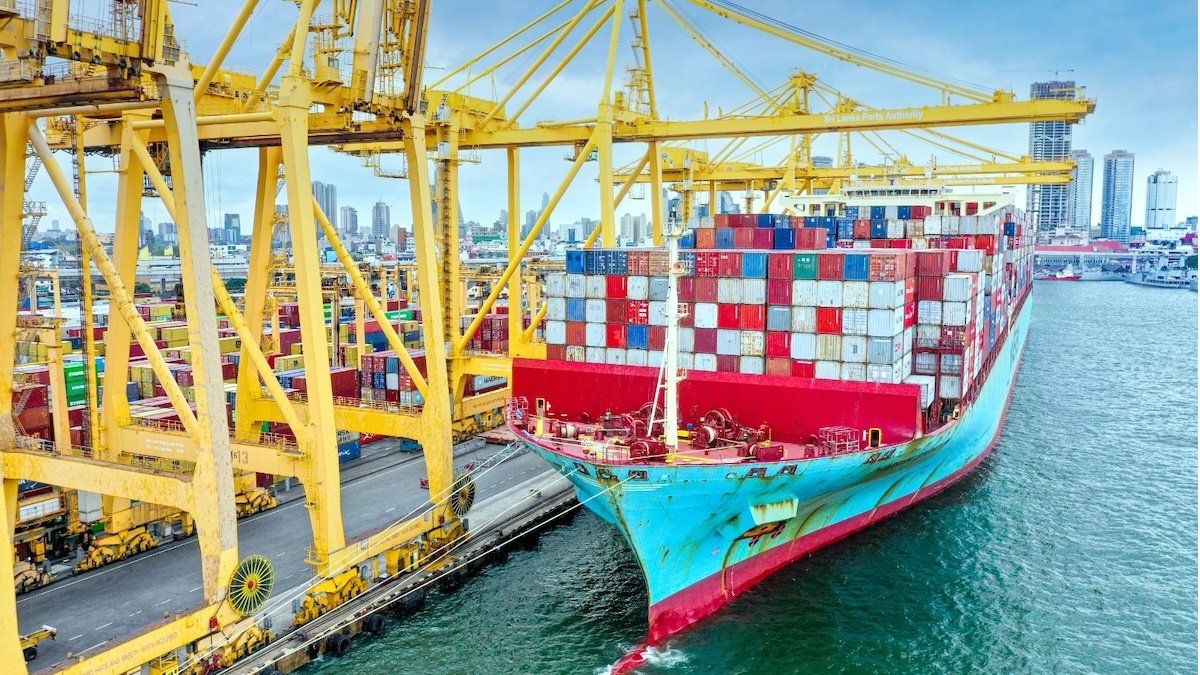
Large backlogs of rolled cargo—shipments delayed because vessels were already full—continue to disrupt schedules, while congestion remains significant at several of Asia’s busiest ports, including Shanghai, Ningbo, Yantian, Singapore, Busan and Colombo.
With peak-season demand, port congestion and geopolitical uncertainty all converging at the same time, the container shipping market is likely to remain volatile in the weeks ahead, even as questions grow over how long current freight rates can be sustained.