



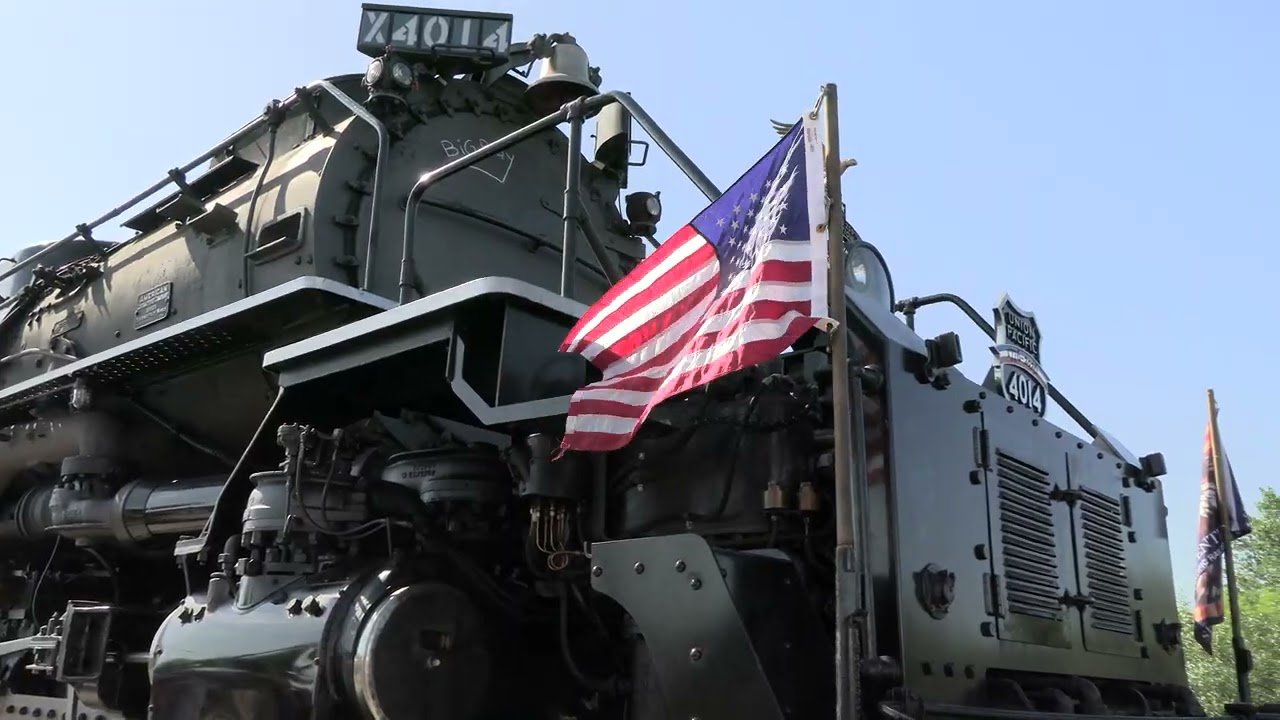
Union Pacific’s legendary Big Boy No. 4014 drew massive crowds as it arrived on the U.S. East Coast during the Fourth of July celebrations, marking the completion of a rare coast-to-coast tour that began in Sacramento, California, in April.
While thousands of rail enthusiasts gathered to witness the historic steam locomotive and Union Pacific’s executive train during the USA 250 festivities, the event also became the backdrop for discussions about another milestone that could have an even greater impact on the country’s transportation network.
During the celebrations in Philadelphia, FreightWaves spoke with Union Pacific CEO Jim Vena and Norfolk Southern CEO Mark George, who shared their thoughts on the companies’ proposed merger and the regulatory process that lies ahead.
The two executives discussed their expectations for the review that will be conducted by the Surface Transportation Board (STB), the federal agency responsible for evaluating major rail mergers. They also reflected on the challenges of navigating such a high-profile transaction and the importance of ensuring the process moves forward efficiently.
Vena noted that, looking back, there was one step he believes the STB could have taken much earlier in the review process, although details of that point will emerge as discussions continue.
The proposed merger between Union Pacific and Norfolk Southern is widely viewed as one of the most significant developments in the U.S. rail industry in decades. If approved, it has the potential to reshape freight transportation across the country by creating the nation’s first true transcontinental railroad connecting the East and West coasts under a single network.
As regulators begin evaluating the transaction, industry observers will be watching closely to see how the merger could affect competition, freight capacity, supply chains and the broader U.S. economy.
Meanwhile, Big Boy’s successful arrival on the East Coast provided a symbolic reminder of American railroading’s past, even as the industry looks toward what could become one of its most transformative chapters.