



As the region attracts more and more innovative, fast-growing companies seeking international transportation, distribution and supply chain solutions, DHL Group plans to invest over $447 million in logistics infrastructure, freight services and technology across Central and Eastern Europe by 2030.
The investment is in line with DHL’s strategy to focus on markets and industries with strong growth potential. The group targets to increase its revenues by 50% between 2023 and 2030. Earlier this year, the company announced plans to invest over $570 million to expand its capacity and capabilities in the Middle East.
DHL has named Poland, the Czech Republic, Hungary and Romania as target markets in its latest growth strategy. The growing significance of these markets, the expansion of manufacturing and trade activities and their large consumer bases provide additional opportunities for logistics service providers.
The four countries are attracting more European manufacturers and distributors and international companies wanting to site operations closer to European customers. This is fueling the trend of nearshoring, which is the movement or spreading of production and supply chain activities to be closer to the end customers.
Why it matters: DHL, one of the world’s largest third-party logistics providers, is expanding its footprint in a region that is becoming more and more important for European manufacturing, cross-border distribution and international trade.
Expanding logistics infrastructure in four markets
DHL’s investment program affects several of the group’s business divisions, with money going to additional warehousing capacity, ground freight transportation, supply chain control towers and international express services.
One of the planned projects is a new DHL Express air freight terminal in Katowice, Poland, expected to bolster the company’s international express business in the region.
“Central and Eastern Europe is becoming ever more important in global trade flows and supply chain networks, with Poland becoming one of the most dynamic manufacturing and logistics centers in Europe,” said John Pearson, CEO of DHL Express.
He said there was an increasing demand for resilient and flexible supply chains, and that companies were looking for logistics partners who could connect production facilities, inventory and markets across national borders.
The investments are to support companies operating in these fast developing economies and are intended to expand the infrastructure and international connectivity needed.
Poland strengthens its position in European and global trade
Poland has developed into a major regional economic force over the past three decades. According to the DHL Globalization Tracker published this month, the country’s merchandise trade expanded at more than twice the pace of global trade over the past decade. Its growth rate was also 2.7 times that of trade within the European Union during the same period.
The report, prepared in collaboration with New York University’s Stern School of Business, forecasts that Polish goods trade will grow 28% faster than global trade and 91% faster than EU trade over the next three years.
The analysis also points to a broader diversification of Poland’s international commercial relationships. Germany remains a major trading partner, and most Polish trade continues to take place within the European Union. However, commercial exchanges with both the United States and China have increased significantly over the past decade.
These developments are strengthening Poland’s appeal as a base for production, distribution and regional fulfilment, particularly for businesses seeking closer access to European consumers.
Hendrik Venter, CEO of DHL Supply Chain, said Central and Eastern Europe was consolidating its position as a strategic location for manufacturing and distribution, particularly as companies reassessed where to locate their supply chain operations.
DHL Supply Chain has already expanded its presence in Romania through an extended partnership with Polish retailer Pepco, marking the contract logistics division’s entry into the Romanian market.
DHL’s present presence in Poland enables further growth
Poland has to be a key component of DHL Group’s regional expansion plans. The company has already invested heavily in the country, including the opening of an international logistics center in Poznań in 2024.
The facility is one of the largest logistics projects that DHL has undertaken in Poland, representing an investment of $201 million. It serves several business divisions such as DHL eCommerce, DHL Freight and Post & Parcel Germany, while linking the Polish market to European and global supply chains.
DHL eCommerce also has a large network of fulfillment centers, parcel lockers and collection points across Poland to support e-commerce marketplaces and the growing demand for online deliveries.
Its staff also reflect the country’s importance to the group. Poland is one of the 10 biggest DHL Group markets globally in terms of the number of employees, with over 10,000 people working there.
Germany to build additional warehouse and sorting capacity
The company is based in Germany and continues to invest there, as well as expanding in Central and Eastern Europe.
DHL Express has just opened a new site in Cologne-Marsdorf and significantly increased its operational capacity in the region.
The facility is 215,000 square feet, with three pick-up and delivery bays and 78 loading and unloading bays. It has another 35 warehouse bays and a modern sorting system that can handle 6,000 domestic and international parcels.
There are also 78 charging points for electric vehicles at the site, aiding the electrification of DHL’s delivery operations.
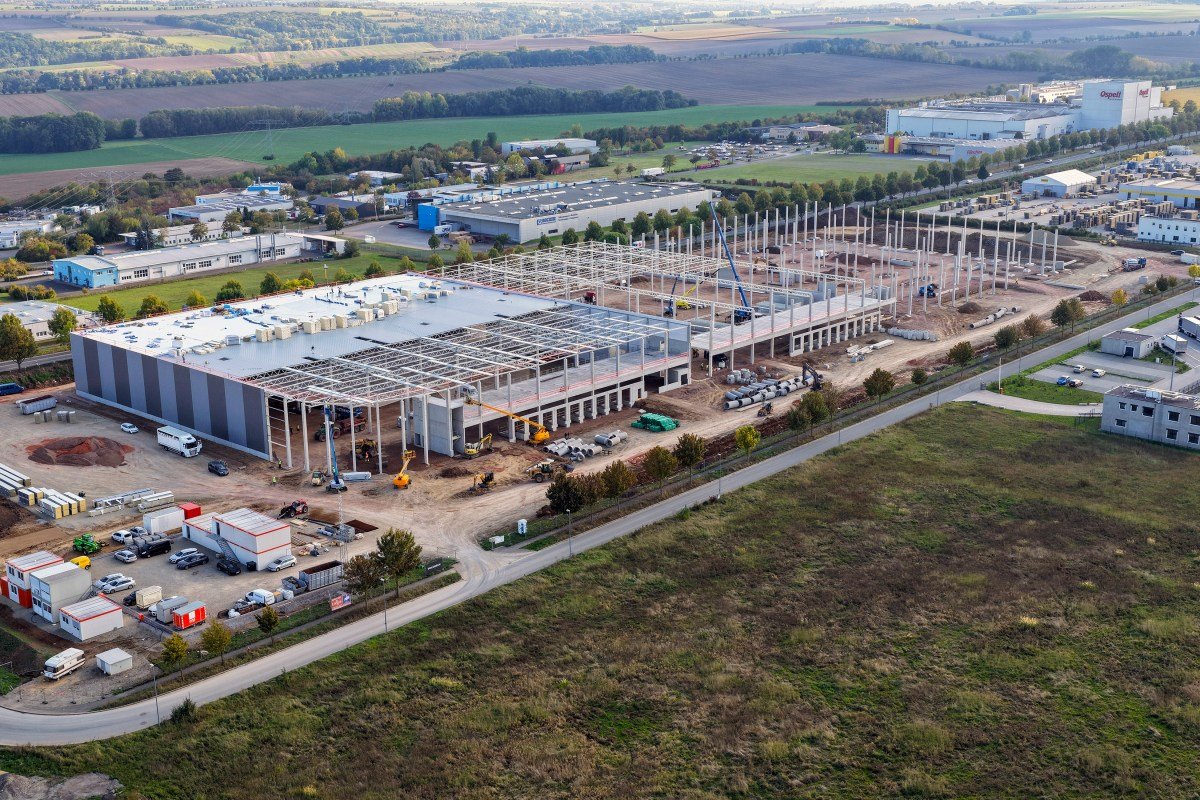
The group is also on course to complete a new logistics center measuring 315,000 square feet on the outskirts of Jena, Germany, by March.
Jena is a high-tech industrial city with an established presence in advanced manufacturing. It is located in Thuringia, in eastern Germany. The new warehouse will offer logistics services to expanding companies in high-tech manufacturing, semiconductors, healthcare and battery technology, DHL said.
DHL Supply Chain’s biggest customer in the area is Zeiss, a manufacturer of eyeglass lenses, camera and cinematic lenses, and binoculars.
DHL’s investments in Poland and neighboring markets and additional capacity in Germany together demonstrate the group’s ambition to strengthen its European logistics network as manufacturing patterns change and companies seek more resilient, geographically diversified supply chains.