




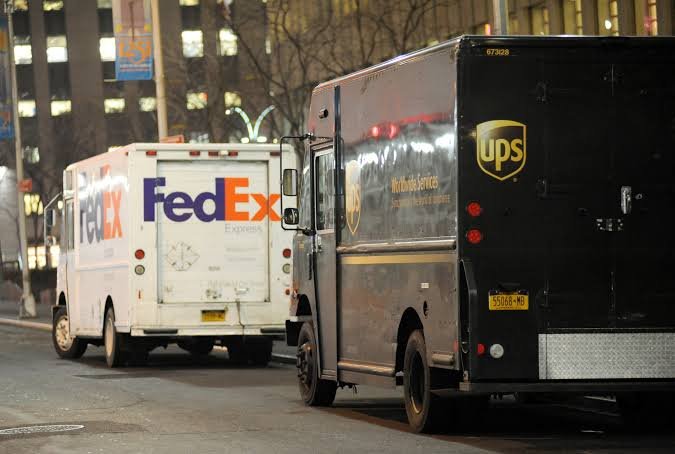
Ground shipping to see record high costs for shippers
Ground shipping costs for FedEx and UPS parcel shippers got a bit of relief in the third quarter of 2026 as fuel surcharges eased and delivery discounts made a return to help take the edge off. But that may not be so for long. The latest TD Cowen/AFS Freight Index released Wednesday said holiday-related surcharges and capacity pressures will likely push costs to record levels in the fourth quarter.
The index indicates that the average rate per ground parcel per piece in Q3 2026 was 38.8% higher than the base level of January 2018. Shipping costs were 2% lower than last quarter but higher than last year.
Fuel costs also fell briefly. Diesel prices, a major input in surcharge calculations, fell during the first two months of the quarter, resulting in an effective fuel surcharge that was down 4.7% from the previous quarter.
It’s not expected to keep going down the road.” TD Cowen/AFS’s estimate of the ground parcel rate per package in Q4 2026 is 43.3% above the January 2018 baseline, the highest reading on record. Higher holiday surcharges, higher fuel charges and limited shipping capacity are expected to drive the increase.
Long-term increase in parcel delivery costs
Historical data on ground shipping cost increases since 2018. The rate index was below its baseline for four quarters through January 2018 before turning positive in 2019. Q2 2022 saw rapid acceleration in costs of 27.4% above baseline, and Q4 2021 saw rapid acceleration in costs of 18.4% above baseline.
The index eased for parts of 2023 and 2024 before re-accelerating in 2025. The share increased to 31.8% in 1Q2025 and continued to increase through the first half of 2026 to 35.5% in 4Q2025, to 41.6% in 2Q. This drops further to 38.8% in Q3 before peaking again in the last quarter at 43.3%.
Diesel prices fall, but fuel surcharges remain a problem
Fuel costs are a big unknown for parcel shippers in 2026. The war with Iran and disruptions in the Strait of Hormuz caused energy prices to spike, adding to the transportation budget pressure.
While diesel prices have fallen a bit in recent weeks, that doesn’t necessarily mean shipping surcharges will be cut by the equivalent. FedEx and UPS have altered their fuel surcharge calculations to enable them to maintain higher surcharges even when diesel prices are falling.
The presentation accompanying the index said 72% of the rise in ground fuel surcharges from Q1 2021 to September 2026 was because of carrier adjustments. It was the higher diesel prices that made the difference.
This breakdown shows the share of the shipping cost that is due to pricing policies. Even if diesel prices fall back to where they were in the first quarter of 2021, shippers will still be paying fuel surcharges at about three times the rate they were paying at the beginning of the year.
“Don’t look at a drop in diesel prices as a significant decrease in fuel-related shipping costs,” said Mingshu Bates, chief analytics officer at AFS Logistics and president of its parcel division.
“I think one thing we all know for sure is even if we get relief on diesel fuel price, we’re not going to get material relief on fuel surcharge,” Bates told Supply Chain Dive.
FedEx, UPS Offer Discounts Again To Keep Big Clients
Shippers also saw a rebound in ground parcel discounting and temporary relief on fuel costs. Discounting at FedEx and UPS returned to Q1 2026 levels after a short lull in the second quarter, the index presentation said.
But the benefits were not evenly spread throughout the market. In general, both carriers’ discounts went to large volume shippers, not to small and medium-sized businesses.
Bates said larger customers typically have the shipping volume and operational resources to work with other carriers. That gives them more leverage on rates, and makes it more likely that they will reroute packages to rival providers.
Giving attractive discounts to these customers is an important way of protecting existing business for FedEx and UPS. Both companies have been trying to win over more small and medium-sized businesses as clients in recent years, but enterprise customers are still crucial for a consistent daily flow of packages through their networks.
“So a big account falling off can impact not only revenue, but network operations and shipment volumes,” Bates said.
Q3 express shipping cost increase
It wasn’t just ground parcel shipping that experienced upward cost pressure. Average price for an express package increased 17.1% in Q3 2026 from January 2018, compared to 15.8% in Q2.
The increase was due to higher billed weights on shipments and more use of premium services. Some industries, such as healthcare, have more costly and speedier means of delivery to satisfy their operational demands.
FedEx and UPS identify healthcare as a significant growth market. For example, if a lab needs samples before 8 a.m. when they open, they would need a premium delivery service, not a cheaper service that shows up later.
The index shows express shipping costs will be 20.3% above baseline January 2018 levels in Q4, a record. That’s a big jump as both carriers offered more aggressive discounts on express shipments in 3Q.
What you see is a pricing structure where the gap between the advertized rate and what customers actually pay is widening “The gap between headline rates and what shippers pay is just widening with the double whammy of lower base discounts and higher surcharges,” the presentation said.
Shippers strike again at holiday peak
And companies are still feeling the pinch on their transportation budgets, looking forward to the 2026 holiday season. The general cost of parcel delivery continues to increase, but lower diesel prices and improved discounts on ground shipping are providing some relief for now.
Ground and express shipping costs are expected to be at record levels in Q4, driven by higher seasonal surcharges, ongoing fuel surcharges, capacity constraints and higher demand for premium express services.
This difference between the base rates they have contracted for and the total cost of shipping will have to be factored into shippers’ holiday shipping plans. “Discounts are an important tool to help manage costs but the latest TD Cowen/AFS results suggest they may not be enough to offset the incremental fees expected during the peak shipping season.