



ELD Data Needs a Clear, Enforceable Standard
Highway argues that ELD providers must meet transparent data-integrity requirements while brokers and legitimate carriers need fair, evidence-based protections
Categories: Logistic, Land, Tech
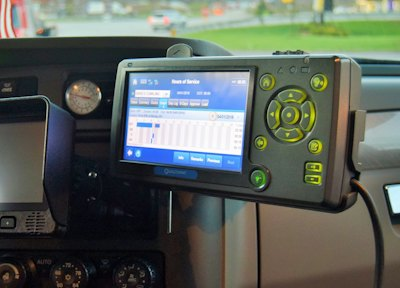
An electronic logging device (ELD) connection has become an increasingly important component of modern freight operations. Brokers rely on these connections to determine whether a carrier is active, verify which vehicles are associated with that carrier and establish whether the appropriate truck is positioned for a particular load. For carriers, the same connectivity can provide evidence of their operating capacity and help them gain access to freight.
Because of that role, the reliability and integrity of the company providing the connection matter. An integration should not be interpreted as an automatic endorsement of everything an ELD provider does. Instead, it needs to operate under defined standards, be reassessed when circumstances change and face consequences when those standards are no longer met.
Highway says it has worked with hundreds of ELD providers over almost five years. The company does not charge providers to integrate with its platform. While registration with the Federal Motor Carrier Safety Administration (FMCSA) is an important starting point, Highway says registration alone does not constitute automatic approval for integration.
The company maintains its own requirements governing integrations and the data supplied through them. It can refuse an integration or terminate an existing relationship when those requirements are not satisfied. Highway says it has already ended integrations with providers that continued to appear on the FMCSA’s registered list.
The company also reviews providers that return to the market under a different name following the revocation of a previous provider. According to Highway, changing a name does not eliminate the history associated with the underlying provider.
Separating provider risk from carrier responsibility
Highway stresses that the presence of a problematic ELD provider does not automatically mean that every carrier using that provider has acted improperly.
One ELD provider can serve hundreds or even thousands of legitimate trucking businesses. When questions arise about a provider, brokers therefore need to be able to identify the potential risk and respond appropriately, while legitimate carriers need a reasonable opportunity to continue operating.
Highway says it can apply appropriate controls to carriers or individual transactions that raise concerns while the relevant facts are established. When an integration ultimately has to be terminated, the company says it seeks to provide legitimate carriers with notice and a practical opportunity to move to another provider.
The objective, it says, should be enforcement that protects the freight network without automatically treating every customer of a particular provider as responsible for that provider’s conduct.
There is also a distinction to be made between the different types of information generated through ELD systems.
Highway does not receive drivers’ hours-of-service records through these integrations, nor does it conduct the safety reviews that fall under FMCSA’s responsibilities. Reports involving manipulated logs therefore warrant serious examination, but ELD telemetry remains only one element of a wider evaluation of carrier identity and cargo risk.
It should not, in Highway’s view, be expected to determine a decision on its own.
ELD manipulation and cargo theft
Based on nearly five years of Highway’s operations, the company says it has not identified a successful cargo theft in which manipulated ELD information was relied upon to make a carrier hiring or load-tendering decision.
That statement reflects the losses Highway has investigated. It is not intended to suggest that manipulating ELD data is harmless or that providers should escape consequences when such manipulation occurs.
Rather, Highway argues that the industry needs to distinguish between two separate questions: enforcement of hours-of-service requirements and whether falsified ELD information directly contributed to a failed cargo decision.
Both issues require reliable evidence and an appropriate response.
A new accountability layer
Highway is also introducing an additional accountability mechanism through its Certified Partner Network program.
Under the initiative, participating providers across several categories will take additional commitments relating to the integrity and dependable delivery of the data they supply. Brokers and carriers will be able to identify providers that have made those commitments and use that information when making their own business decisions.
Participation in the certification program is voluntary. Maintaining an integration with Highway, however, remains subject to the company’s existing requirements.
The certification is therefore intended to establish a higher and more visible standard rather than replace the baseline requirements already enforced by Highway.
The initiative is also not limited to ELD providers. Highway began the program with insurance agents and intends to extend the same accountability expectations to other parties whose data contributes to freight transactions and carrier-hiring decisions.
Putting financial responsibility behind the standard
For Highway, the real measure of any standard comes when something goes wrong.
The company backs qualifying loads with a Performance Guarantee of up to $100,000. Across approximately one million guaranteed loads, Highway says it has made a payout only once.
The company attributes its ability to make that commitment to a broader and enforceable assessment of both the carrier and the load, rather than relying on one individual signal supplied by one provider.
The argument is that the freight industry needs an ELD ecosystem where provider commitments are transparent, data can be relied upon and failures have tangible consequences.
Brokers should be able to establish the standards governing the freight they move. At the same time, legitimate carriers should have a fair route forward when their ELD provider fails to meet those standards.
Highway says it intends to continue enforcing its requirements while standing behind qualifying loads that meet them.
Accountability from inside the arena
Highway acknowledges that questions surrounding its approach will continue, and argues that they should.
However, the company says some of the most vocal demands for immediate action come from commentators and competitors who do not bear responsibility for the consequences of the decisions they advocate.
Those parties are free to raise questions, Highway says, but they are not the stakeholders to whom the company is ultimately accountable.
Its responsibility, according to Highway, is to the brokers and carriers that rely on its decisions, decisions that can directly affect freight operations and people’s livelihoods.
The company invokes Theodore Roosevelt’s famous image of “the man in the arena” to describe that responsibility.
In freight, the arena is represented by a load at risk, a legitimate carrier trying to remain in business and a customer that needs someone willing to make a decision and accept responsibility for its consequences.
Calling for broad action from the sidelines may be straightforward. Establishing the facts, applying a standard consistently and remaining accountable for what follows is considerably more difficult.
That, Highway says, is the work it has chosen.

The company maintains that it has yet to see another carrier-identity platform combine an enforceable standard with a performance guarantee across a comparable volume of freight while being prepared to “bear the brunt of the day.”
Highway says it welcomes competitors and other industry participants willing to meet that threshold.
Until then, the company says it will continue operating “in the arena”: reviewing the evidence, adjusting its course when circumstances require it and putting its own balance sheet behind qualifying loads.
For Highway, that is the standard its customers should expect.
Michael Caney is Chief Commercial Officer of Highway, a carrier identity and fraud-prevention platform. Highway’s products, including its Certified Partner Network and Performance Guarantee, are discussed in this article. The views expressed are the author’s own and do not necessarily reflect those of FreightWaves.