



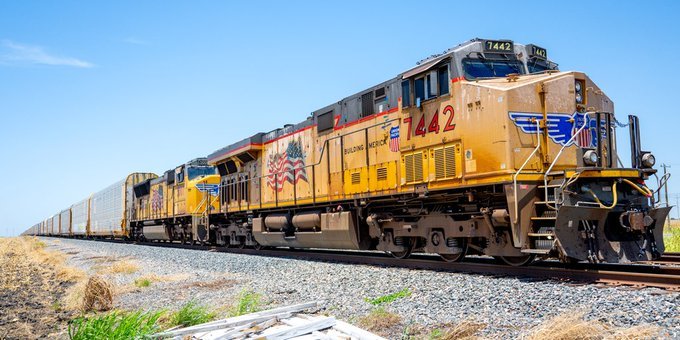
Union Pacific CEO Jim Vena said he remains almost completely confident that regulators will approve the railroad’s proposed $85 billion acquisition of Norfolk Southern, arguing that the combination would make freight transportation faster and strengthen rail’s ability to compete with trucking.
Speaking to Fox Business News on Oct. 6, Vena defended the proposed transaction amid opposition from several labor unions, agricultural organizations and competing railroads.
Asked how confident he was that the deal would receive regulatory clearance, Vena acknowledged that some uncertainty always remains.
“You always have to have a little bit of doubt, but I’m 99.99%,” he said.
The proposed transaction still requires approval from the Surface Transportation Board (STB).
Vena acknowledged that the STB review process is lengthy but said he believes regulators will ultimately reach what he described as the right decision for the country.
“We know that the process through the STB, even though it’s … crazy long, they’ll get to the right decision,” Vena said. “And the right decision is, you have to do what’s better for the country and more opportunity to move ahead and not look backwards.”
A faster coast-to-coast rail network
According to Vena, integrating the Union Pacific and Norfolk Southern networks could cut between 24 and 48 hours from certain freight journeys between the western and eastern United States.
The time savings would come primarily from eliminating interchange delays that occur when shipments move between separate railroad networks.
Union Pacific and Norfolk Southern argue that a combined operation would also improve their ability to challenge trucking through greater efficiency and lower prices.
The merged railroad would operate approximately 50,000 miles of track, creating one of the largest rail networks in the United States.
Critics, however, argue that the scale of the proposed combination could give the two companies near-monopoly power over large portions of the U.S. rail freight market.
Vena rejected that argument, suggesting that the resistance from competing railroads reflects concerns about the stronger service offering that a combined Union Pacific-Norfolk Southern network could deliver.
“In the business world, if they thought we were doing something illogical and it made no sense, they would just stay quiet … and let us fail, but we’re not failing,” he said.
“That’s what they’re worried about. We’re gonna have a better product, lower price, more capability to move and win in the marketplace.”
Coalition warns of risks to shippers and supply chains
Opposition to the transaction has also come from shippers and other industries.
In an August letter to the Trump administration, the Stop the Rail Merger Coalition said the proposed combination could put nearly half of U.S. rail traffic under the control of a single company.
The coalition warned that the merger could negatively affect farmers, manufacturers, energy producers and railroad workers, while potentially increasing costs for consumers and creating additional risks for supply chains.
President Donald Trump had initially voiced support for the transaction.
The proposed acquisition remains under review by the Surface Transportation Board, with a final decision expected in 2027.