



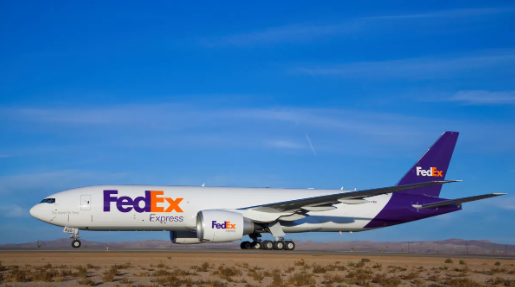
FedEx has signed a Strategic Memorandum of Understanding with China Southern Air Logistics to explore closer cooperation across its global air cargo network, in a move designed to enhance route connectivity, operational efficiency and capacity sharing across key international trade lanes.
According to a June 2 press release from FedEx, the two carriers plan to jointly leverage network resources across five main areas: cargo space, routes, fleet utilisation, operations and digitalisation. The agreement also includes a broader ambition to improve supply chain efficiency and strengthen Guangzhou as an international air cargo hub.
China Southern Air Logistics Chairman Li Xiao said the collaboration is intended to support the development of a “smarter, more agile, and more resilient air logistics ecosystem”, while also improving cross-border logistics capabilities for China-based shippers.
Guangzhou positioned as a key global air cargo node
Industry observers see the partnership as a natural extension of FedEx’s existing infrastructure strategy in Asia. The company already operates a major hub at Guangzhou Baiyun International Airport (CAN), which handles both intra-Asia express traffic and international express freight flows to and from the region.
The facility has an hourly sorting capacity of 36,000 packages, according to FedEx filings, and plays a central role in the company’s Asia-Pacific operations.
Derek Lossing, founder of Cirrus Global Advisors, said the alignment with China Southern Air Logistics could significantly strengthen operational performance at the hub.
“FedEx’s Asia hub is in CAN, and partnering with an airline that has fleet, schedule reliability, and pilots already located there makes a lot of sense,” Lossing said.
He added that shipments originating in the United States and destined for Southeast Asia are likely to increasingly route through Guangzhou as integration between the two networks deepens.
“If you’re in the US and ship something to a Southeast Asian country, there is a good chance that [it] might connect in China Southern’s & FedEx’s hub in CAN,” he said.
Industry trend toward shared capacity models
The agreement reflects a broader industry trend among global integrators toward hybrid capacity strategies, where owned networks are complemented by strategic partnerships with commercial carriers.
Lossing noted that similar approaches have been used for years by competitors, including DHL Express, which has purchased large volumes of block space agreements on long-haul routes such as Los Angeles–Sydney to improve flexibility and reliability.
He suggested FedEx could adopt a similar model by combining capacity purchasing with deeper operational integration between hubs in China and its global network.
Network optimisation and shift strategy
The MOU is also an extension of FedEx’s ongoing network restructuring to better align capacity with demand and speed up delivery.
In 2023 the company rolled out its “Tricolor” network redesign, which divided operations into three layers, to maximize performance for varying levels of shipping priority. Under this model, lower-priority volumes are increasingly shifted to third-party providers, while FedEx’s own fleet is focused on time-sensitive cargo.
Further adjustments were made last year, when FedEx reduced air cargo capacity between Asia and the Americas, including third-party capacity, as part of a broader optimisation strategy outlined by President and CEO Raj Subramaniam.
Building a more flexible global cargo system
Taken together, the new partnership and previous restructuring efforts highlight FedEx’s continued shift toward a more flexible, network-driven operating model, blending owned assets with strategic alliances to manage global demand volatility.
The collaboration with China Southern Air Logistics is expected to play a key role in reinforcing Asia–global trade lanes, particularly as e-commerce and cross-border manufacturing flows continue to expand through major Chinese logistics hubs.
- Latest
- Trending
ADVERTISEMENT