



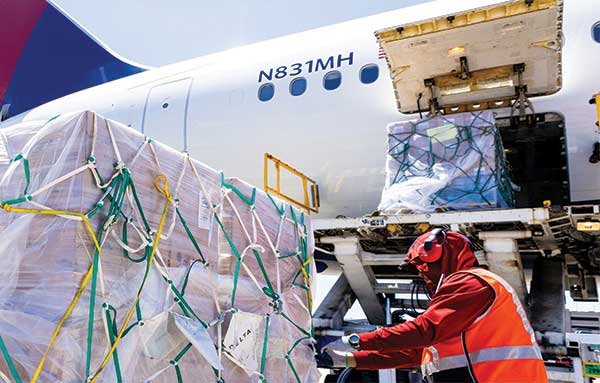
Frankfurt Airport recorded a year-on-year increase in cargo volumes in March despite the disruption caused by the US-Iran conflict, while also seeing the temporary return of preighter operations to move cargo out of the Middle East.
Europe’s largest cargo hub handled 185,500 tonnes in March, up 0.4% on the same month last year. That growth came even as the wider air cargo market declined by 3-4% because of the conflict, according to data providers WorldACD and Xeneta.
Airport operator Fraport said freight capacity on flights to the Middle East fell by 51.5%. Once operations were able to restart, around 50 additional preighter flights were deployed, mainly on Dubai routes. These are passenger aircraft used exclusively for cargo carriage.
The term preighter emerged during the Covid-19 pandemic, when airlines relied on idle passenger aircraft to meet surging cargo demand. The practice largely disappeared after the pandemic, and its return now appears to reflect a short-term response to the cargo backlog created by the conflict.
In its monthly market summary, Fraport said the airfreight sector has faced major capacity constraints since the start of March. Restrictions and closures affecting key Middle East airspace have led to substantial capacity reductions, prompting freight that would normally transit the region to shift onto direct routes between Europe, Asia and Africa.
Outside the conflict zone, freighter activity increased. Fraport said freighter flights rose by 12.4% as airlines switched to direct services into Europe. Flights from Far East routes were up by around 20%, while total cargo flights increased by 5.7%.
Cargo-only volumes rose by 6% to around 118,500 metric tons, despite a 35.6% drop on Middle East routes. Passenger aircraft bellyhold volumes, however, declined by 8.1% year on year to about 67,000 metric tonnes, largely because passenger tonnage to the Middle East collapsed by 60%.
Fraport said African routes were among the main beneficiaries of this shift, with bellyhold volumes increasing by 24.6%. On Far East routes, only Singapore, Thailand and the Maldives recorded noticeable growth.
Overall, Middle East cargo tonnage at Frankfurt fell by 44.3% year on year in March. By contrast, Far East volumes rose by 9.1%, Africa by 40%, North America by 4.3% and Latin America by 5.7%, while European traffic declined by 6.1%.
Across the first quarter of 2026, Frankfurt’s total cargo traffic increased by 2% to around 495,000 tonnes. Traffic with China was the main growth driver, rising by 11%.
Cargo volumes on freighter aircraft in the first quarter rose by 4.9% to about 308,500 metric tons, while bellyhold cargo volumes were down 2.5% to approximately 186,400 metric tons.