



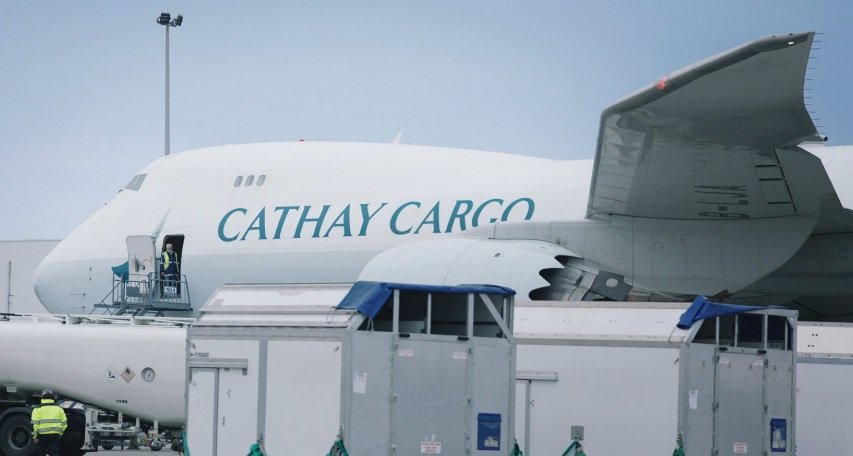
Freight forwarders in Hong Kong have welcomed Cathay Cargo’s decision to create a separate fuel surcharge category for medium-haul services, although they continue to voice strong concerns over the steep rise in overall cargo fuel surcharges.
When fighting broke out in the Middle East at the end of February, Cathay Cargo operated with only two cargo fuel surcharge categories: one for long-haul flights and one for short-haul routes. Under that structure, South Asian destinations including India, Bangladesh, Nepal and Sri Lanka were grouped into the long-haul category.
Following discussions involving the Hong Kong Association of Freight Forwarding and Logistics (HAFFA), Cathay Pacific and the Hong Kong Transport and Logistics Bureau, the airline has now introduced a medium-haul surcharge bracket that includes South Asia.
HAFFA described the move as partial relief for the industry at a time when operating conditions remain highly challenging. The association also thanked Cathay Pacific for taking the step and acknowledged the role of the Transport and Logistics Bureau in facilitating the discussions.
Despite that progress, HAFFA said it will continue monitoring developments closely and take whatever actions are necessary to protect the interests of its members amid the continuing uncertainty created by the Middle East situation.
Cathay Cargo’s surcharge levels have risen dramatically since February. At that time, the airline’s long-haul cargo fuel surcharge stood at HK$3.2 per kg and the short-haul surcharge at HK$1.1 per kg. Those figures have since climbed to HK$18.6 per kg for long-haul and HK$5.1 per kg for short-haul services. The newly introduced medium-haul surcharge has been set at HK$9.3 per kg.
At its recent annual general meeting, HAFFA renewed its criticism of rising surcharges, saying members have been under growing pressure ever since the Middle East conflict began. The association linked part of the problem to the recent liberalisation of Hong Kong’s cargo fuel surcharge market.
At the beginning of 2025, Hong Kong moved away from a government-regulated system and allowed individual airlines to set cargo fuel surcharges according to their own commercial situation.
HAFFA has called for proper mechanisms to be reinstated, arguing that the current environment risks distorting competition, encouraging profiteering and damaging the wider industry.
At the AGM, HAFFA chairman Gary Lau said freight forwarders were struggling under what he described as an unbearable burden caused by the sudden jump in surcharges. He warned that the impact is being felt not only in costs and cargo flows, but also in livelihoods, the wider economy and Hong Kong’s competitiveness as an international logistics hub.