



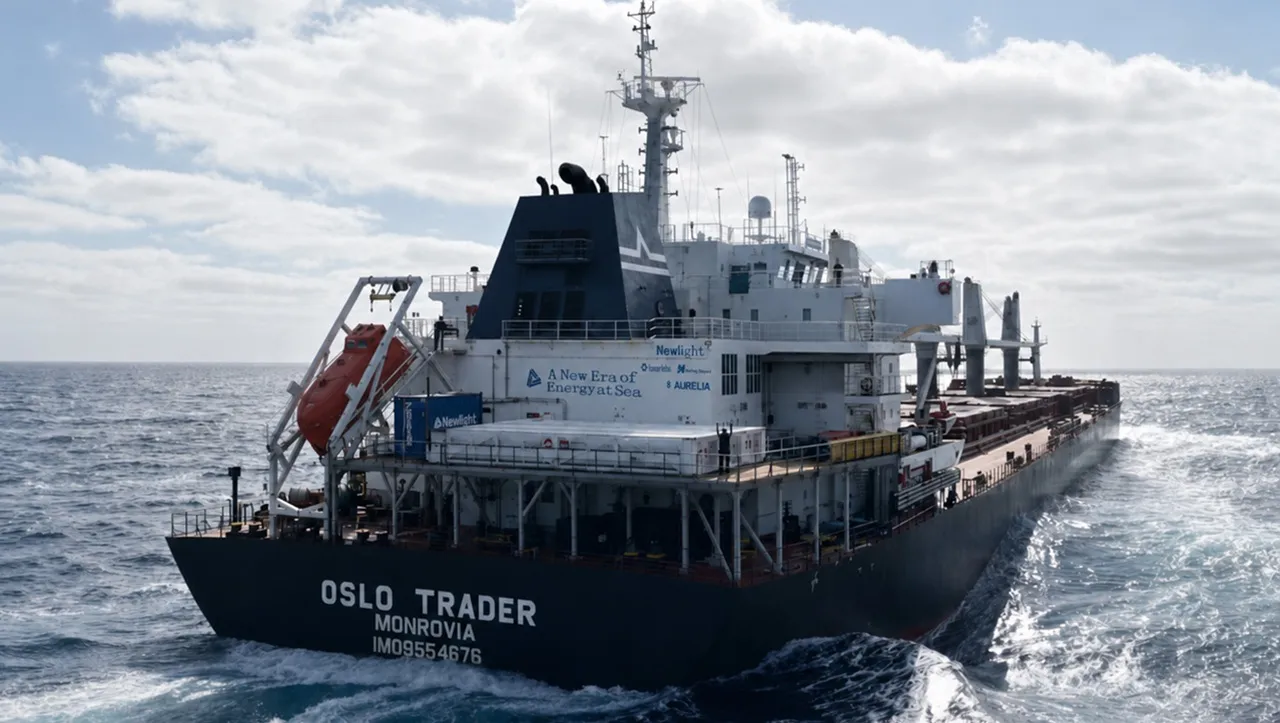
A long-range commercial voyage has demonstrated the potential of hydrogen-hybrid technology to reduce fuel consumption and emissions on existing vessels, with Newlight’s system delivering significant savings aboard a Lomar Shipping bulk carrier.
During the test, the 57,038 dwt bulker completed an 8,500-nautical-mile voyage between Singapore and Ghana. Fuel consumption fell by 24%, while CO2 emissions were reduced by 28%. Carbon monoxide emissions also declined by 20%.
The voyage represents the first long-range commercial test of Newlight’s hydrogen-hybrid energy system on a bulk carrier.
Rather than replacing the vessel’s existing diesel engine, the technology introduces a small quantity of hydrogen into the combustion process. An AI-driven combustion controller continuously adjusts the pressure and volume of hydrogen injection according to engine load, vessel speed and changing operating conditions.
Newlight says the system is designed specifically for existing vessels and can be retrofitted within one to two weeks while the ship remains in operation. The installation does not require downtime or a drydocking period.
“We are building a new energy layer for the diesel engines already powering the global economy, making them materially more efficient and cleaner without requiring them to be replaced,” said Haran Cohen Hillel, Co-Founder and CEO of Newlight.
“The vessel didn’t need to change how it operated. We simply gave its existing engine a way to do more, and it did so successfully across thousands of miles at sea.”
The results also point to a potentially rapid financial return for shipowners. Based on the test voyage, Newlight estimates that the system could generate annual operating cost savings of around $500,000 on a vessel of similar size, with a claimed payback period of less than 18 months.
The project forms part of lomarlabs’ Compass Programme, with Newlight also becoming an investor as part of the initiative to test the technology.
For Lomar, the voyage also provided an opportunity to demonstrate the practical use of hydrogen onboard an existing commercial vessel.
“This voyage has demonstrated that hydrogen can safely be managed and used onboard, to enhance the combustion of HFO and reduce emissions,” said Stylianos Papageorgiou, Managing Director at lomarlabs.
“It therefore provides a new pathway for sustained compliance within the IMO 2050 framework for existing and aging vessels.”
The system also allows the vessel to operate solely on diesel if hydrogen is unavailable, providing operational flexibility rather than making the ship dependent on a continuous hydrogen supply.
Newlight’s technology has received regulatory approval from RINA.
The company says commercial interest in the retrofit system is growing. It has already signed agreements covering 12 vessels operated by multiple shipping companies, with wider fleet deployments planned for next year.
The results from the Lomar vessel suggest that hydrogen-assisted combustion could offer shipowners another route to improving the efficiency of existing diesel-powered fleets while reducing emissions without replacing their engines.