




SRC Group and Energy Transfer have teamed up in a move that could quietly change how ships manage onboard energy consumption, with a focus on heating and cooling systems that are often overlooked in decarbonisation debates.
The partnership is aimed at bringing electric heat pump technology into mainstream maritime use, both for new vessels and for retrofits, replacing traditional oil-fired boilers and chillers used for heating and cooling onboard.
Under the agreement, SRC Group will hold exclusive rights to market and integrate Energy Transfer’s technology in maritime applications. The idea is to combine SRC’s hands-on ship engineering and retrofit experience with Energy Transfer’s thermal management expertise.
At the core of the pitch is a simple logic: reduce fuel burn by improving how energy is used onboard, not just by changing fuels. The companies say the system is designed to lower operating costs while also cutting emissions-related expenses and reducing upfront investment compared with alternative solutions.
Unlike conventional onboard systems that separate heating and cooling functions, the heat pump can deliver both at the same time. That dual operation improves overall energy efficiency and reduces wasted energy in the system.
In favourable conditions, the technology is said to deliver up to 11 kW of combined thermal output for every 1 kW of electricity consumed, a ratio that highlights why heat pumps are attracting growing attention across industrial sectors.
SRC Group Chief Technology Officer Stefano Pitton said shipping is now looking for solutions that are not only technically solid, but also commercially realistic and ready to be deployed without long development cycles.
He stressed that the technology can support zero-emission heating and cooling when powered by electricity, while also offering lower capital costs and faster payback times than many competing systems.
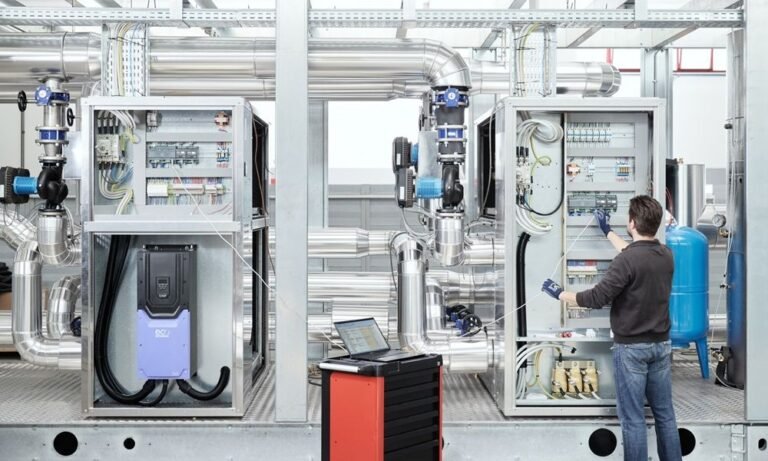
A key part of the strategy is retrofit compatibility. The system is built as a modular skid-mounted unit, designed to fit into limited engine room spaces on existing vessels without requiring major structural changes.
Each installation is adapted to the vessel’s specific heating and cooling needs and can be connected to existing HVAC systems as well as hot water and sanitary systems.
From Energy Transfer’s side, co-founder Lucia Favaretto described the partnership as a way to bring proven industrial technology into shipping in a more direct and scalable way.
She said the system has been engineered to maximise efficiency while keeping installation complexity and physical footprint as low as possible.
The product range spans thermal capacities from 200 kW up to 3 MW, with larger configurations also available. According to the companies, a 3 MW unit is already operating commercially, which strengthens its credibility beyond early-stage concepts.
Heat pumps are gradually gaining ground in shipping as owners look for practical ways to reduce energy demand without waiting for full-scale fuel transitions to methanol, ammonia or LNG.
While alternative fuels remain the long-term focus of decarbonisation strategies, equipment-level efficiency gains are increasingly seen as a faster and more immediate lever.
SRC Group and Energy Transfer estimate that, depending on vessel type and operations, owners could see payback periods of under two years thanks to lower energy use, reduced capital costs and emissions-related savings combined.