



Niagara Region councillors have approved a strategy that could unlock more than $750 million in federal and provincial funding for two major water and wastewater infrastructure projects.
Under the Development Charge Reduction Program (DCRP), the region would give up part of its residential development charge revenue for three years in exchange for grants designed to accelerate infrastructure needed to support future housing and economic development.
The DCRP is part of the Canada-Ontario Partnership to Build, launched earlier this year. The application-based program provides partial relief from development charges over three years while helping finance housing-enabling infrastructure over a 10-year period.
South Niagara wastewater plant leads investment
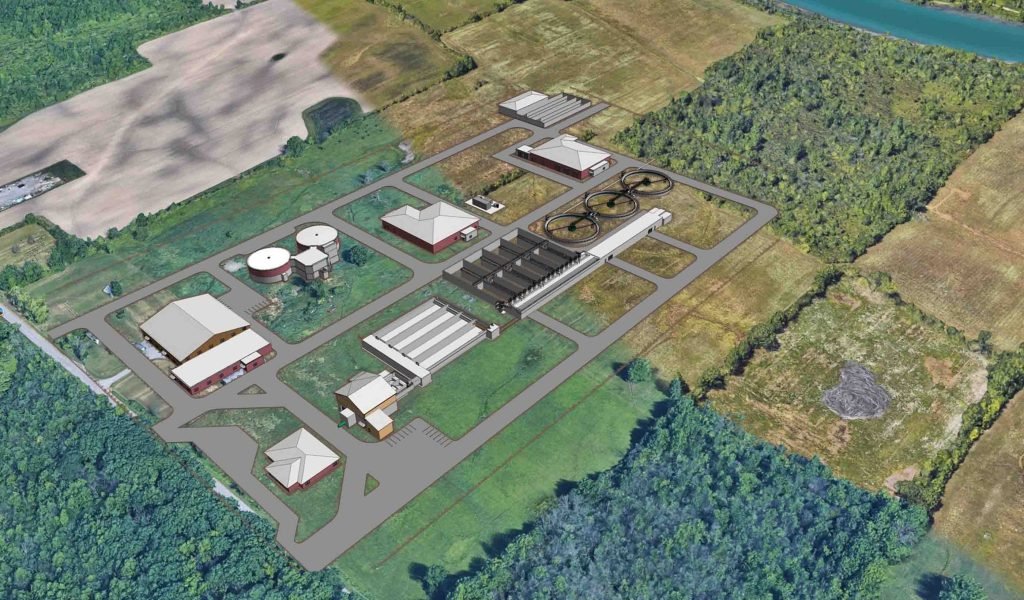
The largest project is the South Niagara Wastewater Treatment Plant (SNWWTP) in Niagara Falls.
Originally estimated at about $361 million when proposed less than a decade ago, the project’s latest cost estimate has reached approximately $688 million.
Once completed, the 108.5-acre facility will be the largest and most expensive infrastructure project in Niagara Region’s history, with capacity to treat 30 million litres of wastewater per day.
The plant will serve Niagara Falls as well as Thorold, St. Catharines, Queenston and Niagara-on-the-Lake, helping reduce pressure on existing treatment systems while providing capacity for future development.
Under the DCRP application, the project could receive approximately $509.3 million in funding.
The new facility is planned for Reixinger Road in the southern part of Niagara Falls, near the QEW and Chippawa Creek. It is expected to support approximately 30,973 new housing units, 750 hectares of employment land and 3,000 hotel rooms and suites, as well as the new south Niagara Falls hospital.
The project would also help address growing pressure on the existing Niagara Falls wastewater treatment plant on Stanley Avenue. Built in 1964 and expanded in 1986, the facility is facing aging infrastructure, deteriorating equipment, environmental compliance requirements and increasing wastewater demand.
West Lincoln infrastructure package
The second major investment is a $375 million water and wastewater infrastructure bundle in West Lincoln.
The package includes the expansion and upsizing of the Smithville trunk sewer, new transmission watermains, upgrades and new construction for water and wastewater pumping stations, as well as watermain replacement work along Regional Road 20 and Wade Road.
The DCRP could provide approximately $241.8 million toward these five bundled projects.
West Lincoln’s population is expected to more than double by 2051, creating additional pressure on local water and wastewater systems.
Region to give up part of development charge revenue
The funding arrangement comes with a significant commitment from Niagara Region.
If the application is approved, the region would forgo 50% of residential development charge revenue for three years, retroactive to March 30, 2026.
The municipality estimates that this reduction would result in approximately $218.5 million in lost revenue. However, a report to council indicated that staff expects the DCRP funding to more than compensate for the revenue reduction.
The agreement would also require the region to finance 10% of construction costs through water and wastewater rates rather than development charges.
Infrastructure designed to support long-term growth
The SNWWTP forms part of Niagara Region’s broader South Niagara Wastewater Treatment Solutions program. Stantec was awarded the contracts for the treatment plant and the South Niagara Trunk Sewer in 2025.
Mike Kocher, Stantec’s design manager for the SNWWTP, described the project as an important step in preparing the region for future growth, with local multidisciplinary teams working alongside international specialists.
The new infrastructure is expected to provide additional capacity as residential development, employment growth and tourism activity increase across southern Niagara.
For the region, the DCRP represents a way to bring forward infrastructure that would otherwise place a much heavier financial burden on local ratepayers, while creating the water and wastewater capacity needed for thousands of new homes and future economic development.