



Danish shipping and integrated logistics group A.P. Moller-Maersk has taken over the management of Puma’s three major, highly automated distribution centers in the United States, with the facilities now being converted into multi-client operations designed to improve utilization and generate additional revenue.
Under the new arrangement, Puma (XETRA: PUM) will allow Maersk to lease unused warehouse capacity to other companies.
The Germany-based sportswear manufacturer already has a long-term agreement with Maersk covering a broad range of integrated logistics services, including international ocean freight, airfreight, customs, inland transportation, warehousing and distribution across Europe.
The North American contract logistics agreement expands that relationship, with Maersk taking responsibility for warehouses in Torrance, California; Phoenix; and Whitestown, Indiana, outside Indianapolis. Together, the three facilities cover approximately 2.3 million square feet, Maersk announced Thursday.
For Puma, outsourcing its U.S. distribution network to Maersk is expected to improve the performance of its automated facilities, accelerate order processing and lower costs. The network will continue supporting Puma’s retail stores, wholesale customers and online shoppers.
Why It Matters: The move significantly broadens Maersk’s relationship with an existing customer while highlighting a growing logistics strategy: companies are increasingly seeking to commercialize unused capacity within infrastructure they already own or operate, turning excess space into an additional source of revenue.
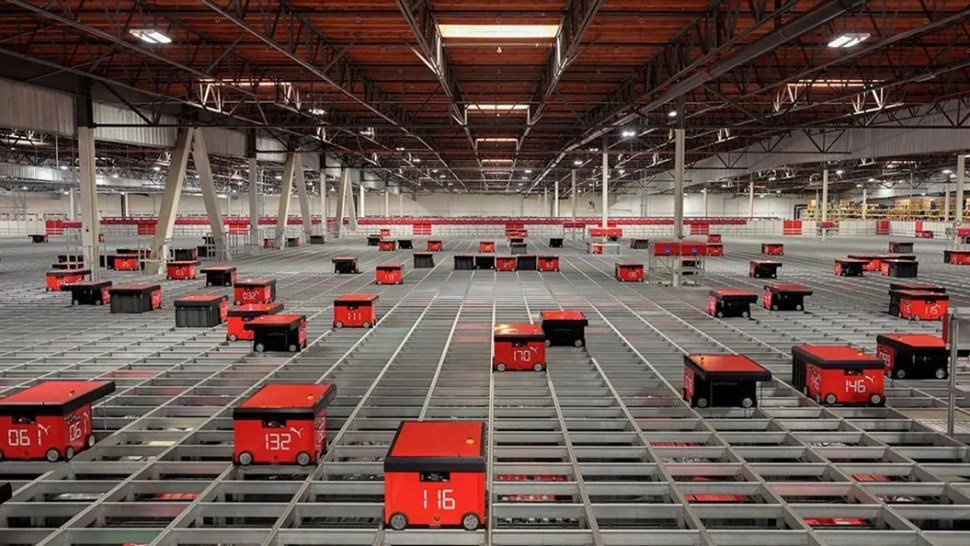
All three Puma distribution centers are equipped with AutoStore systems. The technology provider specializes in automated storage and retrieval solutions in which inventory is organized inside a compact grid, while robots automatically retrieve goods and deliver them to employees at workstations for picking and packing.
AutoStore’s flexible and scalable design allows warehouse operators to respond to changing demand while maintaining fulfillment performance.
The agreement goes beyond serving Puma’s own requirements. By making available capacity within the network accessible to additional customers, Maersk can transform excess warehouse capacity into a revenue-generating asset for both companies.
A central part of the strategy is the Torrance facility, which will become Maersk North America’s first AutoStore deployment designed to support multiple clients. Beginning in 2027, the site will offer capacity to other brands seeking fast, automated order fulfillment close to key air and ocean gateways and within one of the largest consumer markets in the United States.
According to Maersk, the Torrance operation will be capable of handling approximately 20 million units of throughput annually.
“Many companies are looking for ways to get more value from the logistics infrastructure they’ve already invested in. This partnership is a great example of how Maersk can combine our operational expertise, technology, and logistics network with a customer’s existing assets to improve efficiency, maximize the value of automation, and reduce costs,” said David Hune, North America head of Maersk Contract Logistics, in a news release.
Maersk North America currently operates more than 70 warehouses spanning approximately 22.5 million square feet. Its services include consolidation, deconsolidation, storage, distribution and omnichannel fulfillment.
Globally, Maersk manages more than 500 warehouses.