



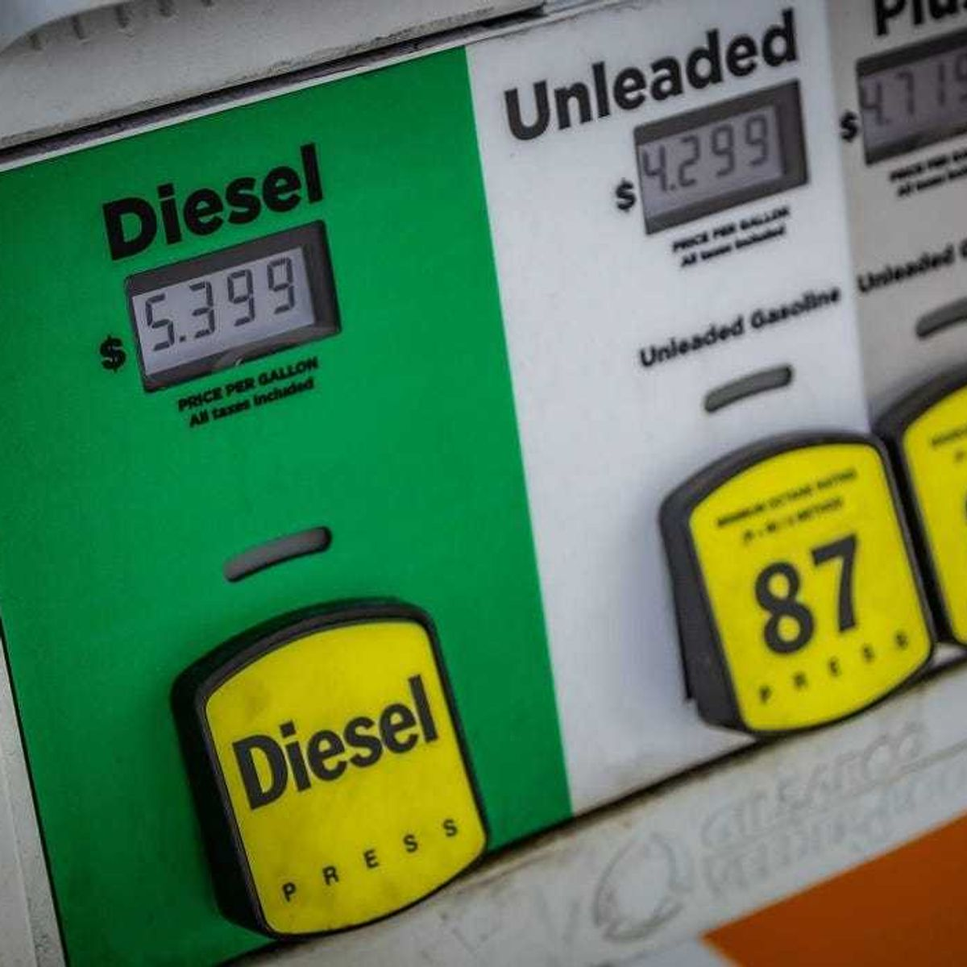
Retail diesel prices have reached a new all-time high, according to the latest national average published by AAA, as disruptions affecting global energy markets continue to push prices at the pump higher.
AAA’s daily national retail diesel average stood at $5.85 per gallon on Friday, surpassing the previous record of $5.82 per gallon, which was established in June 2022, several months after Russia’s invasion of Ukraine.
The latest increase follows Thursday’s average of $5.7832 per gallon, which had already represented the highest price recorded since military action against Iran began in early March.
Before the attacks on Iran and the subsequent Iranian counterattacks, AAA’s diesel price on the Friday preceding the conflict stood at $3.758 per gallon. The national average has therefore risen by approximately $2.10 per gallon since then.
The pace of the latest increase has been particularly striking. Over the past four days alone, AAA’s national retail diesel average has climbed by just under 25 cents per gallon.
The DTS.USA data stream in SONAR recorded a slightly lower national average on Friday, at $5.81 per gallon.
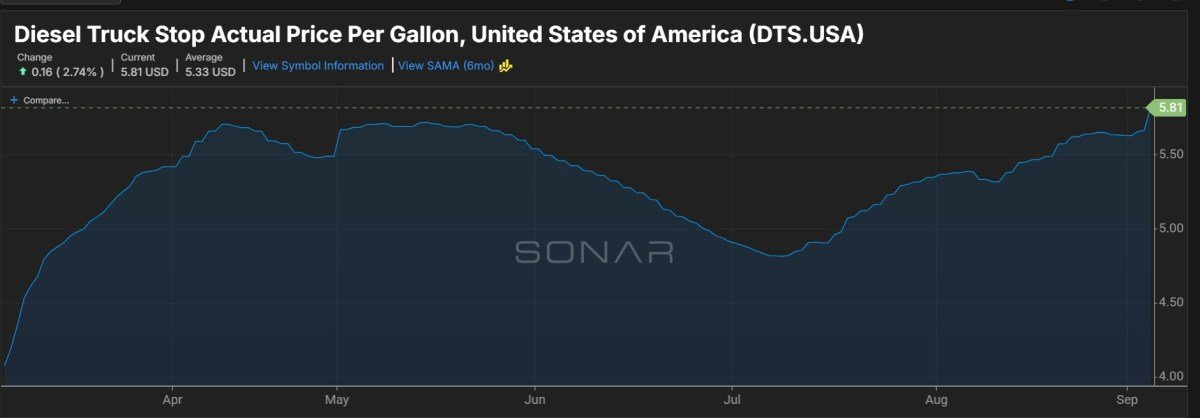
The surge at the pump follows a sharp move in the ultra-low sulfur diesel (ULSD) contract traded on CME. That contract represents the starting point of the multi-stage pricing process that ultimately feeds through to diesel prices paid by consumers and businesses at the pump.
ULSD settled just below $4.50 per gallon on August 21. Over the following four days, however, the contract dropped to approximately $4.25 per gallon, amid expectations that restricted flows through the Strait of Hormuz could ease.
Such a development would not, however, have addressed the separate reduction in diesel supplies originating from Russia.
That disruption has followed successful Ukrainian drone strikes targeting Russia’s refining sector, an industry heavily geared toward producing middle distillates such as diesel.
The market’s subsequent behavior demonstrated the difference between expectations and underlying fundamentals. After the brief decline, ULSD prices began climbing again, reaching a $4.6822-per-gallon settlement on Wednesday.
The latest move has also come after what has effectively been a month-long bullish run. On August 4, exactly one month earlier, ULSD had settled at $3.7705 per gallon.
Excluding what appears to have been a one-day outlier settlement in 2022, the contract’s all-time high was reached on Tuesday of this week, at $4.6773 per gallon.
Yet there is an important twist to the current market picture. As headlines focus on diesel reaching unprecedented levels at the pump, the CME contract itself has begun to soften.
ULSD fell 8.86 cents per gallon on Thursday. By approximately 10:30 a.m. Friday, the contract was down by just under 12 cents per gallon, trading at $4.4739 per gallon.
The situation was highlighted Friday by Kevin Book, managing director of ClearView Energy Partners, during an interview with CNBC.
Book described middle distillates such as diesel as being “at the top of the list as far as the energy policy discussion right now.”
He pointed to the pressure facing the U.S. refining system, noting that American refineries are operating “flat out.” That is hardly surprising, given that crack spreads for refined products — and diesel in particular — have reached historic highs.
At the same time, Book said supplies from parts of the Middle East have been disrupted by the closure of the Strait of Hormuz, with the situation further complicated by refinery outages in Russia.
Even if the Strait were to fully reopen, however, Book questioned whether diesel prices would quickly return to previous levels.
“I think that there are real questions about the infrastructure on the other side,” he said.
There have been refinery restarts, and a return to more normal conditions in the Strait of Hormuz would improve the outlook to some degree.
But the bigger question remains whether supply flows could actually return to their previous levels.
“But will it go back to flowing as it did?” Book asked. “It doesn’t seem obviously that way right now.”