



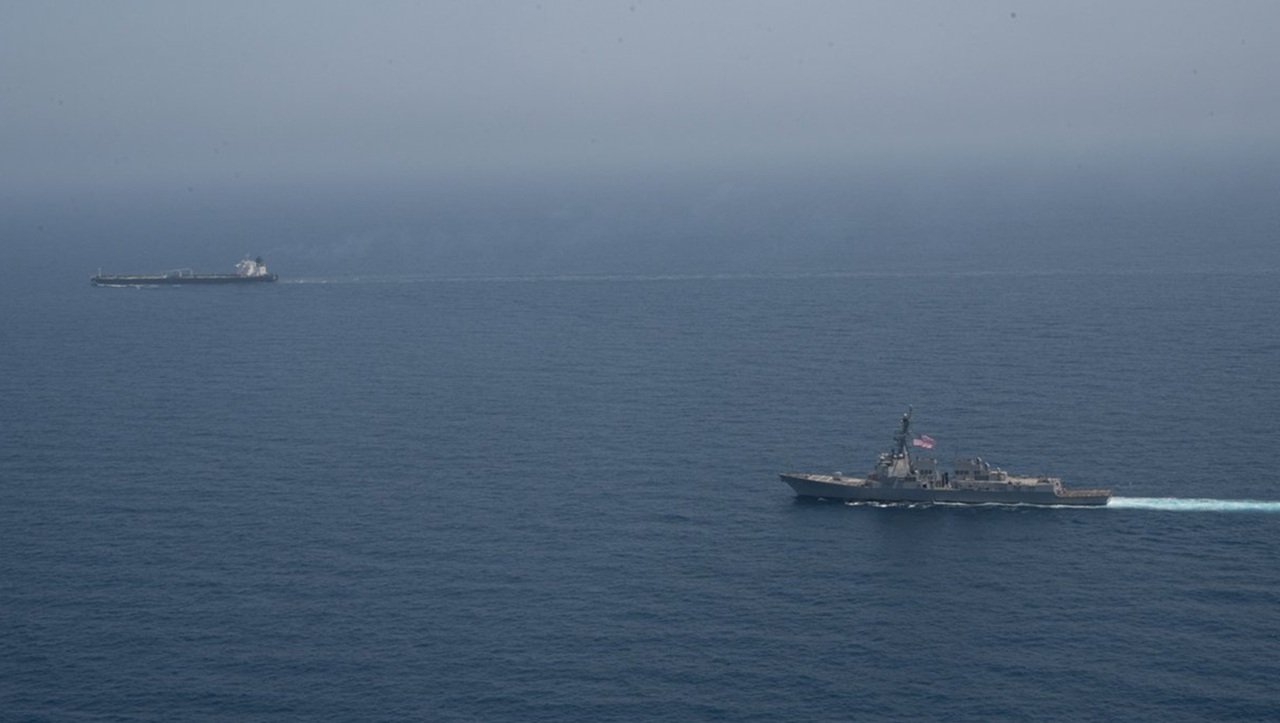
Traffic through the Strait of Hormuz has slowed dramatically following the seizure of two container ships by Iran and the continued enforcement of a US naval blockade in the Arabian Sea.
The vessels Epaminondas and MSC Francesca were seized by Iran’s Islamic Revolutionary Guard Corps Navy on 22 April, triggering a sharp fall in vessel movements through one of the world’s most strategic maritime chokepoints.
According to figures from the Joint Maritime Information Center, only three cargo ships and one tanker crossed the Strait of Hormuz on 25 April, with two vessels moving eastbound and two westbound.
AIS data from Pole Star Global showed the Liberian-flagged tanker Well Sail transiting eastbound on 24 April toward an anchorage at Fujairah. Two sanctioned false-flag chemical/product tankers, Majesty and Oceanjet, also moved eastbound the same day before anchoring off Shinas, Oman, short of the US blockade area near the Gulf of Oman.
US Central Command said American forces have directed 38 ships to turn around or return to port since the blockade came into force on 13 April.
Centcom also confirmed that US forces intercepted the Panama-flagged LPG carrier LPG Sevan, which had been sanctioned by the US Treasury’s OFAC one day earlier, and forced the vessel back toward Iran under escort.
An analysis by Signal Ocean using AXSMarine AIS data showed 446 confirmed Strait crossings between 1 March and 21 April, averaging 8.6 crossings per day, although activity varied significantly depending on political and security conditions.
Signal Ocean said the Strait was operating at only around 7% to 9% of its pre-conflict utilisation rate during stable periods, with the remaining traffic dominated by operators with higher risk appetite, diplomatic exemptions or ownership structures that change their risk calculation.
The highest recent activity came on 18 April, when both Iran and the US declared the Strait open, resulting in 28 crossings. That brief recovery was followed by renewed Iranian restrictions and attacks on two Indian-flagged vessels and a French container ship.
IMO Secretary-General Arsenio Dominguez has called for seafarers detained on seized vessels to be released, stressing that crews are not responsible for the geopolitical conflict.
He also warned that the situation is not improving and said there is currently no safe transit anywhere in the Strait of Hormuz.