



Two of the world’s most critical maritime energy arteries are coming under pressure at the same time but for entirely different reasons. And the timing could hardly be more difficult for global supply chains.
One crisis is being driven by war. The other is being driven by climate.
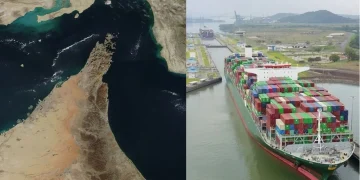
Since February 2026, the Strait of Hormuz, which normally handles roughly a quarter of the world’s seaborne oil trade, has faced sustained disruption linked to the US-Israel-Iran conflict.
A ceasefire reached in April, followed by another agreement in June, failed to hold as fighting resumed in July. The situation deteriorated again on September 10-11, when drone strikes launched from Iraq targeted Saudi Arabia’s East-West Pipeline, the kingdom’s main alternative route for moving oil toward the Red Sea without passing through Hormuz.
Saudi Aramco subsequently shut the pipeline as a precaution. Oil prices moved above $100 a barrel for the first time in months, while the International Energy Agency reported that Saudi crude production had fallen to its lowest level in more than three decades.
At the same time, Houthi forces have seized an island in the middle of the Bab el-Mandeb Strait, putting another critical energy chokepoint under pressure.
The second disruption is unfolding thousands of kilometres away.
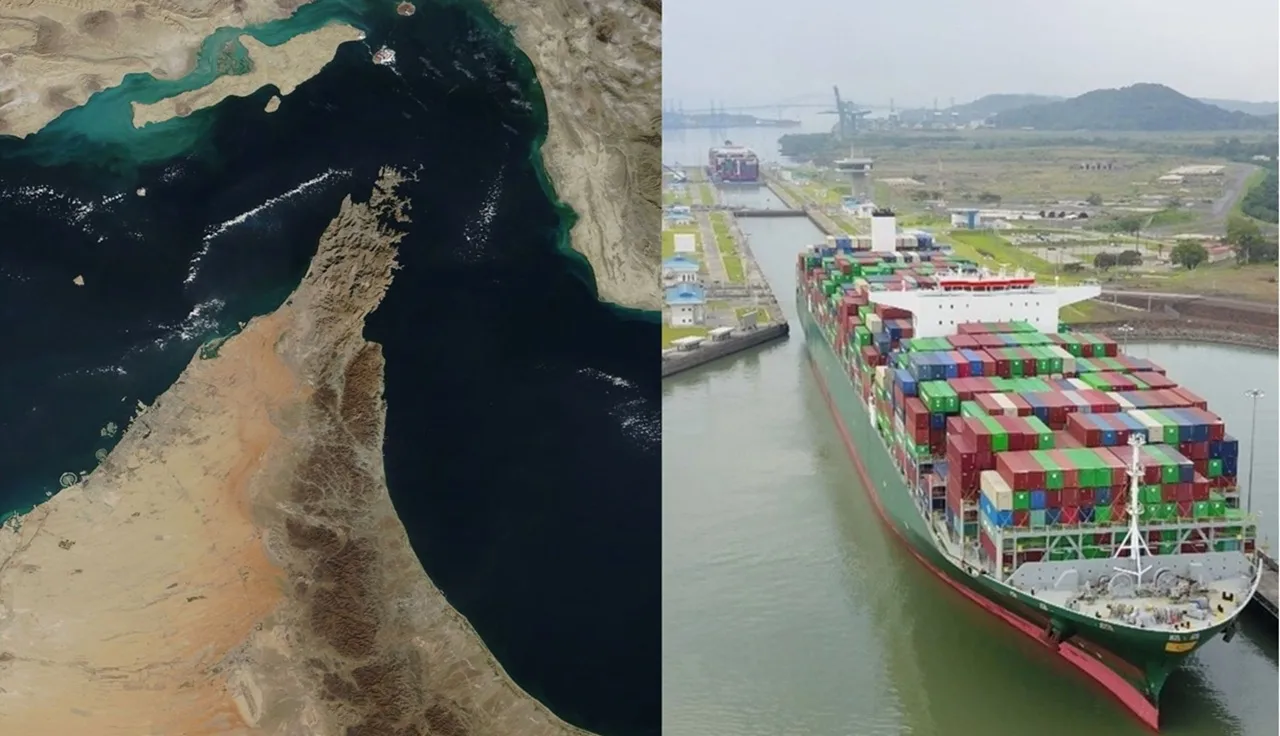
The Panama Canal is heading into its dry season with its water resources already under strain. Rainfall across the canal’s watershed between May and August was around one-third below average, forcing authorities to reduce daily transits from 36 vessels toward 32.
The more serious test, however, is still ahead.
Between December and April, during the Northern Hemisphere’s dry season and winter, approximately 3.2 million barrels per day of oil products that would normally pass through the canal will be competing for a shrinking number of available transit slots.
One crisis is geopolitical. The other is meteorological. Both are arriving during the same critical months.
Why the North Feels It First
The geographical distribution of the world’s population makes the timing particularly significant.
Around 90% of the global population lives in the Northern Hemisphere, which is also home to the overwhelming majority of global economic output. That population is now approaching winter just as both maritime chokepoints are becoming less reliable.
Meanwhile, the Southern Hemisphere is moving into summer and is largely insulated from the same immediate seasonal exposure.
The demand equation makes the situation even more complicated.
Summer cooling is relatively price-sensitive. Consumers can reduce air-conditioning use or postpone travel when energy prices rise. Winter heating is different. It is a continuous necessity and offers far less room for demand to respond to higher prices.
The exposed population in the Northern Hemisphere is also, on average, considerably wealthier than that of the Southern Hemisphere. That means consumers and businesses can absorb higher prices for longer before demand begins to break.
A supply disruption can therefore become a sustained price increase rather than correcting itself through weaker consumption.
Forecasters have also warned that an El Niño pattern this winter could bring unusually severe cold to parts of the Northern Hemisphere, potentially adding another layer of pressure to energy demand.
A Thinner Cushion Than Usual
The global economy is entering this period with less spare capacity than it has enjoyed in previous decades.
The US Strategic Petroleum Reserve has fallen to its lowest level since 1983, standing at roughly 320-357 million barrels compared with an authorised capacity of 714 million barrels.
Earlier in the conflict, 172 million barrels were released or loaned out in an effort to stabilise prices.
Other countries are also rebuilding their reserves, but their replenishment programmes are generally slower and more discretionary, with much of that process extending into 2027.
The timing of the seasonal travel surge adds another complication.
Thanksgiving, Diwali, Christmas, New Year’s and Chinese New Year all fall within broadly the same October-to-January period. Aviation and road-fuel consumption can therefore rise sharply just as winter heating demand reaches its seasonal peak.
That leaves little room for another major disruption.
A Second Shock Six Months Down the Line
The effects of the energy crisis are not limited to oil.
The same disruption is increasingly affecting fertilizer supply chains, creating the possibility of a second shock that could emerge months later in global food markets.
Gulf countries account for a meaningful share of global nitrogen and phosphate fertilizer supplies, while shipping activity through the Strait of Hormuz has fallen sharply.
Brazil is particularly exposed. The country imports most of its fertilizer and has activated an emergency committee to secure supplies ahead of its 2026/27 crop season.
Reports indicated that by mid-2026, less than half of the fertilizer required for that season had been purchased.
Argentina, Uruguay and Australia face similar risks as they approach their own sowing periods.
That means a supply shortage developing now may not immediately appear in food markets — but could translate into higher food prices in 2027 when the consequences reach the harvest.
What Comes Next
The best-case scenario is relatively straightforward: both maritime chokepoints gradually recover, disruptions ease and strategic reserves are rebuilt according to schedule.
The worst-case scenario is considerably more damaging.
The East-West Pipeline could remain offline, drought conditions around the Panama Canal could intensify, and fertilizer shortages could reduce Southern Hemisphere harvests. Together, those factors would reinforce both energy and food inflation.
The most probable outcome may fall somewhere between the two extremes: persistent price pressure interrupted by sudden and potentially severe price spikes.
There is also a deeper structural change taking place beneath the immediate crisis.
BRICS has expanded to include several major oil producers, adding momentum to efforts to shift portions of global energy trade away from the US dollar.
For shipping companies and businesses exposed to international trade, however, the immediate lesson remains the same regardless of which scenario ultimately unfolds.
Routes and suppliers need to be diversified. Chartering and fuel relationships need to be secured before the market tightens further. And vessel deployment needs to retain enough flexibility to respond quickly.
Winter has not arrived yet.
But for global supply chains, the decisions that will determine how well they weather it are already being made.