



The security outlook for commercial shipping in the Strait of Hormuz has improved slightly, with the Joint Maritime Information Centre (JMIC) reducing the threat level for vessels operating in the strategic waterway to “Substantial.” Despite the downgrade, maritime authorities continue to caution that the risk of an attack remains significant.
The revised assessment follows the announcement that the United States and Iran are expected to sign a Memorandum of Understanding on Friday. The new rating marks the lowest threat level recorded since the conflict involving Iran began on 28 February, and represents a two-step reduction from the “Critical” level that remained in place until early June.
In its latest update issued on 16 June, JMIC stated that maritime traffic continues to operate in a substantial-risk environment. Navigation interference, monitoring activities and communications from the Islamic Revolutionary Guard Corps (IRGC) are expected to persist, while short-notice disruptions remain possible.
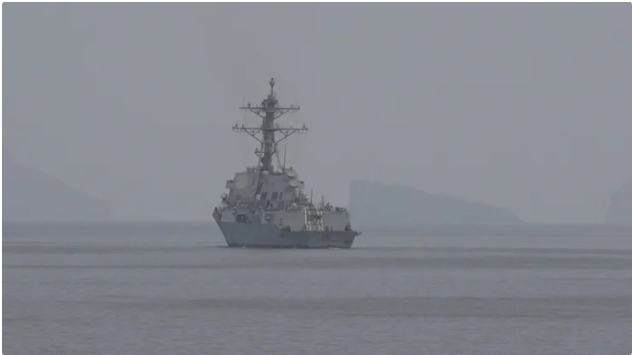
According to the centre, IRGC activity on the water has become less volatile since the announcement of the forthcoming U.S.-Iran agreement. At the same time, the continued presence of U.S. naval forces is helping to provide stability and oversight in the area.
However, JMIC also warned of a continuing mine threat in and around the Traffic Separation Scheme (TSS), urging vessels to exercise extreme caution when approaching or transiting the area.
Concerns were heightened after reports emerged of three explosions in the Strait of Hormuz during the night of 15–16 June. Iranian media indicated that the incidents were linked to traffic management operations, although it remains unclear whether they were related to attacks on vessels or mine-clearing activities.
Commercial shipping traffic through the Strait remains significantly below normal levels. Many operators continue to favour the southern transit route through Omani waters, where the U.S. military is facilitating safer passage for commercial vessels.
The JMIC has also lowered the threat levels for both the Arabian Gulf and the Gulf of Oman to “Substantial.”
For the Arabian Gulf, the organisation noted that navigational system interference and residual kinetic threats remain present. Vessels operating near Iranian coastal areas or remaining stationary for extended periods could still face increased targeting risks, particularly when AIS transmissions remain active.
In the Gulf of Oman, naval activity continues across the region. Ships could still be subjected to monitoring operations, radio hailing and verification requests especially when approaching the Strait of Hormuz or sailing near coastal shipping lanes. JMIC said that suspicious approaches and electronic interference remain credible threats and that an attack remains a strong possibility under current conditions.
Ship masters have been advised to maintain safe distances from naval vessels to avoid the risk of misidentification while operating in the region.
The downgrade in the threat level is a positive signal for global shipping markets, but authorities stress the security situation remains fragile and operators should continue to follow elevated risk-management procedures throughout the region.
- Latest
- Trending
ADVERTISEMENT