



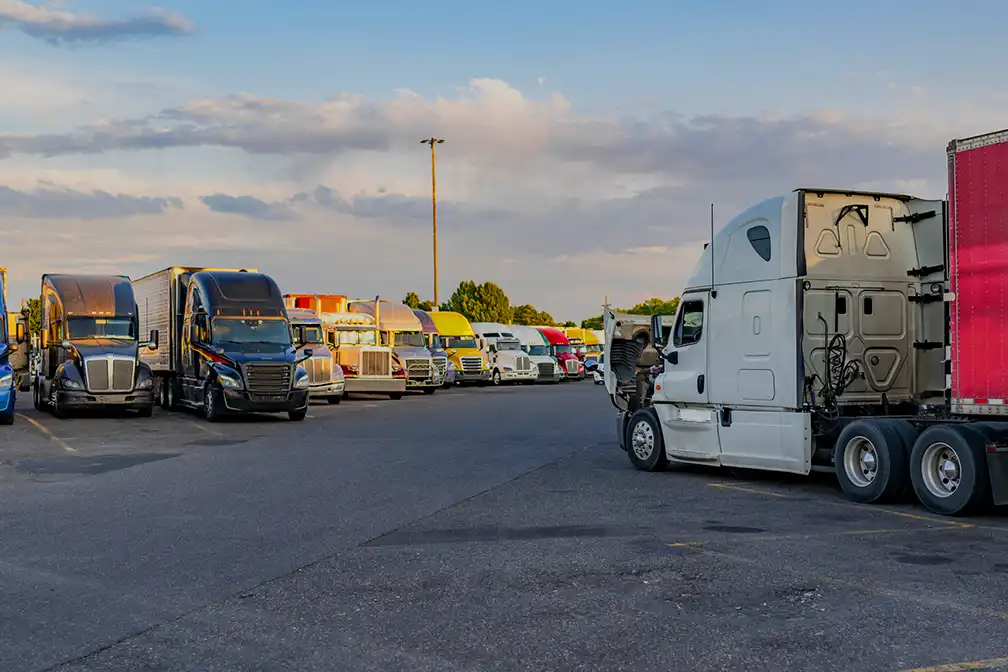
Truck Parking Club has surpassed 5,000 locations across the United States, marking a major expansion in a market facing a severe shortage of truck parking capacity.
The Chattanooga-based company was founded in November 2022. It took 366 days to reach its first 100 locations, but only 81 days to grow from 4,000 to 5,000.
Truck Parking Club now aims to exceed 10,000 locations by the end of 2026, which would require adding around 580 locations per month, or about 19 per day.
The company was recently ranked No. 24 on the FreightWaves FreightTech 25 list for 2026.
Its model does not rely on building new parking facilities. Instead, it activates unused private property and turns it into truck parking capacity.
Founder and chief executive Evan Shelley said the company has created a way to add parking capacity quickly and at scale without waiting for construction, leasing or major infrastructure investment.
Drivers from 93 of the top 100 fleets have used Truck Parking Club locations. The network now offers more than 80,000 reservable spaces across 49 states.
The truck parking shortage is both an operational and safety issue. Truck Parking Club estimates that traditional construction costs range from $100,000 to $200,000 per space. Building the equivalent of its current capacity through conventional methods would cost around $8 billion.
Federal data shows hundreds of fatal crashes and more than 41,000 crashes annually involving large trucks on highway ramps and shoulders, where drivers often park because they lack safer alternatives.
Truck Parking Club activates spaces at warehouses, trucking terminals, repair shops, self-storage facilities, tow yards, CDL schools, hotels, stadiums and other private sites.
The company said most transaction revenue goes directly to property owners, while Truck Parking Club manages onboarding, customer service and quality control.
Looking ahead, each location could become a service node for drivers, potentially supporting food, repairs, electric-vehicle charging and other services based on market demand.