



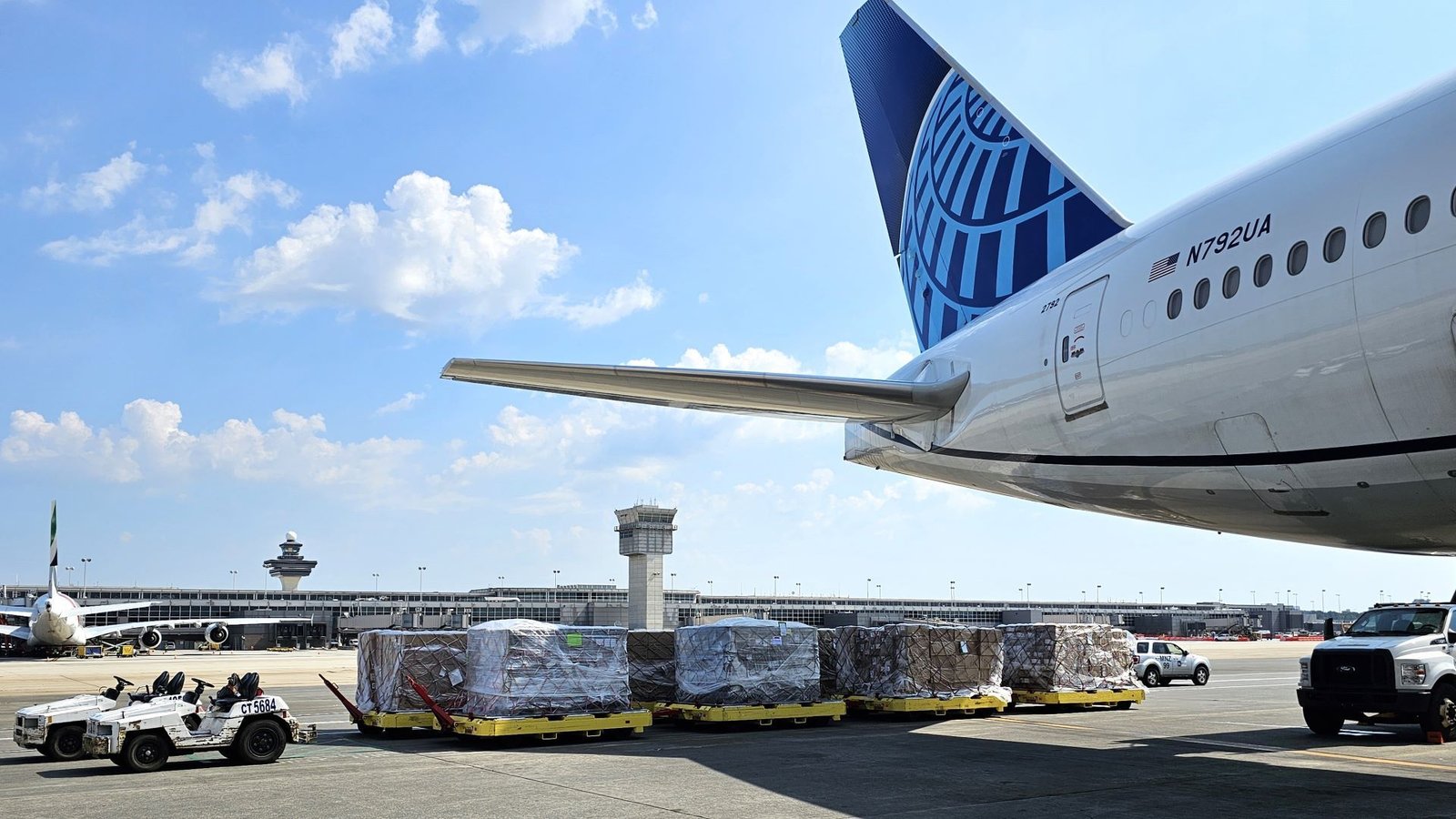
United Airlines will introduce a new market disruption fee for cargo customers from 1 May as the carrier looks to offset rising jet fuel prices and a broader range of cost pressures linked to the Iran war.
United Cargo informed shippers of the upcoming surcharge last week, saying the measure is intended to cover the higher global cost of doing business. The fee will vary by region, and customers have been advised to contact their sales representatives for lane-specific details.
Jet fuel prices, typically an airline’s second-largest expense after labour, have nearly doubled since the United States and Israel launched attacks on Iran on 28 February. While many transport companies have responded by increasing fuel surcharges, United’s new fee is broader in scope and is designed to account for multiple sources of cost inflation.
United Cargo spokeswoman Stephanie Robbe Kramer said the airline is facing rising costs imposed by suppliers, partners and broader market conditions across the air cargo ecosystem. She said the fee is not tied to one single element, but reflects a combination of external pressures.
The airline has not said how long the surcharge will remain in place, stating only that it will continue to evaluate conditions and communicate any changes as the market evolves.
The pricing announcement came just before United released first-quarter results showing a surprise contraction in cargo revenue. Cargo sales for the quarter stood at $422 million, down 1.6% year on year.
That decline was unexpected given broader market conditions. The global air cargo market expanded by about 6.5% during the first two months of the year compared with 2024, while spot rates have jumped by 25% to 40% since 1 March as demand rose and industry capacity was constrained by Middle East-related flight restrictions.
By comparison, Delta reported a 9% increase in first-quarter cargo revenue to $226 million, while American Airlines said cargo revenue rose 12.9% to $219 million.
United declined to explain the drop in its cargo revenue.
At group level, United Airlines reported pre-tax earnings of $900 million and adjusted earnings per share of $1.19, beating analyst expectations. Operating revenue rose 10.6%, and the airline said it plans to reduce capacity by 5% for the remainder of the year to help manage costs during what it described as a volatile period.
In related developments, Amsterdam Schiphol Airport on Thursday announced a temporary discount of more than 10% on airport charges from 27 April to 31 March 2027 to help airlines cope with sharply higher jet fuel prices caused by the Iran war and encourage them to maintain service to the Netherlands.
Lufthansa Group has also said it will cut 20,000 flights at its European hubs over the next six months in an effort to reduce fuel spending.