



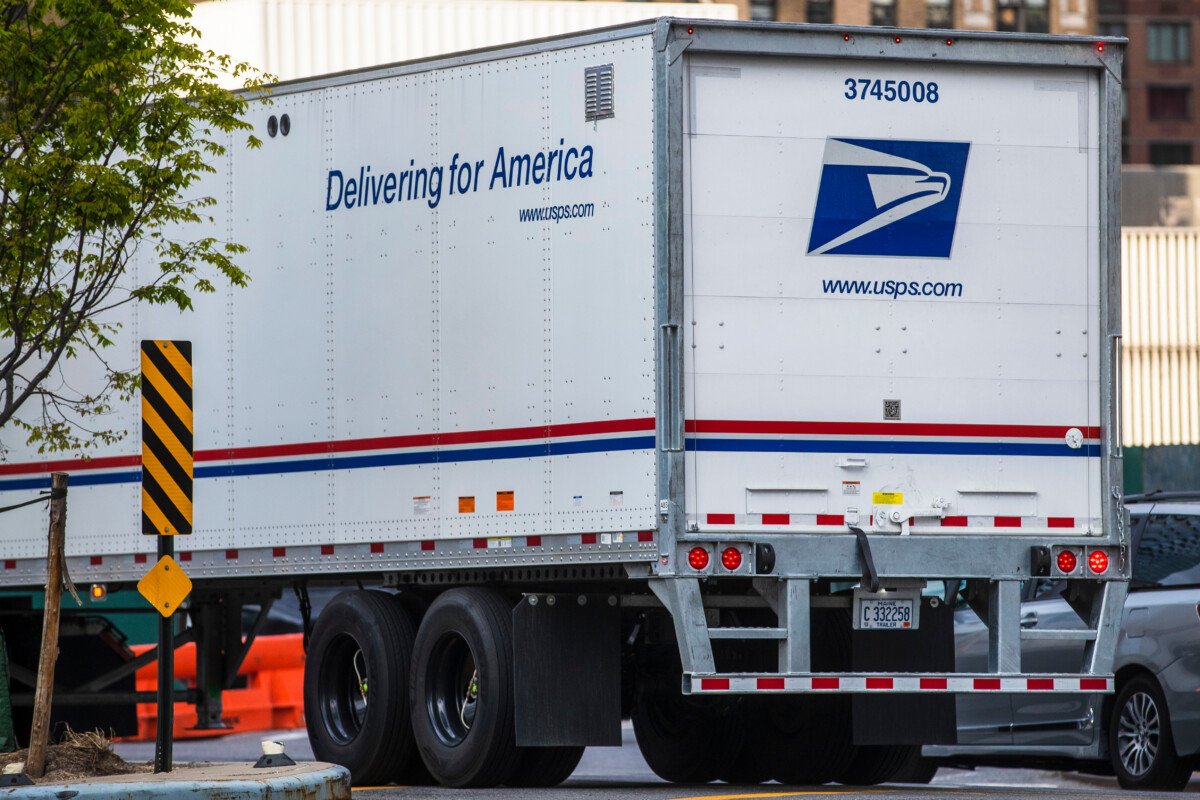
The U.S. Postal Service has imposed a firm new deadline on the use of non-domiciled CDL holders in its vast mail transportation network, giving suppliers until 1 May to comply.
In a letter dated 16 April 2026, chief logistics officer and executive vice president Peter Routsolias informed all suppliers that, effective from 1 May, non-domiciled CDL holders will no longer be permitted to transport mail under USPS contracts or ordering agreements unless they have been screened and badged by the U.S. Postal Inspection Service.
The letter states that suppliers are responsible for ensuring that every driver assigned to Postal Service work has completed all required screening and clearance steps before beginning service. Suppliers must also provide the necessary forms and information to support the clearance process.
The new directive revives and formalises a phase-out first announced in January 2026, when USPS said it would work with contracted transportation providers to remove unvetted non-domiciled CDL operators from its network. The policy was presented as part of a broader alignment with Department of Transportation safety initiatives and recent audits concerning non-domiciled licensing practices.
The move comes after a difficult episode in late October 2025, when USPS briefly stopped loading trailers hauled by non-domiciled CDL drivers. That action led to immediate disruption across the network, including cancelled loads, missed trips and delayed sorting operations. USPS handles around 55,000 truckloads and nearly 2 billion miles annually, and on a supplier call at the time, Routsolias admitted the agency had underestimated the scale of its dependence on non-domiciled CDL drivers. He said the volume of omissions had been astronomical and acknowledged that USPS had not fully understood how widespread the practice was. The resulting service disruption forced a quick reversal.
Since then, capacity conditions have become even tighter. Major contractor 10 Roads Express, which handled a meaningful share of USPS volume, is shutting down in early 2026 after losing key contracts, removing thousands of drivers and tractors from the market. Previous Office of Inspector General reports and industry investigations have also highlighted vetting gaps, hours-of-service violations and fatal crashes involving some mail-hauling contractors, adding urgency to the current safety push.
Carriers now have only two weeks to complete the required Postal Inspection Service screening or identify replacement drivers. While the objective is to strengthen accountability, the measure risks putting further pressure on an already constrained third-party capacity market at a time when USPS is still facing persistent cost and service challenges. Transportation providers therefore face an immediate compliance and continuity challenge if they want to protect their mail transport business.