



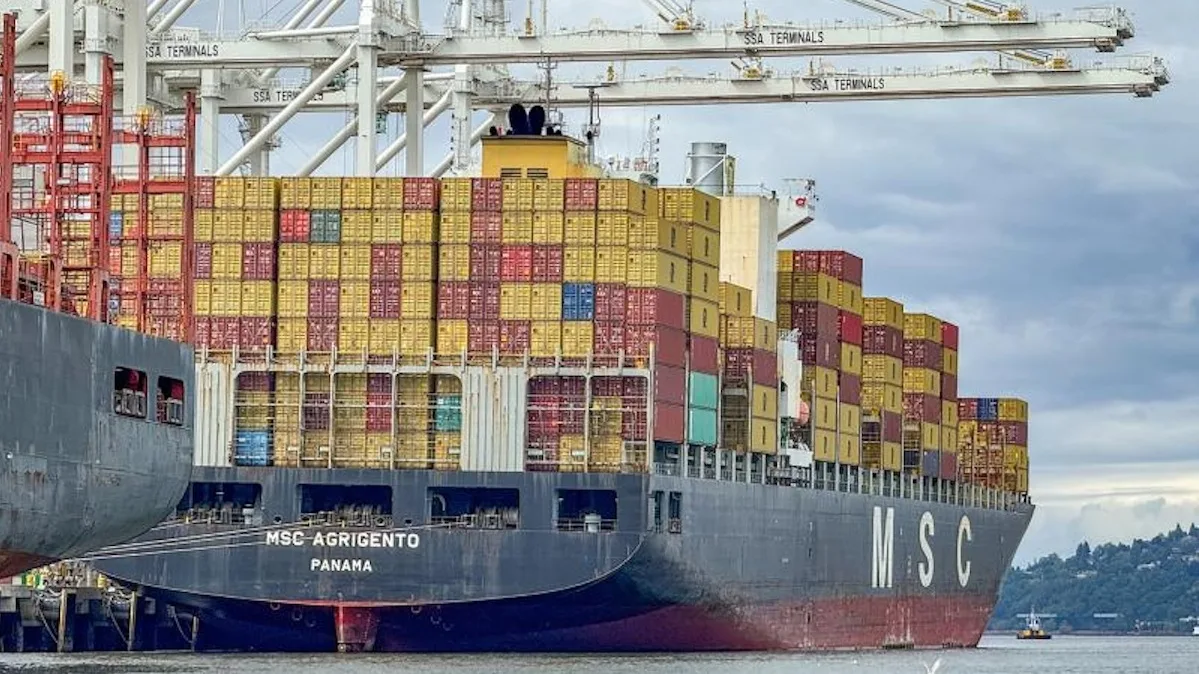
Washington state has passed a law that prevents public money from being used to fund automated container handling equipment at its ports, making the restriction permanent and reinforcing a labour-backed approach to green port investment.
Governor Jay Inslee signed Senate Bill 5995 into law in March. The measure is intended to protect maritime jobs by ensuring that public decarbonisation spending does not end up replacing dockworkers with automated systems.
The legislation removes a sunset clause that would otherwise have allowed the restriction to expire at the end of 2031, turning the ban into a permanent feature of state policy.
The law applies to fully automated equipment if it is remotely operated or monitored, regardless of whether a human can still intervene or take control.
At the same time, port districts remain explicitly authorised to use public funds for zero-emission and near-zero-emission equipment, provided the systems remain human-operated.
The restriction applies to both port districts and port development authorities across Washington, including the ports of Seattle and Tacoma, which rank ninth and tenth among U.S. gateways and together handle around 3.3 million teu annually.
The International Longshore and Warehouse Union, which has around 42,000 members across the U.S. West Coast, including in Washington, supported the measure.
The issue of automation has become increasingly charged in U.S. port labour relations. In 2024, it emerged as a flashpoint during longshore contract negotiations on the East and Gulf Coasts, where a three-day strike by the International Longshoremen’s Association shut down container operations at dozens of ports. That dispute eventually ended with a new six-year agreement that protected jobs while still allowing semi-automated cranes and other equipment.
The legislation also arrives against a backdrop of growing concern over port productivity. Studies continue to show that U.S. ports, especially on the West Coast, lag on efficiency due to congestion, labour constraints and landside bottlenecks. The World Bank’s Container Port Performance Index ranked Asian ports in 13 of the top 20 positions in 2023, with East Asia again leading in 2024.