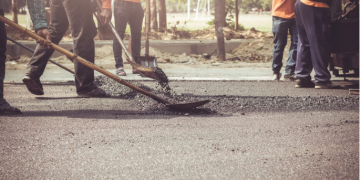





A major $102.5 million road resurfacing program is underway across British Columbia’s Lower Mainland and Vancouver Island, targeting some of the province’s most heavily used highway corridors.
The works form part of a broad infrastructure maintenance effort designed to repair road surfaces affected by long-term traffic loads and weather-related wear, according to the latest project update. The program focuses on restoring key transport routes that are essential for both passenger mobility and freight movement across the region.
In the Lower Mainland, several sections of Highway 1 are included in the resurfacing schedule. These include the Abbotsford area and adjacent side roads covering approximately 11 kilometres, a 30-kilometre stretch westbound near Hope, as well as two major North Shore segments: one running from Taylor Way to Nelson Creek Bridge over 10 kilometres, and another covering 12 kilometres near Cypress Bowl Road.
On Vancouver Island, the resurfacing program covers a significantly larger network of strategic routes. Works include Highway 19 along the Duke Point Highway between Highway 1 and the Duke Point ferry terminal, alongside nearby Nanaimo-area side roads, covering a combined 33 kilometres.
Additional upgrades are planned on Highway 1 between Drinkwater Road and the Chemainus River Bridge, as well as Tzouhalem Road and West Shawnigan Lake Road, totaling 23 kilometres. Highway 19A is also included, with resurfacing work on Royston Road and surrounding Campbell River-area side roads spanning 28 kilometres.
Further north, Highway 19 will see improvements to passing lanes in both directions between Craig’s Crossing and Buckley Bay, covering approximately 54 kilometres. These works are aimed at improving traffic flow and safety along one of the island’s key north–south transport corridors.
The resurfacing program reflects ongoing investment in maintaining transport infrastructure critical to regional connectivity, logistics efficiency and economic activity. The project targets high-traffic routes on both the mainland and island networks with a goal of extending pavement life while reducing long-term maintenance needs and improving driving conditions for all road users.
- Latest
- Trending
ADVERTISEMENT