



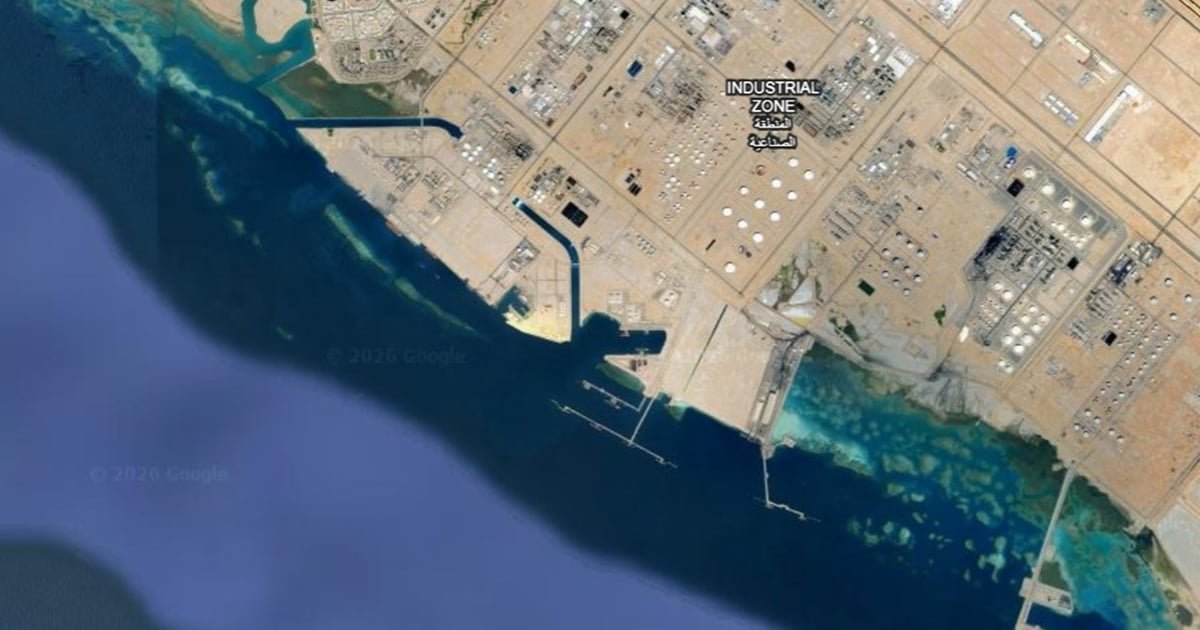
The effective closure of the Strait of Hormuz has sharply increased crude export activity from Yanbu on Saudi Arabia’s Red Sea coast, as traders and producers seek alternative routes around the disruption in the Gulf.
According to analysts at Signal Ocean, Yanbu has long served as a fallback outlet for Arabian Gulf supply constraints by receiving crude via Saudi Arabia’s East-West pipeline and loading it onto westbound tankers that bypass Hormuz.
In January and February, the port averaged around 11 to 12 VLCC loadings per month. In March, that figure rose dramatically to 47, nearly four times the normal level.
Signal Ocean said the jump shows how quickly the market has reoriented toward the only remaining major bypass corridor for crude exports from the region. At the same time, it warned that this alternative route is itself becoming increasingly vulnerable.
The risk intensified after the Houthis entered the conflict on Iran’s side on 28 March and launched multiple missile strikes against Israel. The group had earlier warned that it would not allow the Red Sea to be used in support of US or Israeli operations against Iran.
Signal Ocean said the expansion of the threat envelope raises the possibility that disruption could move further up the Red Sea and threaten strategic Saudi infrastructure, including Yanbu itself.
Between late 2023 and 2025, Houthi attacks on commercial vessels linked to Israel had already caused a sharp reduction in traffic through the Red Sea. The latest developments now cast doubt over the resilience of the only major alternative export corridor currently available to Saudi crude flows.