

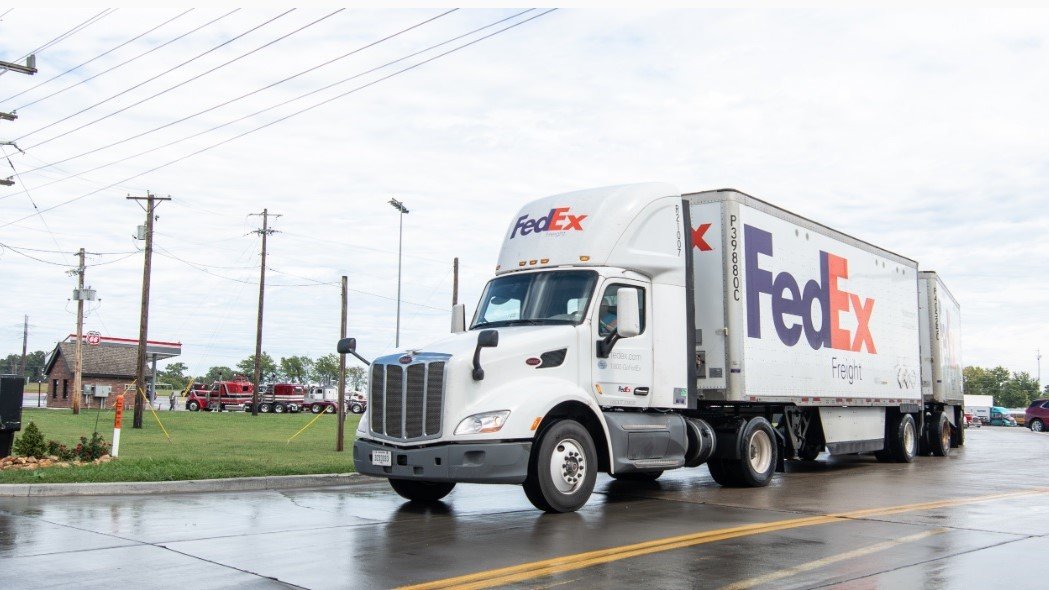
FedEx is taking a major structural step by separating its less-than-truckload arm, FedEx Freight, after receiving formal approval from its board of directors. The company confirmed on Wednesday that the spinoff is on track to be completed by June 1.
As part of the plan, FedEx Corp. will distribute 80.1% of FedEx Freight’s shares to its existing shareholders on a pro rata basis. Investors registered by Friday will receive one share of the newly independent company for every two FedEx shares they hold. FedEx will keep a 19.9% stake for the time being, with the intention of fully exiting the position within the next 24 months, either through debt reduction or shareholder distributions.
“Today’s announcement is an important step as we prepare for a seamless separation of the FedEx Freight business on June 1,” said Brad Martin, executive chairman of FedEx’s board and incoming chairman of FedEx Freight’s board. He emphasized that both companies will continue forward independently, each building on its own strengths to better serve customers and create shareholder value.
Once the separation is finalized, FedEx Freight will begin trading on the New York Stock Exchange under the ticker symbol “FDXF,” while FedEx Corp. will continue to trade under “FDX.” The company also noted that the distribution is expected to be tax-free for U.S. federal income tax purposes.
The move reflects a broader strategy to simplify FedEx’s structure and give investors clearer exposure to its different business segments, particularly the LTL market, which has long been one of its core domestic freight pillars.
FedEx Freight is currently the largest LTL carrier in the United States, employing around 40,000 people. Its network includes 365 terminals (about 26,000 doors) and a fleet of roughly 30,000 vehicles, including 17,000 tractors. The division generates close to $9 billion in annual revenue.
The roots of the business go back to FedEx’s expansion into LTL through a series of acquisitions: Viking Freight in 1998, American Freightways in 2001, and Watkins Motor Lines in 2006. In 2011, these regional and national operations were merged into a single unified network offering both priority and economy services.
With this spinoff, FedEx is effectively giving FedEx Freight its own identity and market visibility, while the broader group focuses on its ongoing transformation and long-term strategy across express and ground operations.





