




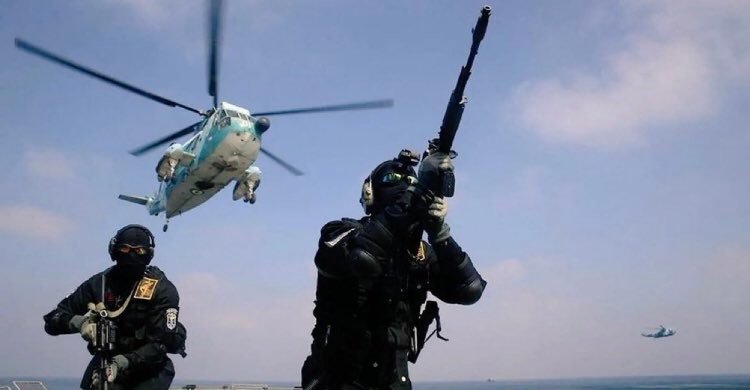
Iran has expanded the maritime area it considers under operational control around the Strait of Hormuz, further increasing pressure on global shipping and regional energy flows.
According to Iranian-linked media reports cited by market analysts, the Islamic Revolutionary Guard Corps Navy now describes the Strait of Hormuz as a “vast operational area” extending from Jask in eastern Iran to Siri Island in the west. Coverage from Fars and Tasnim indicated that the claimed operational zone has expanded significantly, growing from an estimated 20 to 30 miles in the past to as much as 200 to 300 miles across the Hormuz approaches.
The development comes shortly after the publication of an IRGC map earlier this month showing a newly defined control zone covering large parts of the UAE-facing coastline in the Gulf of Oman, adding further uncertainty for commercial vessels moving in and out of the Arabian Gulf.
Concerns over maritime security intensified again yesterday after maritime analytics platform Windward reported the presence of more than 200 small craft operating within the northern Hormuz corridor.
According to Windward, the vessels were heavily concentrated near the southeastern coast of Qeshm Island and across the central navigation corridor. The company also noted what it described as a complete standstill in commercial activity, with all large commercial ships observed in the area remaining stationary.
The impact of the growing disruption is now becoming visible across global economic indicators.
The Global Supply Chain Pressure Index published by the Federal Reserve Bank of New York has now increased for three consecutive months after remaining relatively subdued over the past three years. April recorded the sharpest rise so far, pushing the index to its highest level in nearly four years.
At the same time, the World Bank’s Global Supply Chain Stress Index — which monitors container shipping activity and port fluidity — is approaching levels not seen since the pandemic-era supply chain crisis.
The geopolitical consequences are also extending beyond the shipping industry itself. According to Reuters, both Iraq and Pakistan have reached agreements with Iran for the transportation of oil and liquefied natural gas from the Gulf, highlighting Tehran’s increasing influence over regional energy movements through Hormuz.
For the dry bulk sector, the situation is becoming particularly severe.
Brokerage firm Ursa Shipbrokers stated that dry bulk cargo movements loaded west of the Strait of Hormuz and destined for locations outside the Gulf had “come close to a halt” by week 18 of 2026.
Using vessel tracking information, Ursa estimated export volumes at only 47,000 tonnes during the week running from April 27 to May 3. By comparison, average export volumes during the same period between 2016 and 2025 stood at approximately 2.2 million tonnes.
Since the outbreak of the Iran conflict on February 28, the broker estimates that cumulative dry bulk cargoes loaded within the Persian Gulf for destinations east of Hormuz have reached only around 2.6 million tonnes across all vessel categories and commodities.
Ursa also warned that GPS jamming, AIS interference and intermittent signal blackouts may be partially obscuring the full scale of the disruption. Nevertheless, the brokerage said the overall market picture points toward an unprecedented collapse in regional bulk exports.
The Persian Gulf remains a key export region for commodities such as limestone, aggregates, sulphur and urea. According to Ursa’s estimates, cumulative dry bulk volumes between weeks 9 and 18 are now down by 88% both year-on-year and compared with historical averages, representing an estimated loss of nearly 19 million tonnes in cargo throughput.
The latest escalation is expected to deepen fears across shipping markets that the Hormuz crisis is no longer simply a regional security concern, but a broader structural threat to global maritime trade and supply chain stability.