



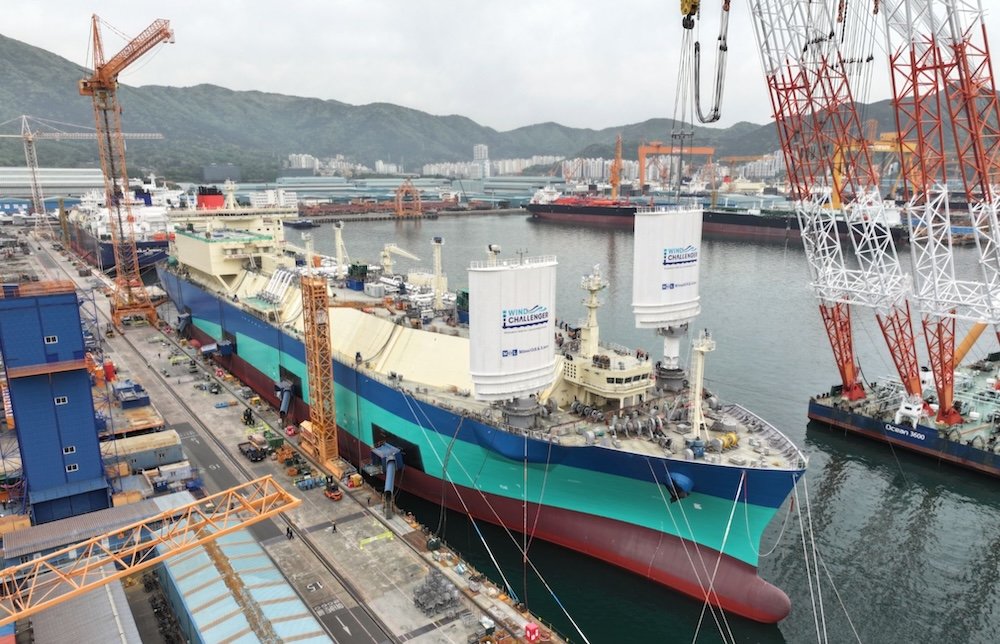
South Korean shipbuilder Hanwha Ocean has revealed what is being described as the world’s first LNG carrier fitted with hard sail wind propulsion technology, a development that highlights how far wind-assisted shipping is beginning to move into mainstream commercial fleets.
The vessel, still under construction for Mitsui OSK Lines (MOL), has been equipped with two Wind Challenger Systems and is expected to be delivered later this year. Once completed, it will enter long-term service under a charter agreement with Chevron.
The Wind Challenger hard sail system was developed by MOL over the past decade and has already been used mainly on bulk carriers. On this LNG carrier, the company estimates the two sails could reduce fuel consumption by up to 12% per voyage, depending on weather and sailing conditions.
Wind propulsion is gaining ground in shipping as companies look for practical ways to cut emissions, but LNG carriers have been slower to adopt the technology. The reasons are largely operational rather than conceptual.
These vessels come with tight technical constraints, including complex deck layouts, strict visibility requirements during loading and unloading, boil-off gas systems, safety exclusion zones around cargo areas, and air-draft limits that make it difficult to integrate large sail structures.
Even so, this project is being seen as an important step. It shows that wind-assisted propulsion is no longer limited to bulkers or simpler vessel types, and is now starting to find its way into more technically demanding segments of the fleet.
For the industry, it’s another small but clear signal: decarbonisation technologies are steadily moving from experimental applications into real commercial operations.







