



The ship recycling industry is clearly becoming more structured and technology-driven, but a new report suggests the biggest challenge is no longer regulation — it’s what happens once the rules meet real operations.
A study from the Sustainable Shipping Initiative says the Hong Kong International Convention is accelerating change across recycling yards,pushing them towards more formal systems, stronger infrastructure and tighter control of hazardous materials.
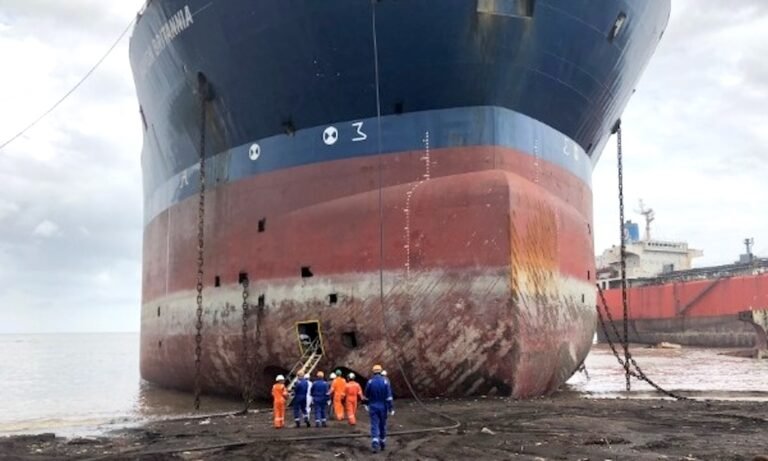
The research, based on India’s Alang recycling cluster, shows yards are increasingly using mechanised equipment, permit systems and more defined safety procedures. This comes as the industry prepares for a significant rise in end-of-life vessels heading for dismantling over the next decade.
But despite this progress, the report highlights a clear disconnect: compliance is improving faster than actual operational capability.
Many yards now collect large amounts of information through inspections, hazardous material inventories and structured permitting systems. The problem, according to the study, is turning that data into consistent, practical safety decisions on the ground.
Digital tools and tracking systems are being introduced to support this shift, helping with documentation, workflow control and hazardous material management. Still, the report stresses that day-to-day safety continues to rely heavily on experienced workers, supervision quality and how decisions are made in real time inside the yard.
It also points out that many risks don’t start at the recycling stage at all. Vessel design complexity, incomplete hazardous material records and ageing onboard systems often create problems long before a ship arrives for dismantling.
Because of that, the study argues that improving safety cannot rest only on recycling yards. It needs better accountability across the entire lifecycle of ships from shipowners to designers and regulators.
The findings come as the maritime industry faces growing pressure to improve transparency around end-of-life vessels, environmental impact and worker safety.
Alang, one of the world’s largest ship recycling hubs,has already been upgrading its infrastructure in recent years, with more mechanisation, improved waste handling and expanded training programmes aimed at meeting international standards.
Even so, the report warns that future progress will depend on more than physical upgrades. It will require stronger skills, better operational knowledge and a deeper integration of safety systems into everyday work.
In the end, the message is simple: the industry is improving on paper, but the real test is whether those improvements consistently translate into safer operations on the ground.