



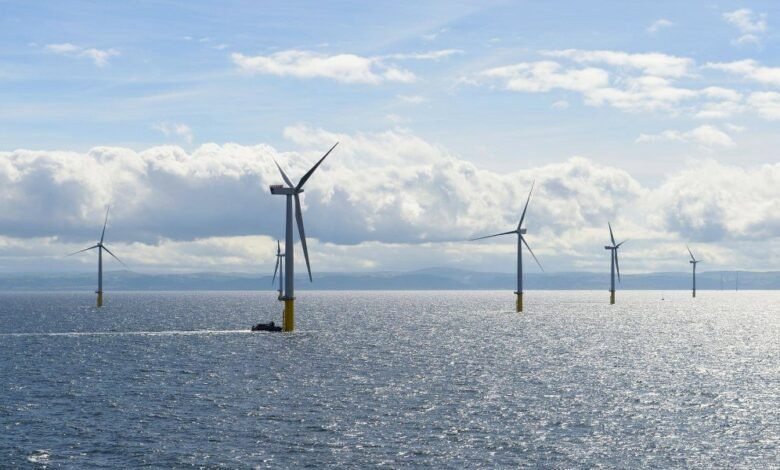
The UK has moved ahead with a major expansion of its offshore wind sector, granting planning approval to a combined 4GW of new capacity across two landmark projects developed by leading European energy players.
The approvals cover RWE and Masdar’s 3GW Dogger Bank South development, alongside SSE and RWE’s 1GW North Falls offshore wind farm. Together, they mark a significant step in the UK’s continued push to scale renewable electricity generation and strengthen long-term energy security.
Dogger Bank South is made up of two offshore wind farms Dogger Bank South West and Dogger Bank South East – along with a wide range of supporting infrastructure. This includes offshore and onshore cabling, substations, National Grid connections, and additional temporary and auxiliary works required to bring the project online.
The UK Energy Secretary’s development consent order allows for up to 100 turbines at each site. With a combined estimated capacity of 3GW, the project is expected to generate enough electricity to power around 3 million average UK households annually.
The scheme had already secured Contracts for Difference in January through the UK government’s Allocation Round 7. Its planning application was submitted in June 2024 and accepted for examination the following month. RWE and Masdar will now move into detailed design and procurement phases, with a final investment decision targeted for 2027.
Alongside this, the UK has also approved the North Falls offshore wind farm, developed as a 50/50 joint venture between RWE and SSE Renewables. The project extends the southern array of the existing 504MW Greater Gabbard offshore wind farm, which is also operated by SSE.
Located approximately 24.5 km from the Port of Lowestoft, North Falls is expected to reach up to 1GW of installed capacity. It will include offshore wind turbines as well as both offshore and onshore supporting infrastructure connected to the national transmission network.
Like Dogger Bank South, the North Falls application was submitted to the Planning Inspectorate in mid-2024 and progressed rapidly through the approval process, being accepted the following month.
With both projects now cleared to proceed, developers are preparing detailed engineering work and commercial structuring as the UK accelerates its offshore wind buildout toward the end of the decade.