



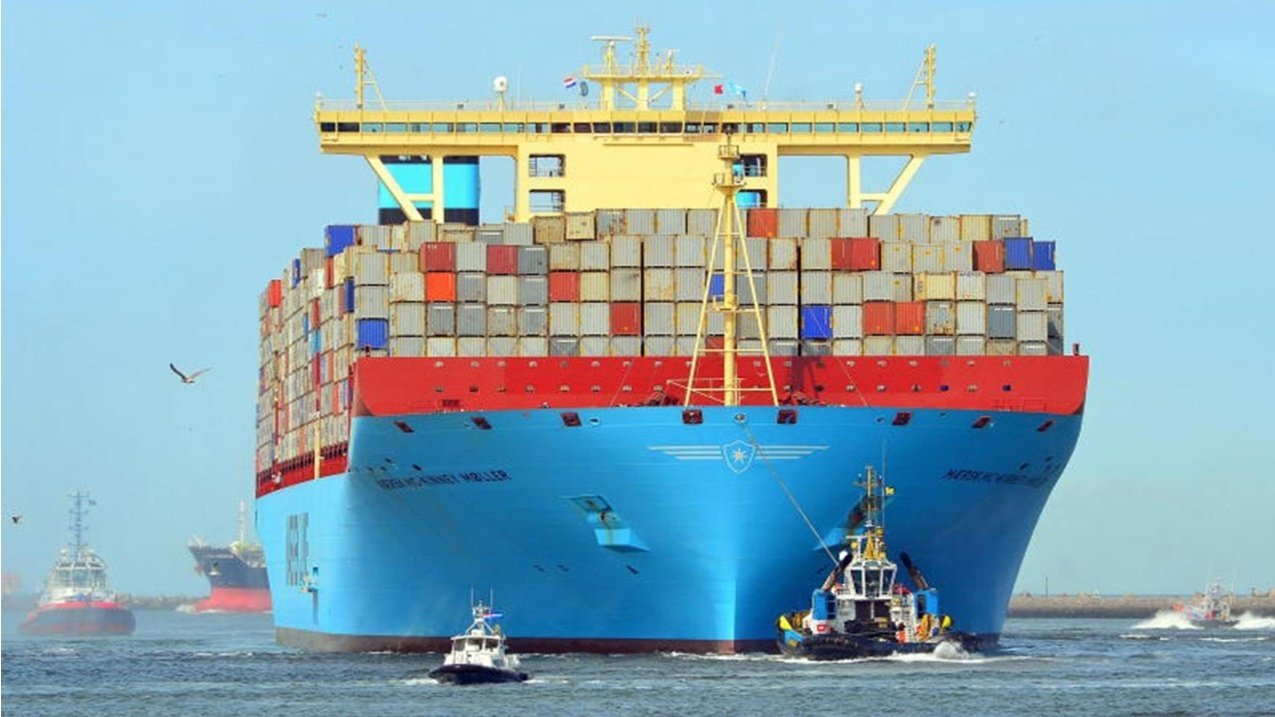
Container shipping activity through the Suez Canal and Red Sea has reached its highest level in 10 weeks, according to new data from shipping consultancy Drewry, as more and larger vessels cautiously reappear on the contested route.
For the week ending May 17, container vessel transits through the Suez Canal climbed to a 10-week peak, with a total of 32 ships recorded in the week ending May 17, compared with 22 ships in the previous week. The combined two-week figure remains slightly below earlier levels but is still higher than the immediate post-conflict period following the escalation of tensions linked to the Iran conflict in late February.
The Suez–Red Sea corridor has remained highly unstable since late 2023, when attacks on merchant vessels in the region prompted major liner operators to divert services around Africa’s Cape of Good Hope, adding up to two weeks of additional sailing time on Asia–Europe and transatlantic routes.
A partial return of larger container ships earlier this year was again disrupted following renewed geopolitical tensions, limiting the recovery of normal routing patterns.
Drewry data shows that only a small number of carriers have resumed sending large vessels of more than 8,000 TEU through the Suez Canal during the week of May 17. CMA CGM deployed seven ships, Mediterranean Shipping Co. three ships, and Maersk one ship.
Maersk has reportedly begun reintroducing limited Suez transits, although only at the northern end of the canal within its Gemini service network alongside Hapag-Lloyd, connecting Asia, the Mediterranean and Saudi Arabia via a hybrid routing that still incorporates the Cape of Good Hope.
Despite this tentative shift, the vast majority of global container traffic continues to avoid the Red Sea. Around 190–200 vessels per week still sail via the Cape of Good Hope, maintaining it as the dominant Asia–Europe trade corridor.
Drewry noted that while the trend line for Suez Canal transits is gradually moving upward, a full-scale return to the route remains highly unlikely in the current environment.