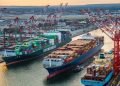




An international consortium led by Maersk-backed Stillstrom has secured a €5m ($5.8m) grant from the EU’s Horizon Europe programme to develop and demonstrate offshore charging infrastructure for vessels waiting at anchor with their engines running.
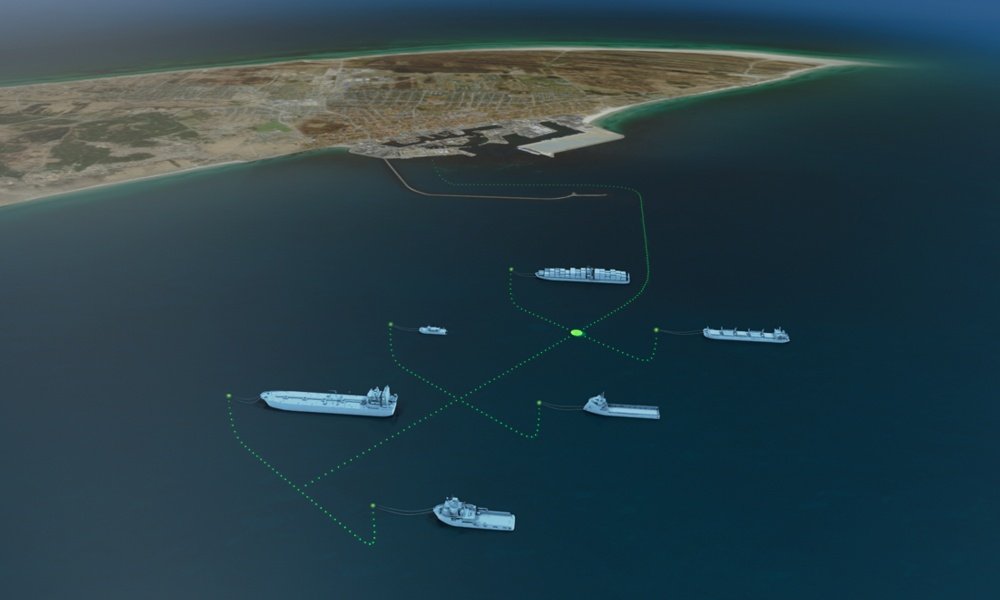
The project, called SPARK, will officially begin in June and will focus on building and testing an Offshore Power Zone in Skagen, Denmark — one of Northern Europe’s busiest anchorage hubs.
Over a three-year period, the initiative aims to directly reduce greenhouse gas emissions from ships idling between operations by providing a plug-in at-sea power solution supplied via the Port of Skagen’s grid. The first phase will involve connecting a single vessel in a live operational environment to validate the concept before scaling it to other locations globally.
Stillstrom, which specialises in vessel charging technology, will lead the consortium alongside Aalborg University, DNV, Maersk, MARIN, the Port of Malta, the Port of Skagen, and University College London.
“Near-shore idling vessels represent a significant and often overlooked source of GHG emissions, making them a clear and immediate opportunity for decarbonisation. Project SPARK brings together partners from across the maritime ecosystem, enabling us to collectively accelerate offshore power from concept to real-world deployment, delivering a practical and economical solution for the maritime sector,” said Kristian Borum Jørgensen, CEO of Stillstrom.
Beyond the technical demonstration, the project will also evaluate the commercial feasibility and regulatory frameworks required to enable wider adoption of offshore charging systems across global ports and anchorage zones.
“This is a significant opportunity for Skagen as one of Northern Europe’s key anchorage hubs,” added Willy B Hansen, CEO of the Port of Skagen. “By hosting this pilot Offshore Power Zone, we are helping to demonstrate how collaborative innovation can directly reduce emissions from idling vessels and support the industry’s transition to cleaner operation.”