

• Latest
  • Trending
Resilient by design: Why air cargo supply chains can’t rely on efficiency alone

Resilient by design: Why air cargo supply chains can’t rely on efficiency alone

May 19, 2026
IAG Cargo launches virtual programme to introduce young talent to the air cargo industry

IAG Cargo launches virtual programme to introduce young talent to the air cargo industry

May 19, 2026
FedEx brings MD-11 freighters back into service after FAA clearance

FedEx brings MD-11 freighters back into service after FAA clearance

May 19, 2026
ADVERTISEMENT
Globe Air Cargo France and Air China Cargo celebrate 30 years of partnership

Globe Air Cargo France and Air China Cargo celebrate 30 years of partnership

May 19, 2026
Tariffs redefine global trade execution as supply chains shift into real-time optimisation

Tariffs redefine global trade execution as supply chains shift into real-time optimisation

May 19, 2026
Target strengthens supply chain leadership with former Walmart executive Jeff England

Target strengthens supply chain leadership with former Walmart executive Jeff England

May 19, 2026
Supreme Court ruling gives Samsara a strong tailwind for broker safety and carrier vetting tools

Supreme Court ruling gives Samsara a strong tailwind for broker safety and carrier vetting tools

May 19, 2026
Target appoints former Walmart executive Jeff England as new supply chain chief

Target appoints former Walmart executive Jeff England as new supply chain chief

May 19, 2026
Maersk returns to Suez route as Red Sea transits hit 10-week high

Maersk returns to Suez route as Red Sea transits hit 10-week high

May 19, 2026
Trans-Pacific freight rates hold steady as peak season approaches amid fuel and capacity pressure

Trans-Pacific freight rates hold steady as peak season approaches amid fuel and capacity pressure

May 19, 2026
How maritime education must evolve to close the seafarer gap

How maritime education must evolve to close the seafarer gap

May 19, 2026
AI robots move into shipyards to catch construction errors before they turn into costly delays

AI robots move into shipyards to catch construction errors before they turn into costly delays

May 19, 2026
EU-backed SPARK project to bring offshore charging zones for idling ships in Denmark

EU-backed SPARK project to bring offshore charging zones for idling ships in Denmark

May 19, 2026
  • Home
  • About Us
  • Press Room
  • Podcasts
  • Media Kit
  • Contact Us
  • Careers
Tuesday, May 19, 2026
  • Login
  • Register
The Logistic News
  • Logistic
  • Air
  • Maritime
  • Land
  • World
  • Business
  • Tech
  • Events
  • Advertise
No Result
View All Result
  • Logistic
  • Air
  • Maritime
  • Land
  • World
  • Business
  • Tech
  • Events
  • Advertise
No Result
View All Result
The Logistic News
No Result
View All Result
Home Air

Resilient by design: Why air cargo supply chains can’t rely on efficiency alone

From optimisation obsession to operational reality — air cargo is being reshaped by volatility, service pressure and constant disruption

The Logistic News by The Logistic News
May 19, 2026
in Air, Cargo, Logistic
Reading Time: 4 mins read
0
Resilient by design: Why air cargo supply chains can’t rely on efficiency alone

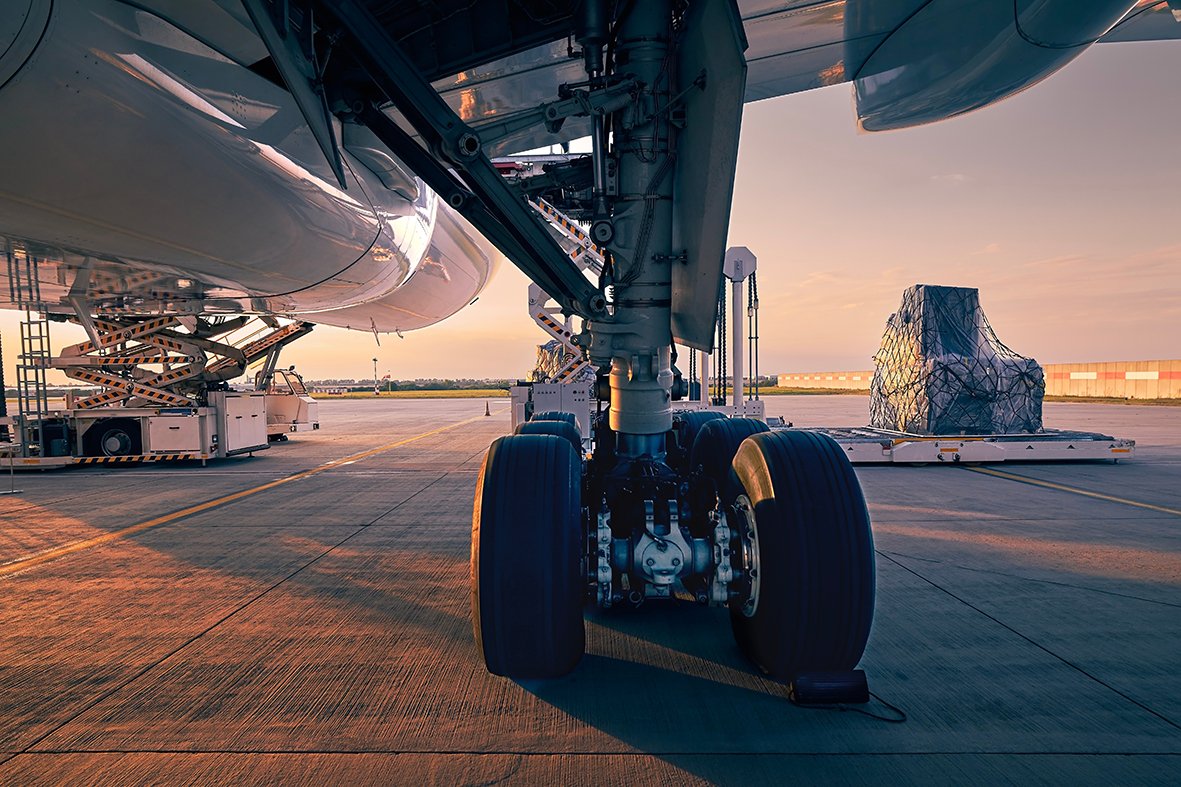
Landing gear of large plane. Preparation cargo airplane before flight at beautiful sunset. Unloading and loading of freight containers at airport.

ADVERTISEMENT

For a long time, air cargo ran on a pretty simple idea: if you make everything more efficient, everything gets better.

Airlines, freighter operators, ground handlers and forwarders all pushed hard on optimisation — squeezing out cost per kilo, filling aircraft more tightly, and streamlining cargo flows across global networks. And for a while, it worked. Efficiency was basically the main measure of success.

But that world doesn’t really exist anymore.

ADVERTISEMENT

Today, air cargo operates in a completely different environment. Volatility is constant, and at the same time customer expectations have gone up across the board. Shippers now expect precise delivery times, live visibility, and consistent handling for sensitive cargo like pharmaceuticals and perishables. All of this is happening while airports face labour shortages, regulators push harder on emissions, and networks become more fragile under pressure.

In that context, even small disruptions can have a big impact. A missed connection, a shortfall in capacity, or a delay on the ground isn’t just an operational issue anymore — it can mean production stoppages or cargo losses that simply can’t be recovered.

And expectations keep tightening. Time-definite delivery, real-time tracking, strict handling requirements for dangerous goods or high-value freight, and narrower recovery windows all mean operators have far less room for error. Resilience is no longer a “nice to have” or a cost debate — it directly affects service quality, compliance, and customer trust.

On top of that, the operating environment itself is becoming harder to predict. Airspace disruptions linked to geopolitical tensions, extreme weather affecting hubs, changing customs rules, and sudden demand swings from e-commerce all add layers of instability. What used to feel like temporary shocks are now part of how the system actually works.

And the scale is massive. Logistics costs in the U.S. alone are around $2.6 trillion, roughly 8.7% of GDP. At that level, even small inefficiencies or disruptions quickly turn into serious financial losses.

So a shift is happening: efficiency alone is no longer enough. A network that looks perfect on paper can still be very fragile in real life.

When efficiency stops being enough

Air cargo optimisation models were designed in a much more stable era. Demand was easier to predict, supply chains were more consistent, and disruptions were less frequent.

In that context, optimisation delivered real gains — fewer empty legs, better consolidation, and more balanced networks.

But things have changed.

Disruptions are now happening more often and costing more. Some companies report they’re dealing with them twice as frequently as before, and losses can reach 5–10% of annual revenue depending on the severity and duration of the disruption.

When things go wrong, companies react fast — rerouting freight, expediting shipments, shifting inventory between hubs. That’s normal. The problem is that these fixes often undo the very efficiency that was designed into the system in the first place.

Over time, the “perfect” network on paper slowly becomes less efficient in practice, simply because reality keeps forcing adjustments.

The gap between planning and reality

One of the biggest challenges right now is the gap between strategic planning and day-to-day operations.

At the top level, companies design networks years in advance — deciding where warehouses should be, how flows should move, and how the system should behave under normal conditions. These models are usually very advanced and highly optimised.

But reality doesn’t stay “normal”.

Demand shifts, labour gets tight, delivery requirements change, and suddenly planners are forced to intervene manually — adding routes, adjusting schedules, reallocating capacity. The system keeps running, but it drifts further away from the original design.

This is where the disconnect happens: strategy assumes stability, operations deal with constant change.

And bridging that gap is becoming one of the most important challenges in supply chain management today.

Thinking in systems, not silos

More and more leaders now talk about needing a “helicopter view” of the supply chain.

The idea is simple: you can’t really optimise one part of the network without affecting everything else.

For example, changing delivery zones might improve transport efficiency but create congestion in warehouses. Adding suppliers to reduce risk might increase complexity in transport and inventory positioning.

When each decision is made in isolation, you often end up improving one area while quietly weakening another.

A helicopter view forces companies to see the system as a whole — where design, planning, and execution are connected, not separate.

That’s where real resilience starts: not in individual fixes, but in how the entire network behaves together when conditions change.

Building for a world that doesn’t stay stable

Across air cargo — whether airlines, integrators, forwarders or shippers — adaptability is now becoming a core requirement. Fixed schedules, tight capacity, and high-value time-sensitive freight mean there is very little margin for disruption.

At the same time, global supply chains are increasingly described as being in a “permanent state of disruption”. That might sound dramatic, but for many operators it reflects daily reality.

So companies are adjusting. They’re building more flexible networks, adding alternative routing options, working with more partners, and investing heavily in systems that help them react faster when things change.

Technology is playing a key role here.

At a strategic level, scenario planning tools are being used to test how networks behave under stress — whether that’s demand spikes, airspace closures, or sudden changes in trade flows. At an operational level, capacity and load tools help match freight to aircraft constraints in real time, while also enabling rapid re-planning when something breaks.

And then there’s visibility — which has become essential. Real-time tracking, control towers, and execution dashboards allow companies to see problems early and react before they escalate.

But the key point is this: resilience doesn’t mean giving up efficiency. The strongest networks are trying to balance both at the same time.

A different way of thinking about supply chains

If the last decades were all about making supply chains as efficient as possible, the next ones will be about making them flexible enough to survive constant change.

Because change isn’t occasional anymore — it’s the baseline.

Success will depend on how well companies can connect long-term design with real-time execution, instead of treating them as separate worlds.

Artificial intelligence is starting to support that shift by identifying weak points in networks, simulating disruption scenarios, and highlighting where assumptions no longer hold true. In other words, helping companies see problems before they become operational failures.

What’s emerging is a more connected system, where strategy, planning, and execution continuously feed into each other.

In that kind of setup, resilience isn’t something you add after the fact. It’s built in from the start.

And for air cargo leaders, the real question is no longer “is our network optimised today?” — but “will it still work tomorrow when everything changes overnight?”


Previous Post

Tariffs redefine global trade execution as supply chains shift into real-time optimisation

Next Post

Globe Air Cargo France and Air China Cargo celebrate 30 years of partnership

Next Post
Globe Air Cargo France and Air China Cargo celebrate 30 years of partnership

Globe Air Cargo France and Air China Cargo celebrate 30 years of partnership

Leave a Reply Cancel reply

Your email address will not be published. Required fields are marked *

A D V E R T I S E M E N T

Popular News

  • Drone Delivery Takes Flight: Amazon Partners with UPS for Trial Program

    Drone Delivery Takes Flight: Amazon Partners with UPS for Trial Program

    0 shares
    Share 0 Tweet 0
  • Rail Cargo Group Strengthens European Network with Captrain Netherlands Acquisition

    0 shares
    Share 0 Tweet 0
  • Automotive Inbound Logistics Market: Navigating Future Challenges

    0 shares
    Share 0 Tweet 0
  • Global Inflation Cools to Target After Three Years, Central Banks Face Policy Dilemma

    0 shares
    Share 0 Tweet 0
  • Dubai Mercantile Exchange Rebrands as Gulf Mercantile Exchange Following Saudi Tadawul Group Acquisition

    0 shares
    Share 0 Tweet 0

Recent News

IAG Cargo launches virtual programme to introduce young talent to the air cargo industry

IAG Cargo launches virtual programme to introduce young talent to the air cargo industry

May 19, 2026
FedEx brings MD-11 freighters back into service after FAA clearance

FedEx brings MD-11 freighters back into service after FAA clearance

May 19, 2026
Globe Air Cargo France and Air China Cargo celebrate 30 years of partnership

Globe Air Cargo France and Air China Cargo celebrate 30 years of partnership

May 19, 2026

Discover a new era of logistics reporting with The Logistic News, your go-to platform for breaking news, insightful features, and exclusive interviews shaping the global logistics and freight landscape. Trust us to deliver accurate, timely, and relevant information that empowers professionals and enthusiasts alike in navigating the intricacies of this vital sector.

Navigation

  • Home
  • About Us
  • Press Room
  • Podcasts
  • Media Kit
  • Contact Us
  • Careers
  • Privacy Policy
  • Terms of Use

© 2024 - thelogisticnews.com

Welcome Back!

Login to your account below

Forgotten Password? Sign Up

Create New Account!

Fill the forms below to register

All fields are required. Log In

Retrieve your password

Please enter your username or email address to reset your password.

Log In

SIgn Up Newsletter

This will close in 20 seconds

Manage Cookie Consent
We use technologies like cookies to store and/or access device information. We do this to improve browsing experience and to show (non-) personalized ads. Consenting to these technologies will allow us to process data such as browsing behavior or unique IDs on this site. Not consenting or withdrawing consent, may adversely affect certain features and functions.
Functional Always active
The technical storage or access is strictly necessary for the legitimate purpose of enabling the use of a specific service explicitly requested by the subscriber or user, or for the sole purpose of carrying out the transmission of a communication over an electronic communications network.
Preferences
The technical storage or access is necessary for the legitimate purpose of storing preferences that are not requested by the subscriber or user.
Statistics
The technical storage or access that is used exclusively for statistical purposes. The technical storage or access that is used exclusively for anonymous statistical purposes. Without a subpoena, voluntary compliance on the part of your Internet Service Provider, or additional records from a third party, information stored or retrieved for this purpose alone cannot usually be used to identify you.
Marketing
The technical storage or access is required to create user profiles to send advertising, or to track the user on a website or across several websites for similar marketing purposes.
Manage options Manage services Manage {vendor_count} vendors Read more about these purposes
View preferences
{title} {title} {title}
No Result
View All Result
  • Logistic
  • Air
  • Maritime
  • Land
  • World
  • Business
  • Tech
  • Events
  • Advertise

© 2024 - thelogisticnews.com