



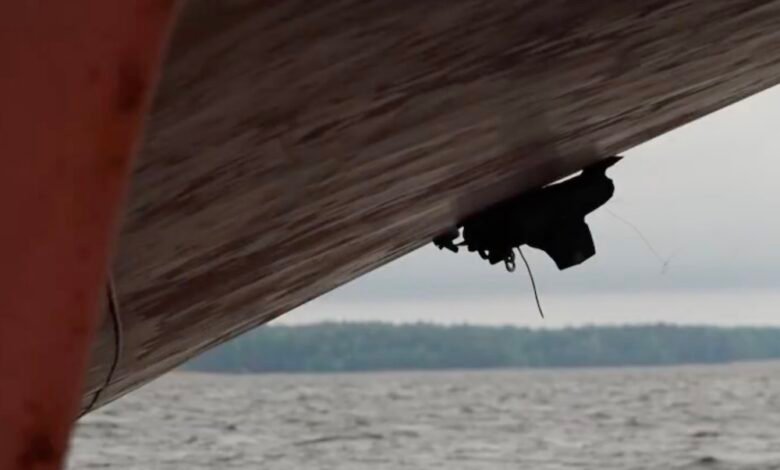
Russian security services say a potentially serious maritime security incident was narrowly avoided after divers discovered magnetic explosive devices attached to the hull of an LPG tanker at the Russian port of Ust-Luga.
According to Russia’s FSB security agency, the Liberia-flagged LPG tanker Arrhenius arrived at Ust-Luga on May 20 after sailing from Antwerp. The vessel, managed by UAE-based Maple Mariner Holding, was preparing to load liquefied petroleum gas before continuing its voyage to Samsun, Turkey.
During an underwater hull inspection near the engine room area, divers reportedly found several magnetic devices fixed to the ship’s hull. Russian authorities stated that each device contained around 7 kg of plastic explosives.
The country’s Investigative Committee has since opened a criminal case for attempted terrorism and illegal trafficking of explosive materials. Officials claimed the devices were factory-made naval magnetic mines allegedly produced in a NATO country.
The explosives were later neutralised by FSB specialists working alongside Russia’s Ministry of Defence and National Guard.
Russian investigators believe the devices were likely attached outside Russian territorial waters. Investigative Committee spokeswoman Svetlana Petrenko said early findings suggest the mines could not have been installed after the vessel entered Russia.
The investigation is now focusing heavily on the tanker’s previous movements. Authorities noted that the vessel arrived at Ust-Luga several days later than expected. During questioning, the ship’s captain reportedly explained that before unloading cargo in Antwerp, the vessel had remained at anchorage for approximately a day and a half due to a port workers’ strike.
Russian investigators now view that delay as a potentially important element of the case.
The incident comes as Russia continues tightening maritime security measures across its Baltic ports following a series of suspicious tanker-related events over the past two years.
In February 2025, the suezmax tanker Koala ran aground near Ust-Luga after an explosion in its engine room. Following several suspected attacks involving oil tankers last year, Moscow introduced mandatory diver inspections for vessels arriving at Russian ports.
The latest case is likely to heighten fears around maritime security risks in sensitive energy trade corridors especially for tankers moving between Europe, Russia and the Black Sea region.
- Latest
- Trending
ADVERTISEMENT







