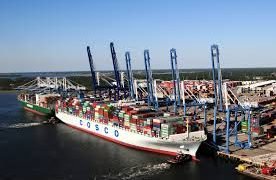




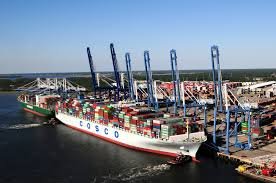
The South Carolina Ports Authority is preparing to significantly expand its roll-on/roll-off (Ro-Ro) operations at the Port of Charleston as part of a broader strategy to support the state’s rapidly growing automotive industry and its increasingly complex just-in-time supply chains.
According to a May 15 press release, the port plans to enhance both its rail infrastructure and vessel parking areas at the North Charleston Terminal. Improvements are expected to be completed by 2028, with an adjacent paper mill site scheduled for demolition this summer to make way for the expansion.
While final figures for the added capacity have not yet been disclosed, the Columbus Street Terminal currently handles more than 250,000 vehicles annually, underscoring the port’s already significant role in US automotive logistics.
Laura Clifton, public relations manager for the South Carolina Ports Authority, said the upgrades are part of a broader effort to reinforce the port’s competitiveness in automotive logistics, supported by the state’s strong workforce, supplier network, rail connectivity and available land for future expansion.
In 2025, motor vehicles and parts were South Carolina’s top export category, according to the state’s commerce department. The state also accounted for an 18% share of all completed passenger vehicle sales across the United States, the highest among all 50 states.
Beyond passenger vehicles, SC Ports also handles construction equipment and oversized cargo such as buses and trailers, further diversifying its Ro-Ro operations.
The port has long-standing relationships with major global automakers including BMW, Mercedes-Benz Vans and Volvo Cars, all of which operate manufacturing facilities in the state and depend heavily on the port for the import and export of components supporting just-in-time production models.
At the wider regional level, the Georgia Ports Authority is also expanding its automotive handling capabilities. In 2025, it processed 779,000 units, positioning itself as the “nation’s busiest port for automobiles,” according to its own data, alongside more than 53,000 units of heavy machinery.
The Georgia port is currently executing a series of infrastructure investments to prepare for larger vessel calls and rising cargo volumes, including a $100 million roll-on/roll-off berth project and upgrades to vehicle storage areas and other harbour infrastructure.
Together, the moves reflect intensifying competition and rapid capacity expansion among US Southeast ports, with automotive supply chains still reliant on efficient seaport gateways to keep production and distribution pipelines flowing.
- Latest
- Trending
ADVERTISEMENT







