



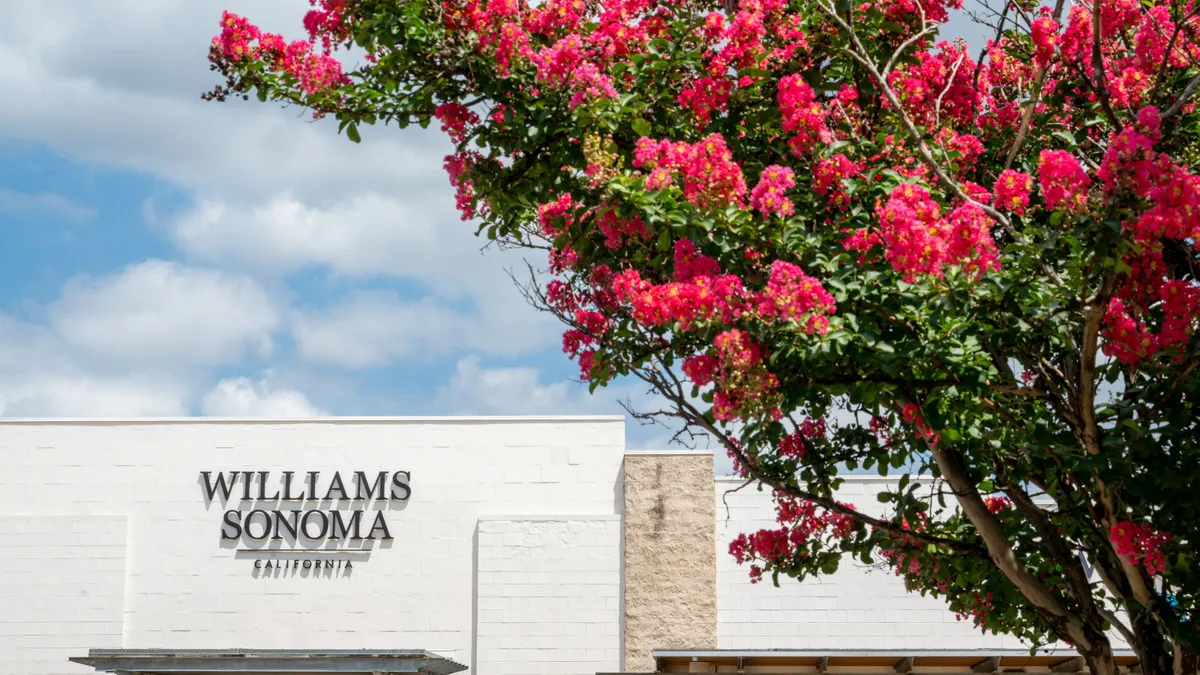
Williams-Sonoma is preparing to distribute part of the roughly $200 million it has recovered from invalidated International Emergency Economic Powers Act (IEEPA) tariffs, with both vendor partners and employees set to benefit from the refunds.
According to the company’s second-quarter 2026 earnings report published Wednesday, the kitchenware and home goods retailer recognized most of the refund as a reduction in its cost of goods sold. However, it plans to direct $47.5 million toward reimbursing vendor partners for discounts they previously provided to help offset the impact of the IEEPA tariffs.
Williams-Sonoma will also allocate $10 million for a one-time contribution to the 401(k) retirement accounts of certain employees. The company said the contribution is intended to recognize their efforts in navigating the tariffs and managing their effects across the business.
“We’re so appreciative to have the money back and to be able to reward our employees with part of it,” President and CEO Laura Alber said during the company’s earnings call Wednesday, praising employees for their work during a particularly challenging period.
Sharing the benefit with suppliers
Williams-Sonoma’s decision comes as U.S. Customs and Border Protection continues to issue refunds tied to the IEEPA tariffs that the Supreme Court struck down in February.
Companies across multiple industries have taken different approaches to the money they are recovering.
Some have chosen to pass the benefits directly to customers. Amazon, for example, said it would issue refunds to shoppers in limited circumstances. Walmart and BJ’s Wholesale Club, meanwhile, have opted to invest tariff-related refunds in price reductions.
Other companies have taken a different position. Nintendo has maintained that tariff refunds are not owed to customers.
Businesses have also used the returned funds to absorb higher logistics and sourcing costs, sell their rights to potential tariff refunds in exchange for faster cash, or share reimbursement benefits with supplier partners.
Williams-Sonoma is now firmly among those choosing to share the proceeds with its vendors.
Alber described the decision as “the right thing to do,” pointing to the discounts suppliers had previously provided when tariffs increased the company’s costs.
“They gave us discounts and when we got the money back, we gave them their money back,” Alber said, adding that the move could further strengthen the company’s relationship with its suppliers and differentiate those partnerships from those maintained by competitors.
Employees also set to benefit
The decision to direct part of the refunds toward employees represents a less common approach to handling the recovered tariff payments.
Alber said the past year had been particularly difficult, with teams dealing with products moving across the world, sourcing challenges and the need to offset some of the additional costs created by tariffs.
“It was a very chaotic year moving products all over the world and trying to resource them,” Alber said, while highlighting the work carried out by teams across the supply chain to mitigate some of those costs.
The $10 million retirement-account contribution is intended as recognition for those efforts.
Williams-Sonoma has not ruled out using additional refund proceeds elsewhere in the business. Alber indicated that the company could decide to invest some of the remaining money depending on its needs and opportunities.
“We love cash. So why not have some more? And who knows, we may decide to do something,” she said.
Most refunds already recovered
The company’s approach marks a notable shift from its earlier expectations. Earlier this year, Williams-Sonoma had expressed pessimism about the possibility of recovering IEEPA tariff payments.
As of Aug. 2, however, the retailer said it had recovered “substantially all” of the refunds it had filed for.
The company still expects to receive an additional $3.2 million in tariff refunds.
For Williams-Sonoma, the recovery therefore represents more than a reduction in costs: part of the money is being redirected to the suppliers who helped absorb the tariff pressure and to employees who worked to manage its operational impact.